
The fastest open-top Aston Martin in history. The Valhalla Spider combines F1 technology with a plug-in hybrid system.
Aston Martin has unveiled the Valhalla Spider, an open-top version of its first production supercar with a centrally located engine. Its 1079 horsepower plug-in hybrid system, Formula 1-inspired active aerodynamics, and top speed of 350 km/h make it the fastest road car without a fixed roof ever created by the British brand.
In this article:
The Valhalla Spider delivers 1079 horsepower and 1100 Nm of torque thanks to its plug-in hybrid system with three electric motors.
It is the fastest open-top model in Aston Martin’s history, capable of reaching 350 km/h.
The design draws on the expertise of the Aston Martin Aramco Formula 1 Team and technologies used in motorsport.
Aston Martin: An Open-Top Supercar Inspired by Formula 1
Aston Martin is expanding the Valhalla model line with a new Spider variant. The British manufacturer emphasizes that it is the fastest convertible in the brand’s history and also the first production supercar with a mid-mounted engine available in a roofless version.
The new model retains all the key technical features of the Coupé version, including a carbon fiber monocoque structure, an advanced plug-in hybrid powertrain, and sophisticated active aerodynamics.
Engineers from Aston Martin Performance Technologies — the technology division linked to the Aston Martin Aramco Formula 1 Team — worked on developing the car. According to the manufacturer, this collaboration allowed them to refine the aerodynamics, driving performance, and lightweight construction so that driving without a roof does not come at the expense of performance.
The roof can be removed, but performance remains
It’s undeniable that the biggest challenge in designing the Spider version was maintaining its aerodynamic properties. Standardly, the car is equipped with a removable fabric roof that can be stored away during favorable weather conditions. According to Aston Martin, the Valhalla Spider with its soft roof can reach speeds of 200 km/h.
Customers can, however, opt for an optional carbon fiber roof that allows the vehicle to reach an electronically limited top speed of 350 km/h. Importantly, the car can achieve the same speed even with the roof completely removed. Aston emphasizes that this is why the Valhalla Spider is “the fastest convertible in the brand’s history.”
1079 HP from a V8 engine and three electric motors
The heart of the model remains the hybrid plug-in system known from the Coupé version. It consists of a twin-turbocharged 4.0-liter V8 engine and three electric motors. The combustion engine alone delivers 828 horsepower. The electric units provide an additional 251 horsepower, resulting in a total system power of 1079 horsepower and a maximum torque of 1100 Nm. Two electric motors drive the front axle and are responsible for torque vectoring, enhancing the vehicle’s agility and stability. The third motor works in conjunction with the new eight-speed dual-clutch transmission to assist the rear axle drive.
The manufacturer notes that the lack of a mechanical connection between the axles allows for very precise control over power distribution among the wheels. The Integrated Vehicle Dynamics Control system oversees all systems, coordinating the operation of the drive, suspension, steering, braking, and active aerodynamics.
Over half a ton of downforce
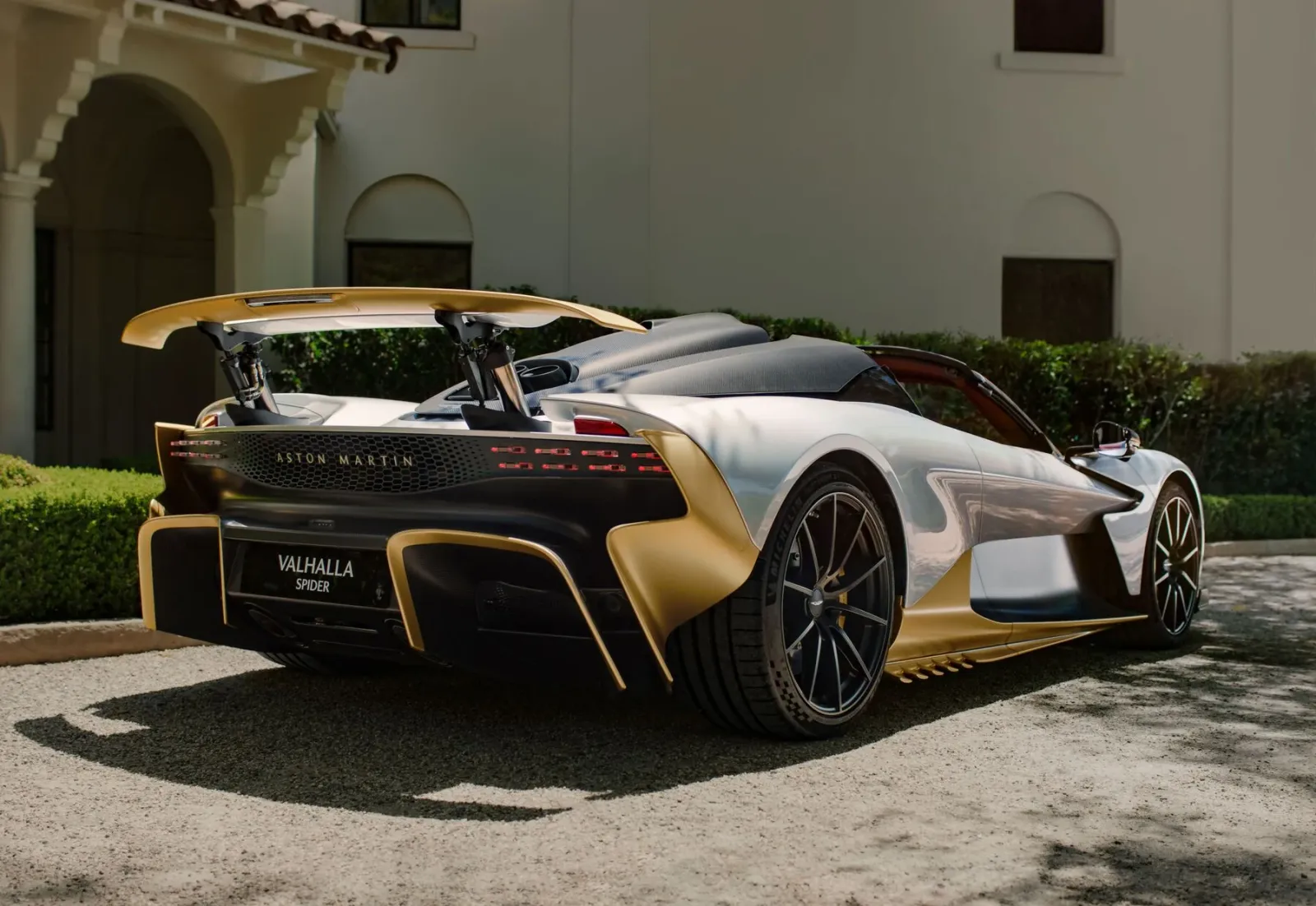
The Valhalla Spider retains one of the most advanced aerodynamic systems in the brand’s history. The movable body elements continuously adjust airflow based on speed, driving conditions, and selected mode — according to the British team.
According to the manufacturer, the car generates over 600 kg of aerodynamic downforce. Engineers performed additional calibration of the systems to ensure consistent performance whether with the roof up or in open configuration.
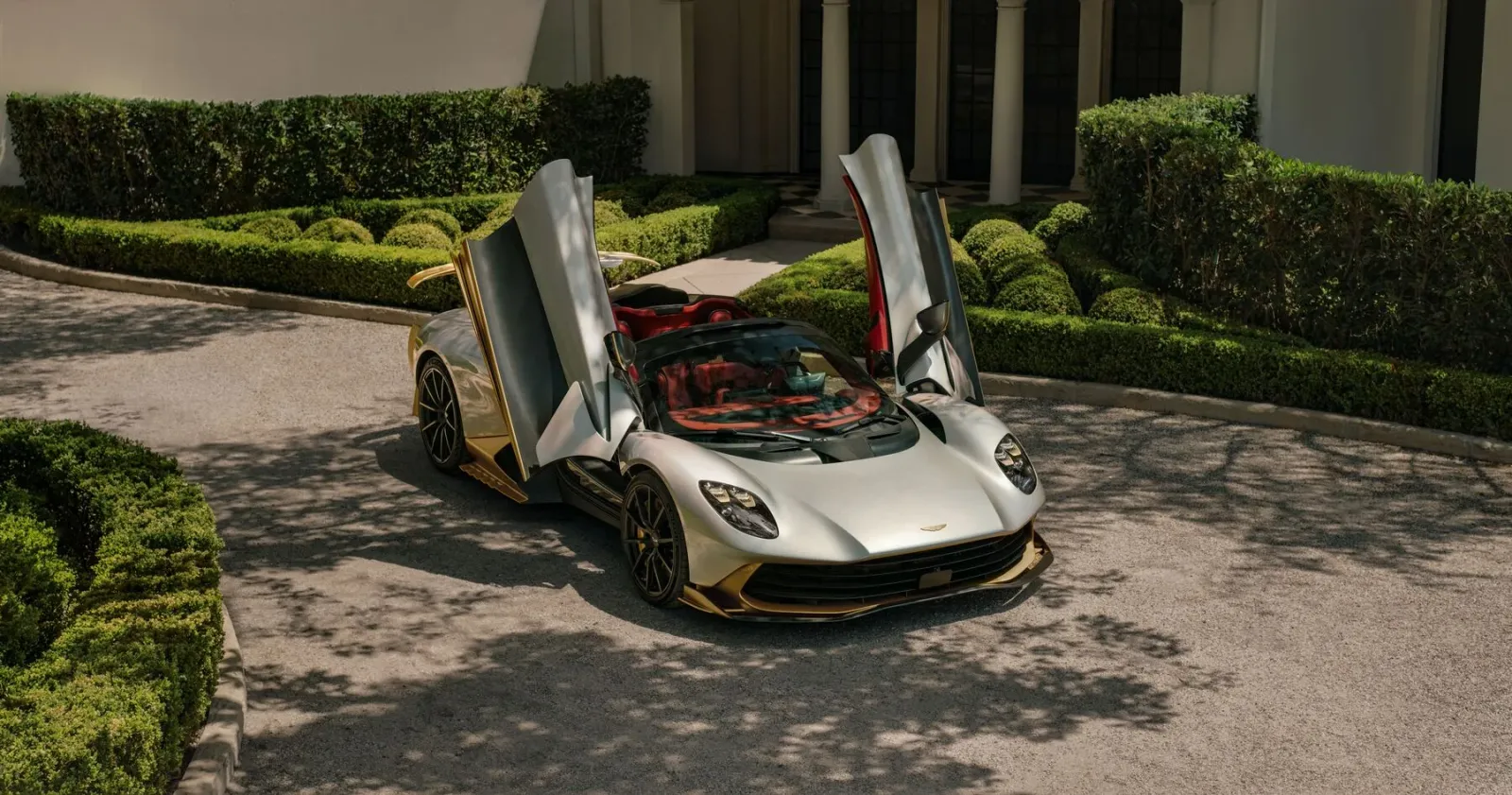
A lot of attention was also paid to riding comfort. A special deflector directs airflow over the passengers, reducing turbulence inside the cabin at high speeds. The air intake for the engine was also modified; in the Spider version, it has been raised by 35 mm compared to the Coupé version.
Carbon fiber and racing technologies
The car’s foundation is the aforementioned carbon structure developed in collaboration with Aston Martin Performance Technologies, utilizing solutions from Formula 1. The manufacturer emphasizes that techniques such as resin molding and autoclave processing enabled high stiffness while maintaining a low weight. The distinctive upward-opening doors have also been modified, featuring new operating mechanisms and a frameless design that facilitates use after the roof is installed.
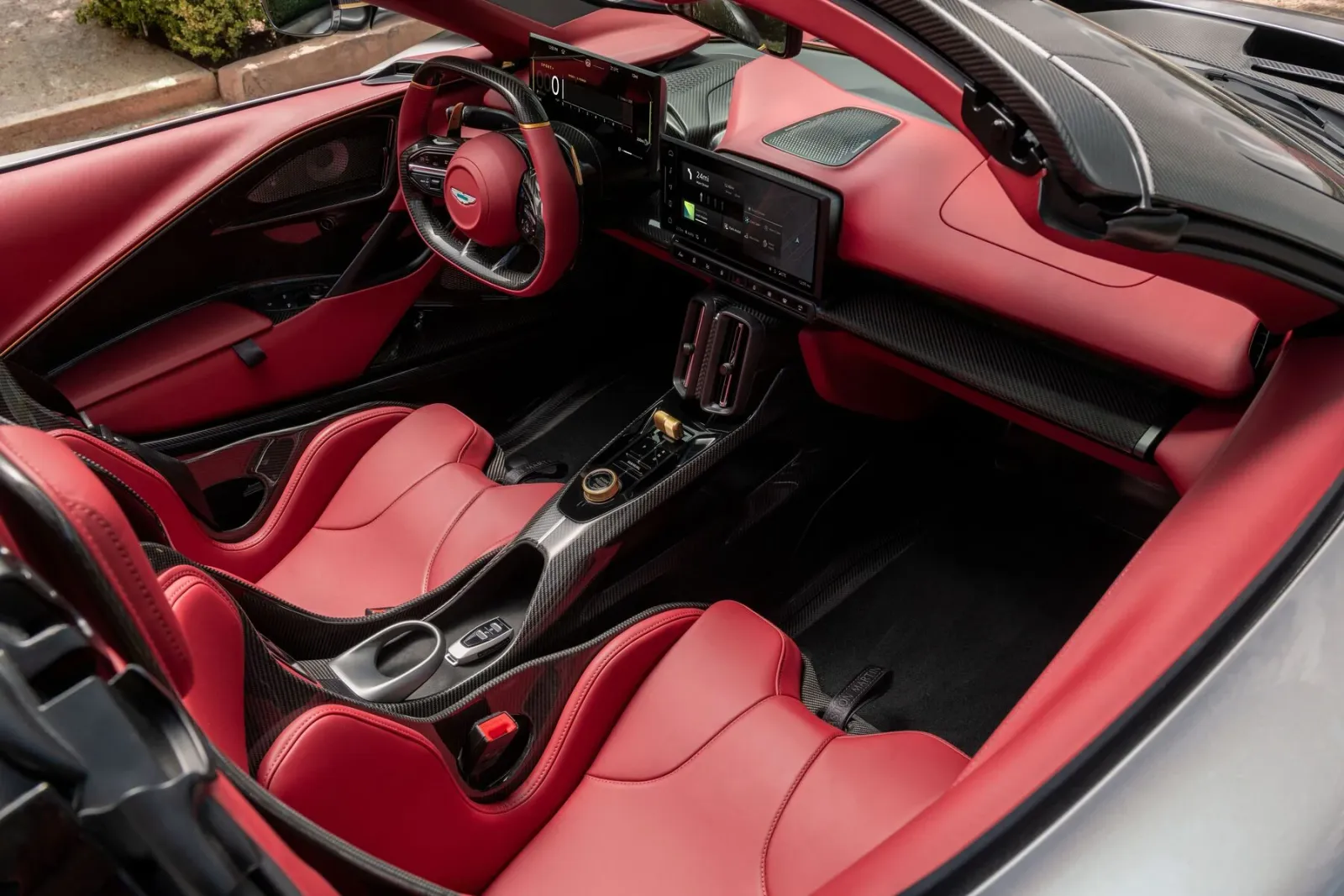
The standard equipment includes the new carbon fiber Touring Seat, designed to provide greater comfort for daily use. Those seeking a more sporty feel can opt for the bucket seats known from the Coupé version at no extra cost.
First, first
Aston Martin CEO Adrian Hallmark describes the Valhalla family as one of the most important projects in the company’s history. The model introduced several groundbreaking innovations at once: the first production supercar with a central engine, the first plug-in hybrid powertrain, and the first V8 engine in the brand’s history with a flat crankshaft, paired with a new eight-speed dual-clutch transmission.
Oskar Włostowski