
Musk has a crazy plan for AI: to have it operate outside Earth
Grok Bot runs faster than any other product launched so far by Elon Musk. The problem? Keeping it operational costs an enormous amount. Musk himself confirmed this on X on November 1, saying, "The operating cost of Grok Bot was unacceptably high compared to the revenue."
Yet users continue to pour in: at the beginning of October, there were about 800,000 weekly payers, more than double the previous period. This growth is tempting, but it also comes with increasingly high expenses. As the cost of powering this AI rises, SpaceX is already looking ahead—bringing some of the computing power out of Earth and directly into orbit.
SpaceX and orbital computing: What Musk said
During SpaceX’s quarterly earnings report in mid-October, Musk described Grok Bot as “the fastest-growing product” ever seen. The number of daily active users rose from less than 100,000 at the beginning of September to over 600,000 by the end of October. Typically, a new software slows down after its launch. Here, however, the growth rate continues to increase per user.
Musk also referred to the calculations being done today in terrestrial data centers as “trivial” compared to what SpaceX envisions for orbit. Note, however, that this is a strategic projection, not a snapshot of an existing infrastructure. No space data centers are currently operational. What is being developed there is the AI inference system, namely the execution of models that respond to users.
Starlink
Orbital data center, up to 1 million AI satellites
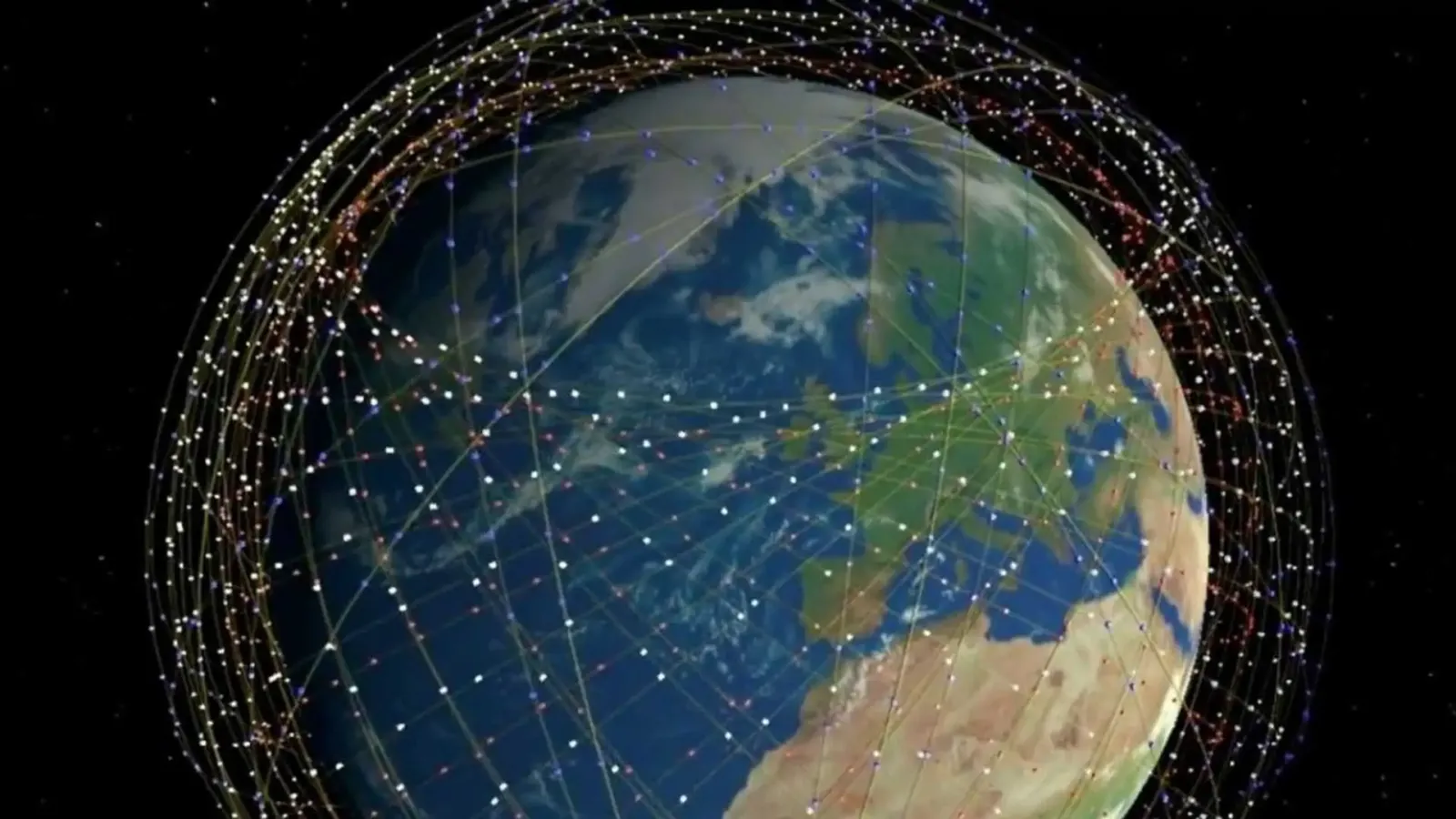
The project, described in SpaceX’s documentation as an Orbital Data Center system, involves satellites designed to take advantage of two advantages not available on Earth: nearly constant sunlight to power the chips and the vacuum of space to cool them. This allows for reduced reliance on ground-based cooling systems. SpaceX aims to split the computing capacity in half, allocating some for internal use and some for external clients. The strategy is that demand will make it possible to rent out this capacity multiple times.
The timelines discussed so far remain only indicative targets. The team indicates that the first satellites could be launched by the end of 2027, with significant scaling expected only in 2028. Further expansion depends on testing and approvals. Between now and those timelines, the plan hinges entirely on SpaceX’s ability to increase launches and satellite production. This is the same bottleneck that has already affected the $56 billion deal between SpaceX and Cursor in the AI market.
The cost issue affecting Grok Bot today, with monthly subscriptions of $30, $100, and $200 that don’t cover computing expenses, is the same one Musk hopes to address by moving inference operations to orbit. But as long as space-based data center systems remain just a concept, the financial pressure falls on terrestrial data centers. This is also evident in the deal between Tesla and Sunrun to power them with 16.8 GW of capacity. The same challenge exists in the chip sector, where Intel, Tesla, and SpaceX are working together.
Read more