
Munich will become part of the German Center for Future Mobility
The Federal Ministry of Transport is designating Munich as the fifth location for the German Center for Future Mobility. At its core is the RISE project — an acronym for Regular Operation, Integration, Scaling, and Development of Automated Mobility Systems in public transportation.
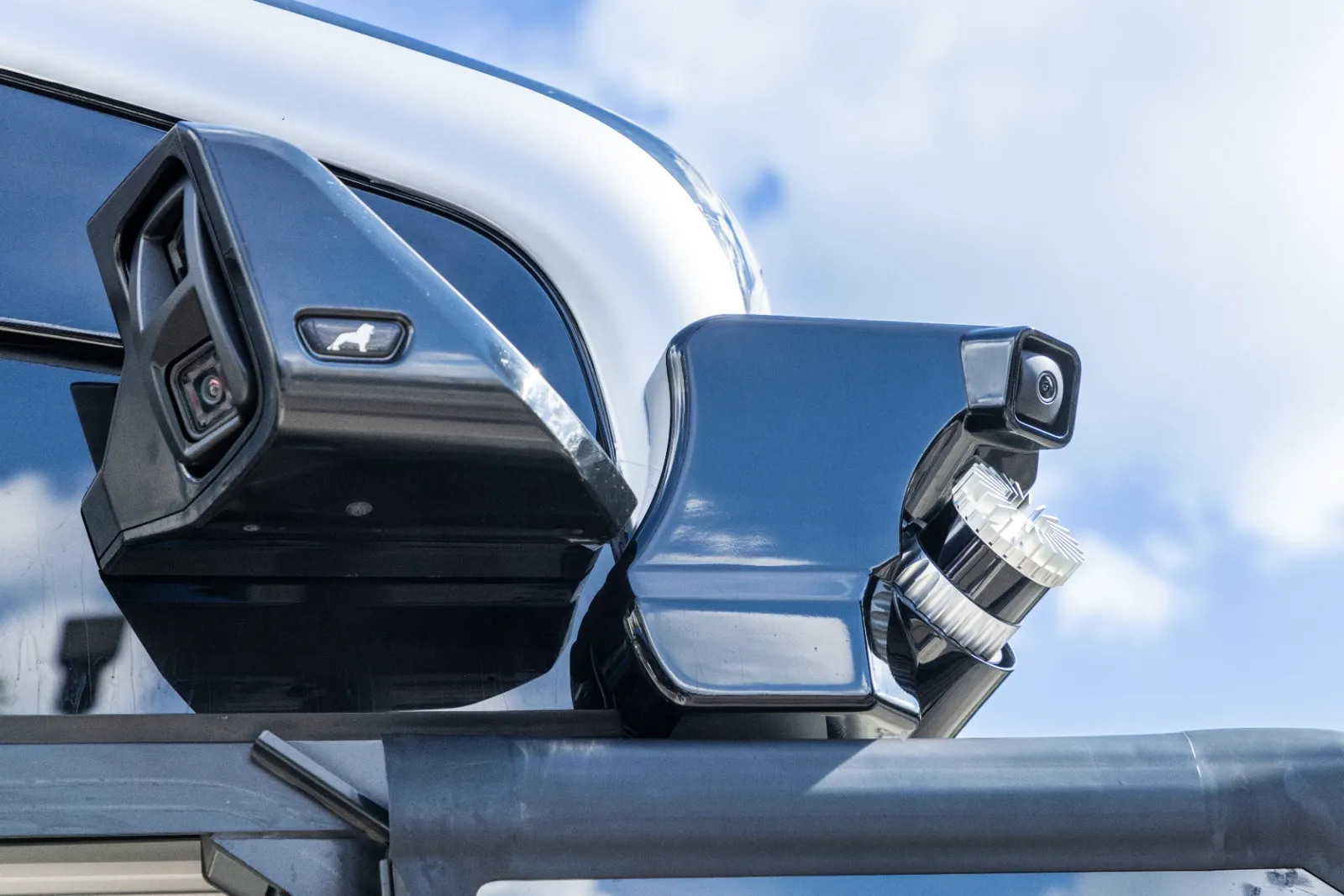
Cameras and sensors on an autonomous MAN bus (illustrative image)
Image: MAN
With the new RISE project under the DZM, Munich will become an even stronger hub for research on autonomous driving in public transportation. The MINGA project in Munich is already preparing for the public testing of self-driving electric shuttles and an autonomous electric line bus.
At the same time, there are greater overlaps between the MINGA and RISE projects: MINGA involves entities such as SWM/MVG, MAN, MVV, and TU Munich; the Ministry of Transport also lists MAN, MVV, SWM/MVG, and TU Munich as partners for RISE, in addition to LMU, UnternehmerTUM, and the University of the Bundeswehr Munich.
RISE can be seen as a logical next step after MINGA: while MINGA focuses primarily on testing autonomous driving technologies in practice, RISE addresses how such technologies can be transitioned from individual research and testing projects to permanent operational use. The Ministry of Transport explicitly identifies approval processes, integration into existing transportation services, scaling up, and further development as key topics for RISE.
Ulrich Lange, Parliamentary State Secretary at the Federal Minister for Transport, says: “Innovative mobility emerges where research and application meet. That is precisely the purpose of DZM. With Munich, a strong fifth location is now added. The RISE project brings together scientists, companies, and transportation practitioners to advance automated mobility from the research stage to practical use. Munich is an excellent location for this goal. This is also reflected in the EU Commission’s decision to bring the Transport Research Arena 2030 to Munich. We want to leverage these opportunities and further develop DZM as a nationwide network for application-oriented mobility research.”
The DZM was announced in 2020 under then-Transport Minister Andreas Scheuer (CSU) and opened in 2021. However, under the coalition government led by Olaf Scholz (SPD), a new direction was adopted, resulting in a nationwide, project-based network and funding structure by the Federal Transport Ministry. To date, there are four locations with different focuses:
- In Hamburg, smart solutions for sensor technologies combined with artificial intelligence are being developed and tested for use in road and bridge transportation. These projects are carried out under the leadership of the Hamburg Wireless Innovation Competence Center (HAWICC).
The new location in Munich can now be seen as an affirmation by the Federal Ministry of Transport toward the network and support structure.
