
M&S expands electric truck fleet with DAF XD models
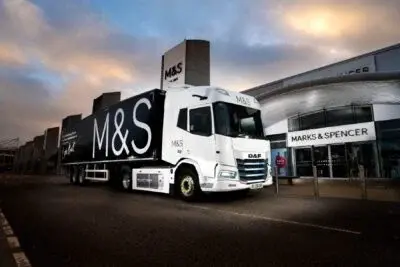
Marks & Spencer is rolling out ten battery-electric DAF XD trucks across its UK logistics network. One vehicle is equipped with a new inverter system that powers a refrigerated trailer directly from the truck battery, eliminating the need for a diesel-powered refrigeration unit.
Five of the new trucks are already in service, while the remaining five are scheduled to enter operation later this year. They join Marks & Spencer’s (M&S) existing fleet of eight battery-electric articulated trucks and five battery-electric rigid trucks.
The DAF XD Electric tractor units, which went into series production in September of last year, are equipped with a 525 kWh (462 kWh usable) battery pack. The retailer expects the vehicles to operate at gross vehicle weights between 32 and 42 tonnes and achieve daily ranges of 250 to 300 miles (402 to 483 kilometres), depending on route profile, payload and operating conditions. According to the company, the truck currently in service has consistently achieved up to 300 miles on a single charge under real-world conditions.
M&S emphasises that one of the new DAF XD Electric vehicles features an integrated inverter that enables a refrigerated trailer to be powered directly from the truck’s high-voltage battery. The system converts the vehicle’s DC battery power into AC electricity for the trailer’s refrigeration unit, eliminating the need for a separate diesel-powered refrigeration engine. According to the retailer, this is the first deployment of the technology on a DAF truck in the UK.
The inverter technology was developed through the eFREIGHT 2030 project, part of the UK government’s Zero Emission HGV and Infrastructure Demonstrator (ZEHID) programme. M&S says powering refrigerated trailers electrically represents “a significant step forward in the transition towards fully electrified transport operations.”
The electric trucks will be used for both regional distribution and retail food logistics on short- and medium-distance routes. Depending on operational requirements, the vehicles will operate on single- and double-shift patterns and are expected to cover around 100,000 kilometres annually per vehicle.
“Adapting our logistics network is vital in achieving our Plan A Net Zero ambitions,” said Mick Pethard, Group Fleet Manager at M&S. “We’re committed to reducing carbon emissions from our transport and, through collaboration with Gist and DAF, we are able to trial new technologies, reduce carbon, save energy and drive operational efficiencies across the business.”
marksandspencer.com