
MPK Świdnica has operationalized a 1.63 MW power plant with a 6 MWh energy storage system.
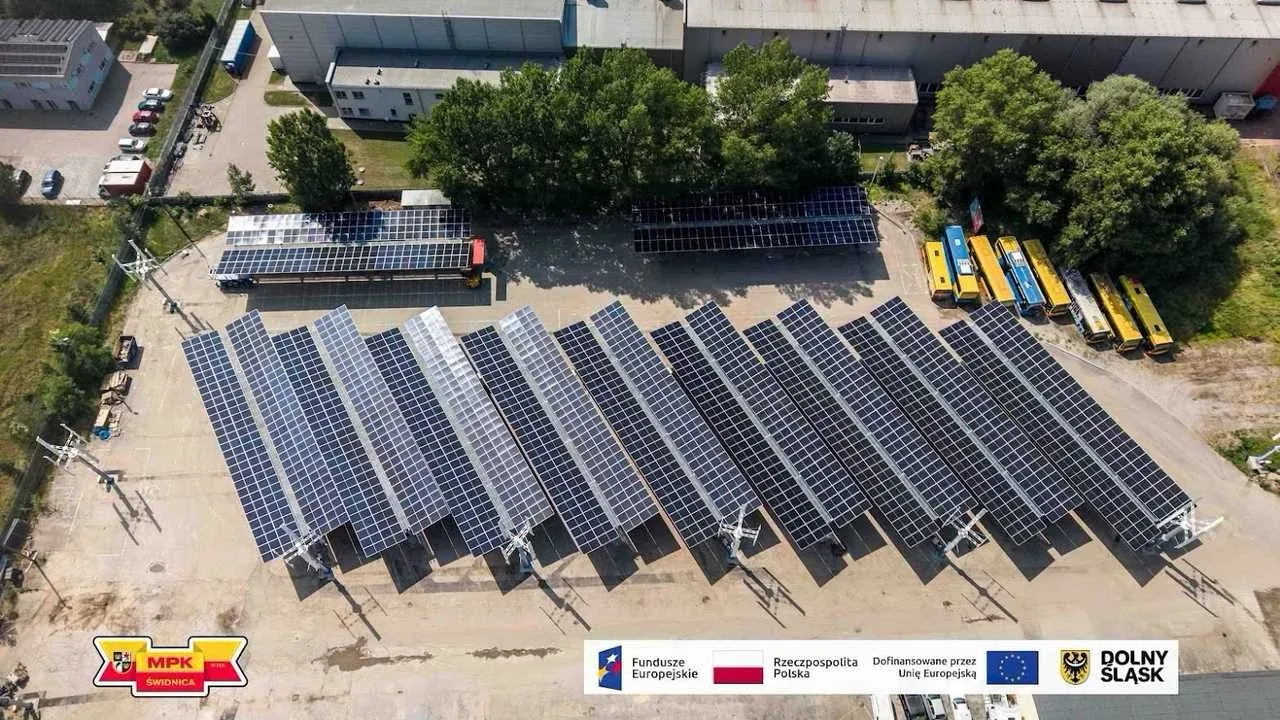
MPK in Świdnica officially commissioned its own renewable energy power plant on October 26, 2026, at the depot located on Inżynierska Street. Photovoltaic panels, wind turbines, and an energy storage system are designed to meet about 80% of the electricity needs of electric buses. The construction costed 45.19 million zł gross.
Panels, turbines, and off-grid storage
There are 19 tall wind turbines at the parking areas, equipped with 2,280 panels totaling a peak capacity of around 1.39 MW. In addition, there are 30 vertical wind turbines, each with 10 kW of capacity, resulting in a total of 300 kW (although the effectiveness of this type of turbine has been highly questionable for me for several years – it’s somewhat like a SCAM). The nominal output capacity of the entire system is 1.63 MW, not the combined total of 1.69 MW. MPK explains the difference, among other things, by the way in which parameters of the AC-based photovoltaic component are calculated.
The core is a storage facility with a capacity of 6 MWh. Electricity generated during peak sunlight hours is reserved for nighttime charging, while the energy management system adjusts production, storage, and consumption accordingly.
The entire system operates as an island network, independent of the public grid. Since energy is not sold to or bought back from the grid, MPK saves on electricity costs and can avoid some distribution fees.
MPK currently has 22 electric buses, and the installation is designed to charge 30 buses daily. The company plans to purchase six more, bringing the total to 28 vehicles. President Tomasz Kurzawa says the company aims to operate mainly on its own energy for about 10–10.5 months per year. In winter, electricity from the grid is used again, thanks to two urban pantograph charging stations. Thus, “own power plant” does not mean independence 365 days a year.
1.9 million zł in annual savings and a five-year payback period
According to MPK, the difference between using purchased electricity and own electricity is on average at least 1.5 zł per vehicle-kilometer. Theoretically, this amounts to around 2.4 million zł per year. After accounting for winter electricity purchases, the transport operator adopts a more cautious estimate of 1.9 million zł.
The recovery of costs funded by commercial loans and own funds is expected to take slightly over five years. Including the repayment of the loan from KPO, it takes about seven years. Everything depends on future energy prices. A simple division of 45.19 million zł by 1.9 million zł results in just over 23 years, so the five-year period refers only to the portion of costs covered by MPK’s own funds and loans.
The renewable energy installation is expected to reduce CO2 emissions by about 1600 tons per year. Together with replacing diesel vehicles with electric ones, the total reduction is expected to reach nearly 3000 tons.
The financing is as follows:
14.35 million zł from the Fund for Just Transition,
A preferential loan of 5 million zł from KPO, at 1% interest for 20 years,
around 4.1 million zł in FEnIKS grants for the energy component, as part of a larger project involving six buses (the total grant amount is over 19.5 million zł),
the rest: own funds and commercial loans.
Other cities are following the same path
The MPK president calls this project the first of its kind in Poland and says he has not found a functioning equivalent in Europe. That is his assessment, but the combination of PV, wind power, a large battery storage system, and island operation truly sets Świdnica apart.
Others also have similar ideas for powering buses. In August 2026, Zielona Góra had 72 electric buses out of 92 MZK buses and plans to install 12 PV systems with storage by the end of 2028. Jaworzno is preparing a storage facility with 8 MW capacity and 14.88 MWh storage, as well as renewable energy sources at depots and routes. Warsaw’s MZA conducted a tender in 2026 for the Ostrobramska depot featuring wind turbines with photovoltaic panels and storage.
The real test for Świdnica will come in December, when there is little sunlight, and seeing if 10–10.5 months of self-generated power can work in practice.
LovEV Newsletter
Want more content like this?
Sign up — we’ll send you a weekly summary once the newsletter starts.