
Monta’s CEO on the industrialization of electric vehicle charging infrastructure: “The simple phase is over”
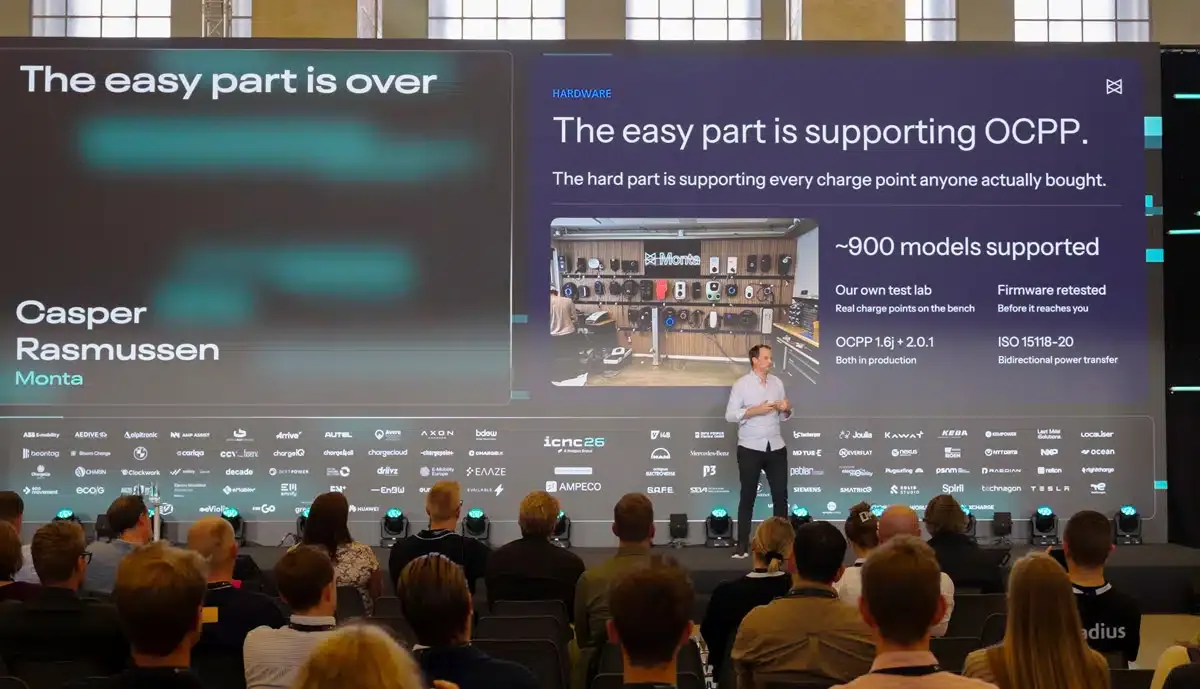
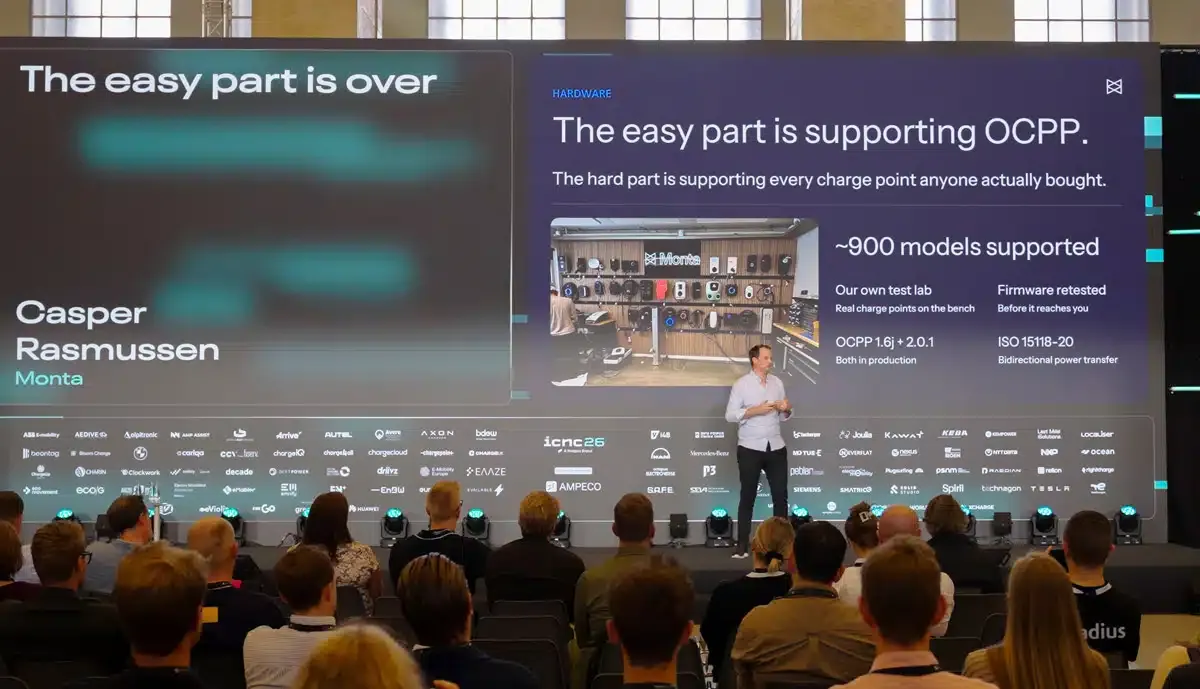
Image: Monta
Casper Rasmussen, CEO of the charging infrastructure platform Monta, focuses on the industrialization of electric vehicle charging. While the initial phase was primarily about installing charging stations, connecting them, and initiating serta billing charging sessions, charging networks are now meant to operate reliably, securely, and cost-effectively on an industrial scale.
"The simple phase is over. And that's good — because we're moving straight into the difficult part," said Rasmussen. Industrialization means addressing three challenges simultaneously: control, scaling, and trust. Each of these goals can be achieved well on its own. Bringing all three together continuously and at an industrial scale — "that's what turns a network of chargers into a real infrastructure rather than just a collection of functions."
"This is the point where charging works less like an app and more like infrastructure," said Rasmussen. "The question is no longer whether we can connect a charging station. The question is whether we can reliably handle millions of charging sessions, devices, and customers every day."
The current charging ecosystem includes numerous hardware models, firmware versions, connectivity environments, and location configurations. According to Monta, it processes four million charging transactions per month at around 330,000 charging stations worldwide and continuously tests more than 900 hardware models in its own laboratory. While about one in 13 charging attempts fails across the industry, the failure rate for hardware managed by Monta’s operating system is around one in 21. Two-thirds of these failures are caused by the hardware itself, according to Rasmussen.
Safety becomes a key factor
Apart from reliability, the security of charging infrastructure also plays a crucial role for Monta. The company relies on recognized security standards, regular security testing, and multiple layers of protection for the data of its users. Meanwhile, EU regulations are raising the requirements for cybersecurity in parts of the charging ecosystem. Monta states on this matter: “Regulation is now the minimum requirement, not just a differentiating factor.”
Payment processing also becomes more complex as transaction volumes increase. Various tariffs and currencies, VAT settlement under ViDA, refunds, reconciliations, and payment fraud pose operational and financial challenges for operators according to Monta. The company has obtained its own license as an e-money institution, set to take effect in April, which will enable measures such as safeguarding customer funds in trust accounts and automating key compliance processes.
Europe already has more than ten million connected charging stations, a number that Rasmussen believes could more than double in the coming years. As this sector grows, so too do the number of drivers and charging sessions, transaction volumes, as well as the demands posed by dynamic energy flows and complex grid integrations. As a result, operators must not only install charging points but also manage them as critical infrastructure, requiring technology at an industrial level, cybersecurity measures, financial controls, and operational resilience.
According to Rasmussen, industrialization simultaneously changes the competition among charging station operators. A reliable core infrastructure is a prerequisite but not a differentiating factor. Differentiation arises from user interfaces, APIs, subscription models, loyalty programs, and the customer journey. He identifies pricing, customer retention, discoverability, energy costs, as well as fleet and driver experience as commercial levers.
Also interesting
About the author
Thomas Langenbucher is an expert in electromobility with professional experience in the automotive and financial industries. Since 2011, he has been covering electric vehicles, sustainable technologies, and mobility solutions for ecomento.de. Learn more.
Reader interactions