
World Car Show: Chinese SUVs Affected by a Strange Syndrome
At the Auto Show, Chinese automakers put on a true display of craftsmanship and luxury competition by showcasing enormous SUVs equipped with cutting-edge technology at each booth, vehicles that will likely struggle to find a European customer base. Was it a misjudged strategy or a genuine approach?
The Paris Auto Show closed its doors two days ago, and the increase in attendance compared to the 2024 edition shows that French people still love cars, though it is far from the 2004 record of over 1.5 million visitors.
Walking through the aisles of the Porte de Versailles, especially on Monday, the day reserved for the media which allowed more time and fewer crowds at the booths, I was struck by two phenomena that were as contradictory as they were revealing of the gap between Europe and China in the automotive industry: while the French companies, led by Stellantis, presented no real new models but seemed to have agreed to keep the event lively with concept cars that would never go into production (while giving the impression otherwise), every Chinese manufacturer present—more than 20 brands in total—showcased its full range, with at least one or two genuine new models per booth. Most of these new models were immediately available or already on display at dealerships. And not a single show car...
Concept cars that look like car shows
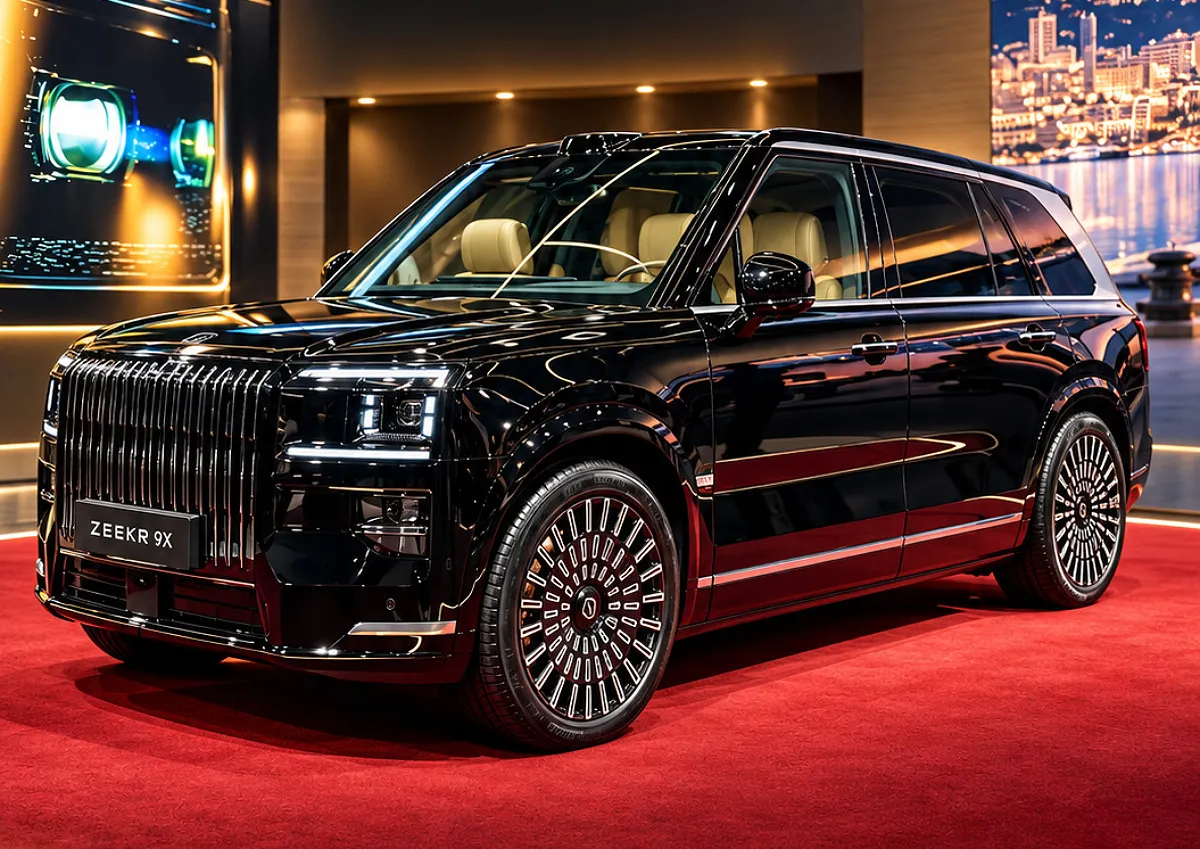
But another phenomenon, more subtle, caught my attention: on practically every booth of Chinese manufacturers, there was a somewhat unique model serving as the flagship. A plethora of luxury SUVs with oversized dimensions and extensive features, next to which even the most upscale Range Rover would almost resemble a Dacia Duster. By “subtle,” I mean it’s more about showing off and demonstrating power rather than a modest introduction of the latest model. These are vehicles that boast excessive luxury, power… and weight, often exceeding 2.5 tons. To move all of this around, they come equipped with engines that would make a sports car seem like a car without a license just a few years ago. The lineup includes electric versions as well as rechargeable hybrid models. For example, the Zeekr 9X belongs to this category.
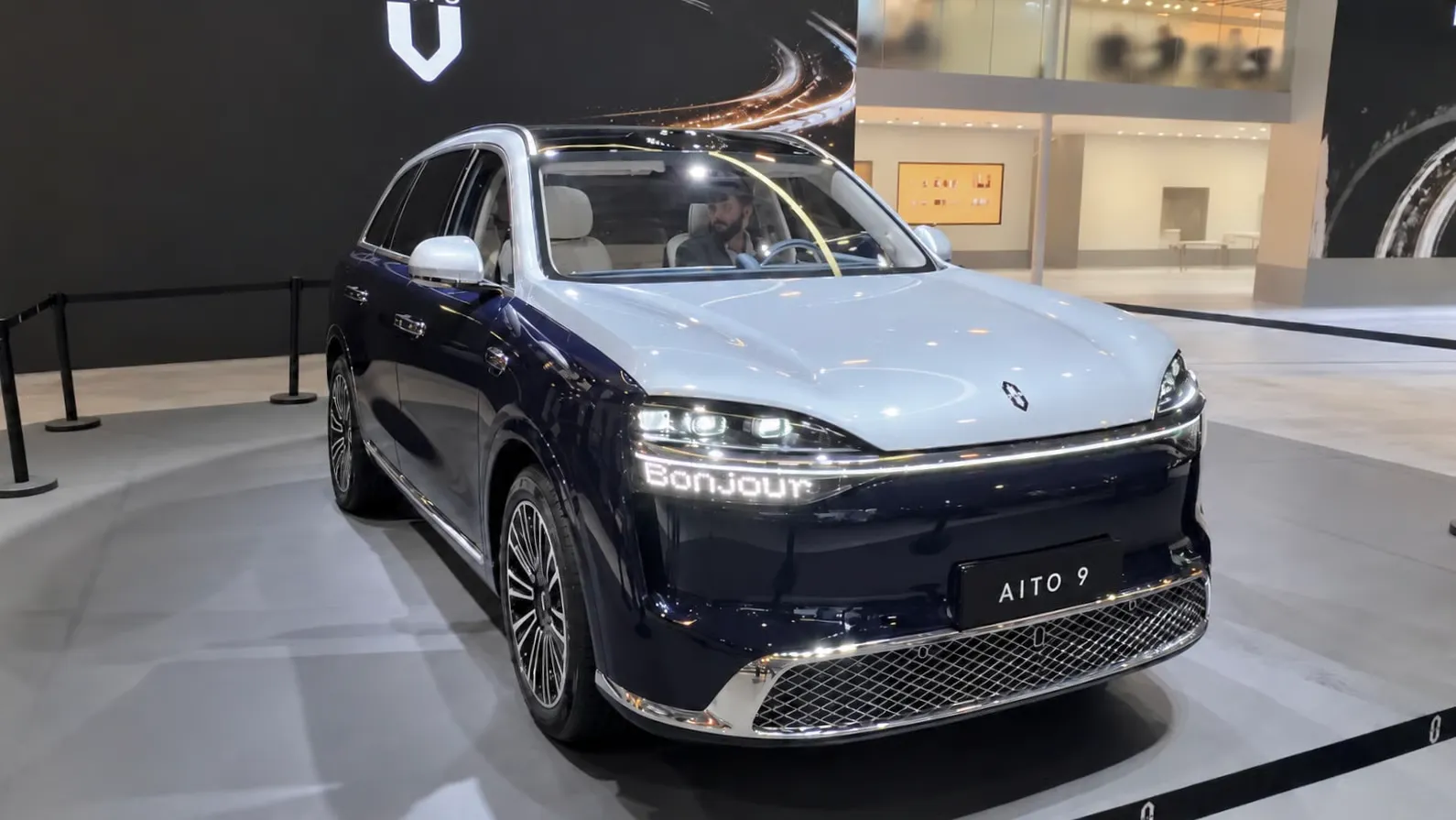
If it belongs to this second category. The common factor remains this clear intention to show that they know how to create vehicles that are large, powerful, comfortable, and highly equipped.We thus had the opportunity to discover and visit the AITO 9, which is surely one of the most imposing models at 5.29 meters in length and 2.56 tons empty weight, along with its smaller siblings the AITO 8 and 7, the Xpeng G9L designed for Europe, the Li Auto Li 8, and even the new BYD Atto 8.
Three even more impressive giants in size were on display, but they are not 100% electric SUVs: the Avatr Concept T09 (5.29 meters, rechargeable hybrid with over 1,000 horsepower, making its world debut), the Leapmotor D19 (5.25 meters, EREV with an 80.3 kWh battery), and the Zeekr 9X (5.24 meters, rechargeable “Super Hybrid” hybrid with 897 horsepower), as well as the GAC GS7.
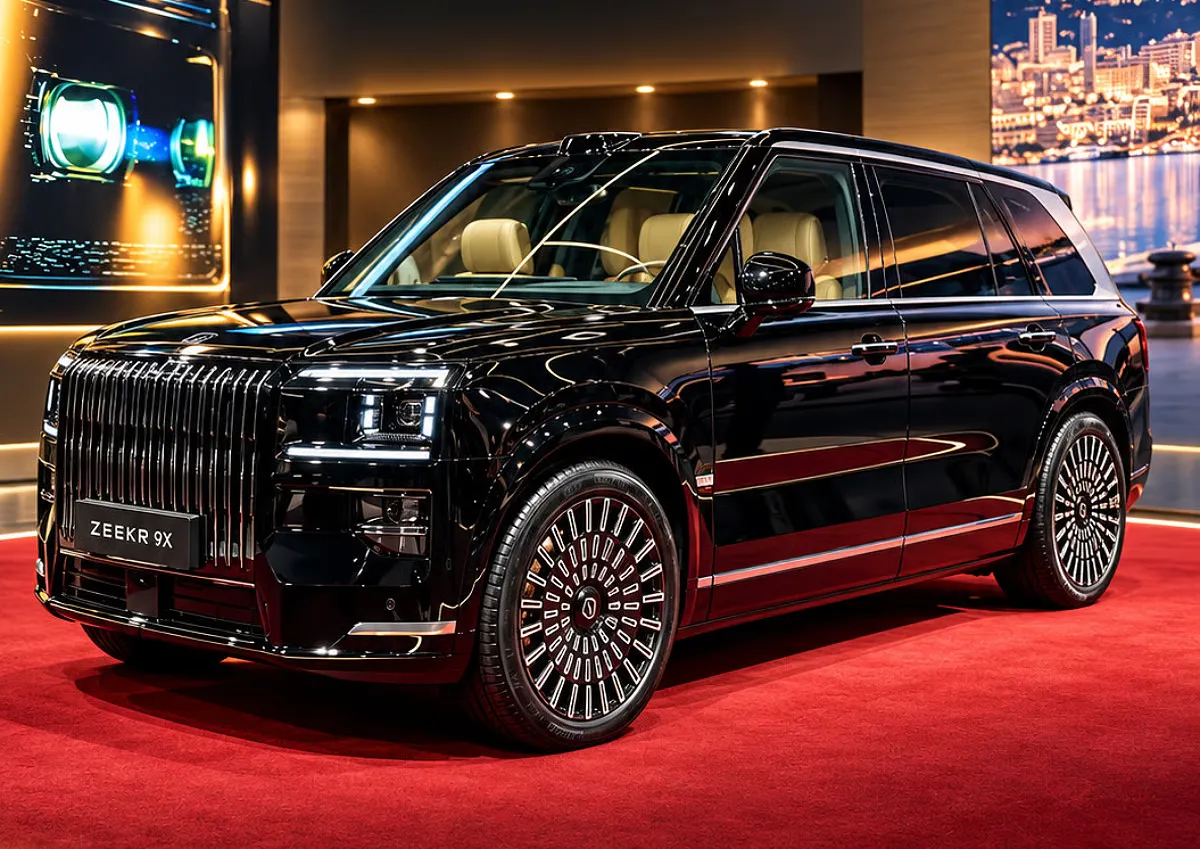
The vehicles were often displayed in a separate enclosed area away from the main booth to emphasize their exclusive and high-end nature.
Admittedly, we’re at one of the most important — if not the most important — auto shows in Europe, and since we’re spending a lot on renting a booth, it makes sense to showcase all our best models to show locals who’s the strongest player. However, when targeting potential European customers (rather than those from Dubai or the U.S.), this approach raises questions, especially since SUVs are no longer the star of the show.
The Rolls-Royce Syndrome
This is what I would call the Rolls-Royce syndrome: as if every brand now has to present its own interpretation of luxury automotive to earn the right to be taken seriously. It’s as though Chinese automakers absolutely want to prove they can touch Europe’s sensitive spot with ultra-luxury products. Or rather, what they imagine to be Europe’s sensitive spot, because our poor old continent has long since stopped being the true birthplace of luxury, with its citizens growing poorer due to a dramatic decline over the past decade. Strategically speaking, we must also not overlook the fact that these cars are first and foremost a result of competition among Chinese brands, each trying to offer at least as much as its competitors.
This might be a strategic mistake by the Chinese, who produce certain models based on the fantasy of an imaginary Europe that no longer truly exists. And since they’re barred from entering the US market, it’s unclear to whom they can sell these SUVs that don’t even fit on our streets or parking lots...
So they’re far from idiots, and I imagine they conduct market research as well. But I’m not entirely sure. It’s often said that China is the world’s factory, and indeed they may still lack that marketing culture—literally: the art of bringing products to market—that Europeans and Americans seem to master better. Hence these absurd vehicles that certainly won’t find many buyers.
That said, it would be a bit easy to conclude that these manufacturers know nothing about our market. An flagship model can serve a purpose other than just filling order books. Its role is rather to attract attention, demonstrate expertise, and inspire interest in exploring the rest of the lineup—even if you end up buying a car that’s half as expensive. Let’s not lie; we’re quite familiar with this approach in Europe, where manufacturers didn’t wait for their Chinese competitors to place an unaffordable model at the top of their catalogs. In fact, returning to the Stellantis and Renault/Alpine show cars event, it’s somewhat a Chinese interpretation of auto show concept cars: showing off technical skill. The only difference, and it’s significant, is that these Chinese “show cars” actually exist in reality and are already in production.
And you can place an order.In essence, this strategy shows one thing: the gap between Europe and China is not only industrial but also cultural, with a Chinese approach to luxury centered on technology, as opposed to European brands whose history and heritage continue to influence purchasing decisions. The Chinese have the technology and are moving toward luxury, while Europeans master luxury and try — more or less successfully — to add a touch of technology to it.
Each has its successes... and its mistakes.