
Model 3 RWD for 174,990 thousand zł. Is the cheapest Tesla the best electric car available for this price today?
Key facts
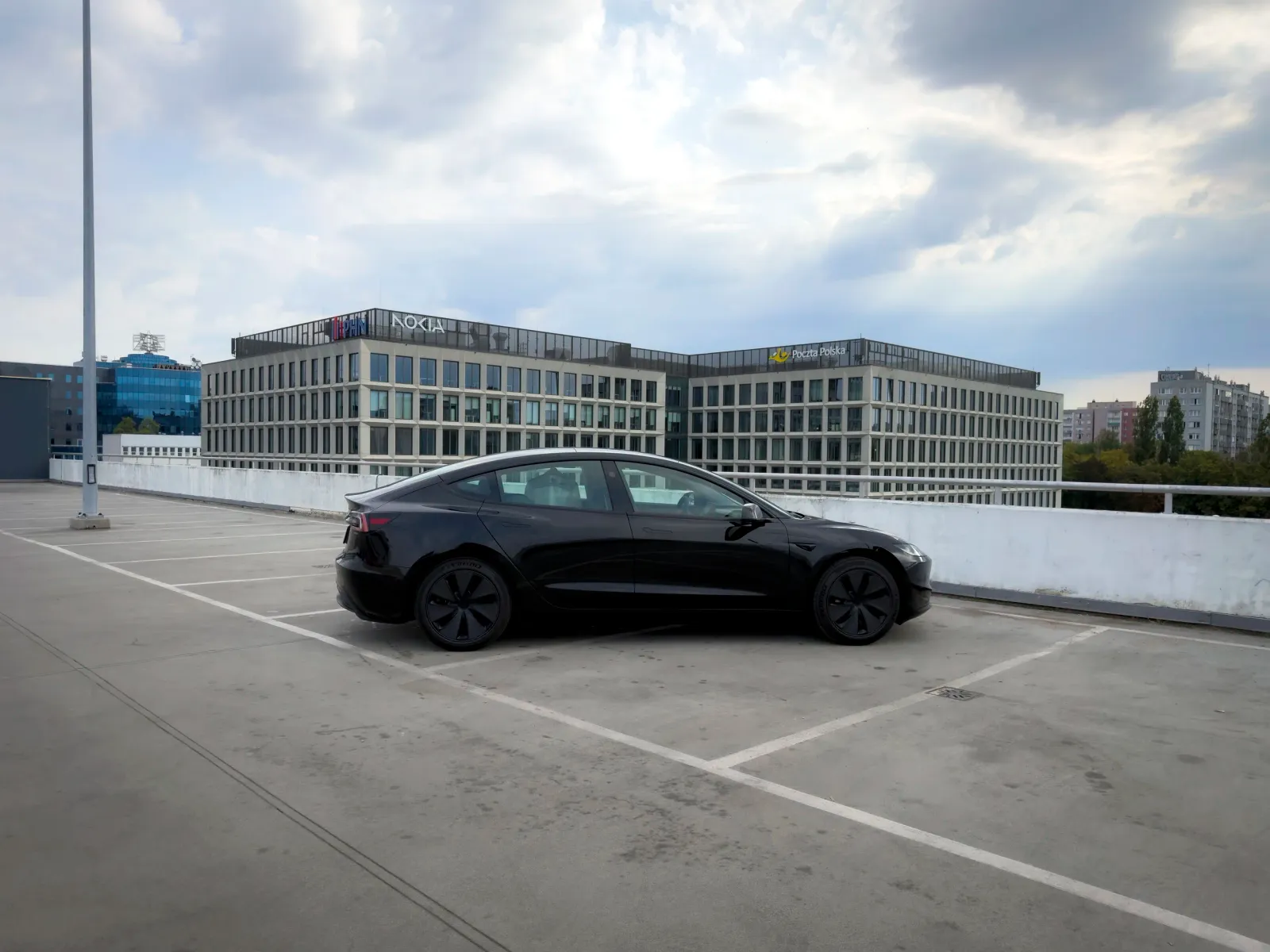
The cheapest Tesla Model 3 costs around 175,000 PLN, and it’s difficult to find a competitor in this price range.
It is 30,000 PLN cheaper than the Premium version, and the differences compared to the higher-end model aren’t as significant as those in the Model Y.
The actual energy consumption ranges up to 10 kWh/100 km. Only the charging time needs improvement.
https://www.tiktok.com/@maciek_gis/video/7671930404152085782
The Tesla Model 3 is a model that’s been around for several years – a decade has passed since its launch, with a facelift introduced at the end of 2020. Yet even the Model 3, being the cheapest variant in the lineup, still manages to surprise. Especially when it comes to price-to-performance ratio, the Model 3 remains a benchmark for the entire segment.
It’s worth noting right away that although it may seem perfect, there are unfortunately also dark sides. The pricing policy affects the residual value, which is already lower for electric vehicles compared to gasoline cars. A new model purchased today could weigh down the used Tesla’s value over the years.
Tesla Model 3: A Price That Changes the Benchmark
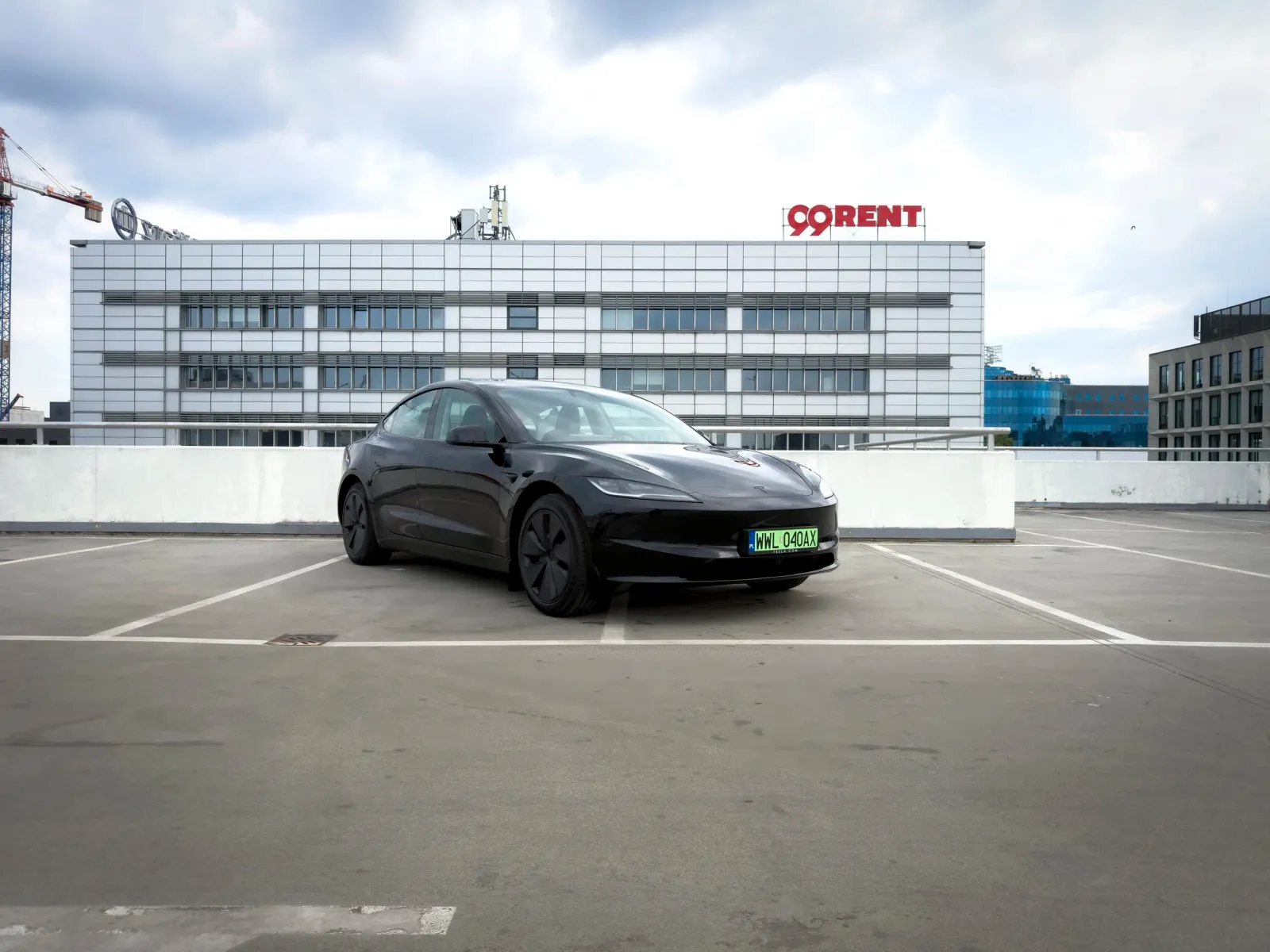
The listed price for the Model 3 RWD is 174,990 PLN, meaning it has no real competition in the D segment as of now. Its direct rivals are starting to significantly lower the prices of their vehicles. For example, the BYD Seal in Design version (313 HP, 570 km range, and 0–100 km/h acceleration in 5.9 seconds) costs around 177,100 PLN (a 2025 model on sale at 215,900 PLN after a discount). The Hyundai Ioniq 6 is more expensive and slower (0–100 km/h in 7.4 seconds), with prices starting at 199,800 PLN in the configurator. As a result, Tesla still holds the advantage in terms of price. But is it better in other aspects?
Tesla Model 3: Performance and Handling
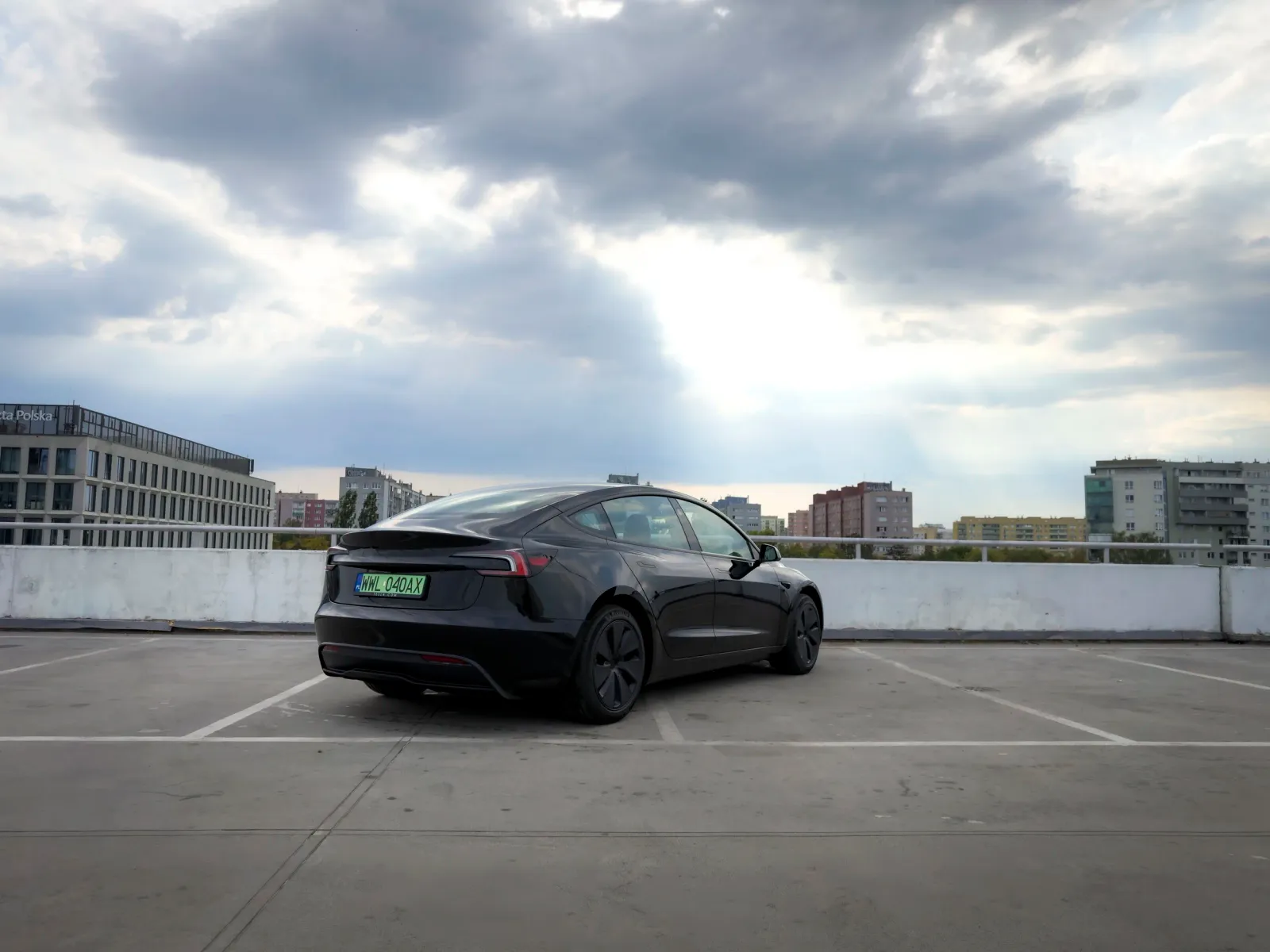
The Model 3 RWD is powered by an engine producing around 280 HP (206 kW) and 420 Nm of torque, located on the rear axle. It accelerates from 0–100 km/h in 6.2 seconds, with a top speed of 201 km/h — a rare figure in this price range, as many electric and hybrid vehicles reach their speed limit earlier. Its weight is 1772 kg, which is a reasonable figure for an electric car with such a range.
In terms of driving, the rear-wheel-drive Tesla can be nervous on sharp curves, and its steering system may not suit everyone’s taste. Importantly, the Model 3 drives better and more steadily than the base Model Y. Therefore, for those who don’t need as much space and prefer to sit lower to the ground, an electric sedan would be a far more suitable choice.
The passive multi-link suspension handles imperfections well, and it’s not noticeable that we’re driving a base model car. The same goes for noise suppression. The Model Y is less quiet in its base version compared to the Model 3. This is another key point in comparing these two vehicles. As for competitors, here the statement “it’s not bad, but it could be better” definitely applies.
Tesla Model 3: Range, Consumption, and Charging
The area where the Model 3 excels the most is economy. Its claimed range is 572 km WLTP with an official fuel consumption of 13.0 kWh/100 km. While Tesla does not disclose the battery capacity, estimates range around 60 kWh net.
The actual measurements are impressive. During urban driving, the car consumed about 12 kWh/100 km; on suburban and city roads, it used around 15-16 kWh/100 km, and on the highway it remained below 20 kWh/100 km. These results still embarrass competitors.
Another advantage is the charging ecosystem. The maximum power output on fast chargers is 175 kW. As a result, plugging the car into a Supercharger allows it to go from 25% to 80% charged in 20 minutes. Using only Tesla’s network, it must be said that the navigation works flawlessly. After entering a destination, the system prepares the battery for fast charging and predicts the charge level upon arrival. Additionally, it tracks charger availability in real time, so we don’t drive to an intermediate stop in the dark—well, almost never, as someone might always be ahead of us. Still, no other manufacturer can boast such advantages. However, when it comes to navigation, things get complicated if we want to use chargers that aren’t Tesla’s. In this regard, the system isn’t as integrated, falling far short of what brands like BMW or Mercedes offer.
Tesla Model 3: Interior and Technology
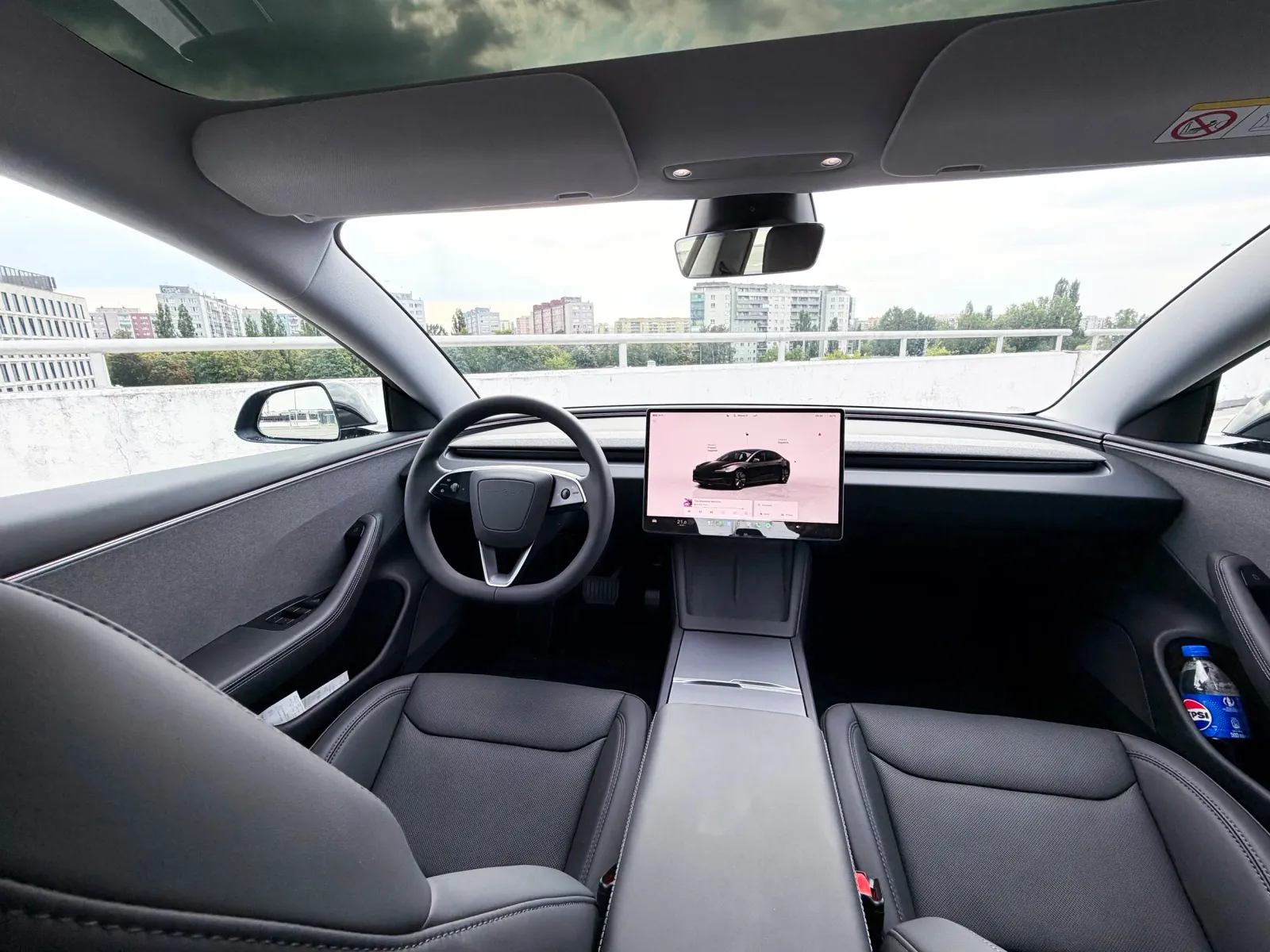
The Model 3’s cabin features a minimalist design. There are no traditional clocks, with almost all functions controlled by the central screen (about 15 inches). For some, this brings clarity and simplicity, while for others it requires adjustment. The multimedia system operates smoothly and remains more readable than that of many competitors, including Chinese brands. However, it lacks Apple CarPlay and Android Auto, although the built-in navigation system and native apps (Spotify, Apple Music) partially compensate for this.
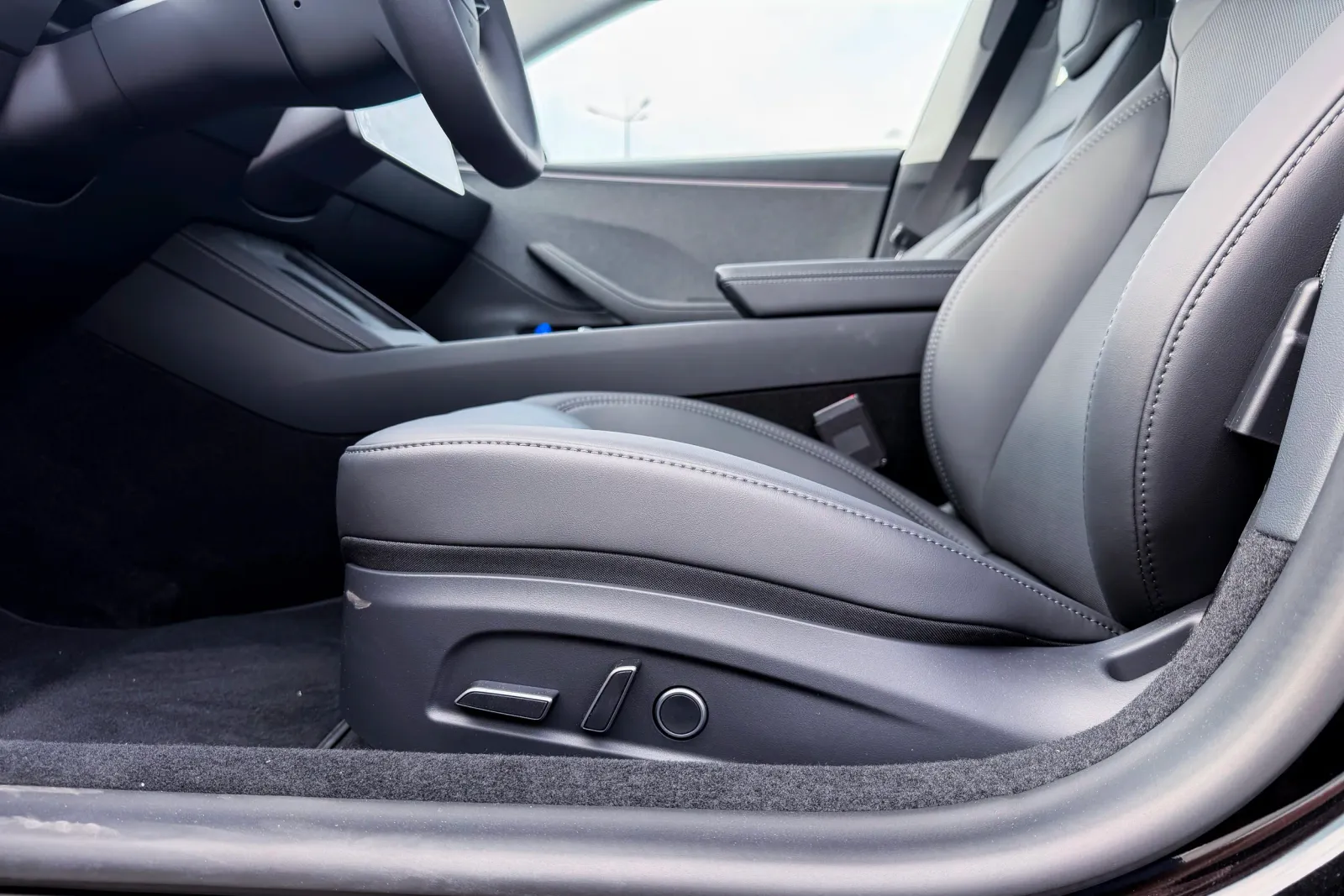
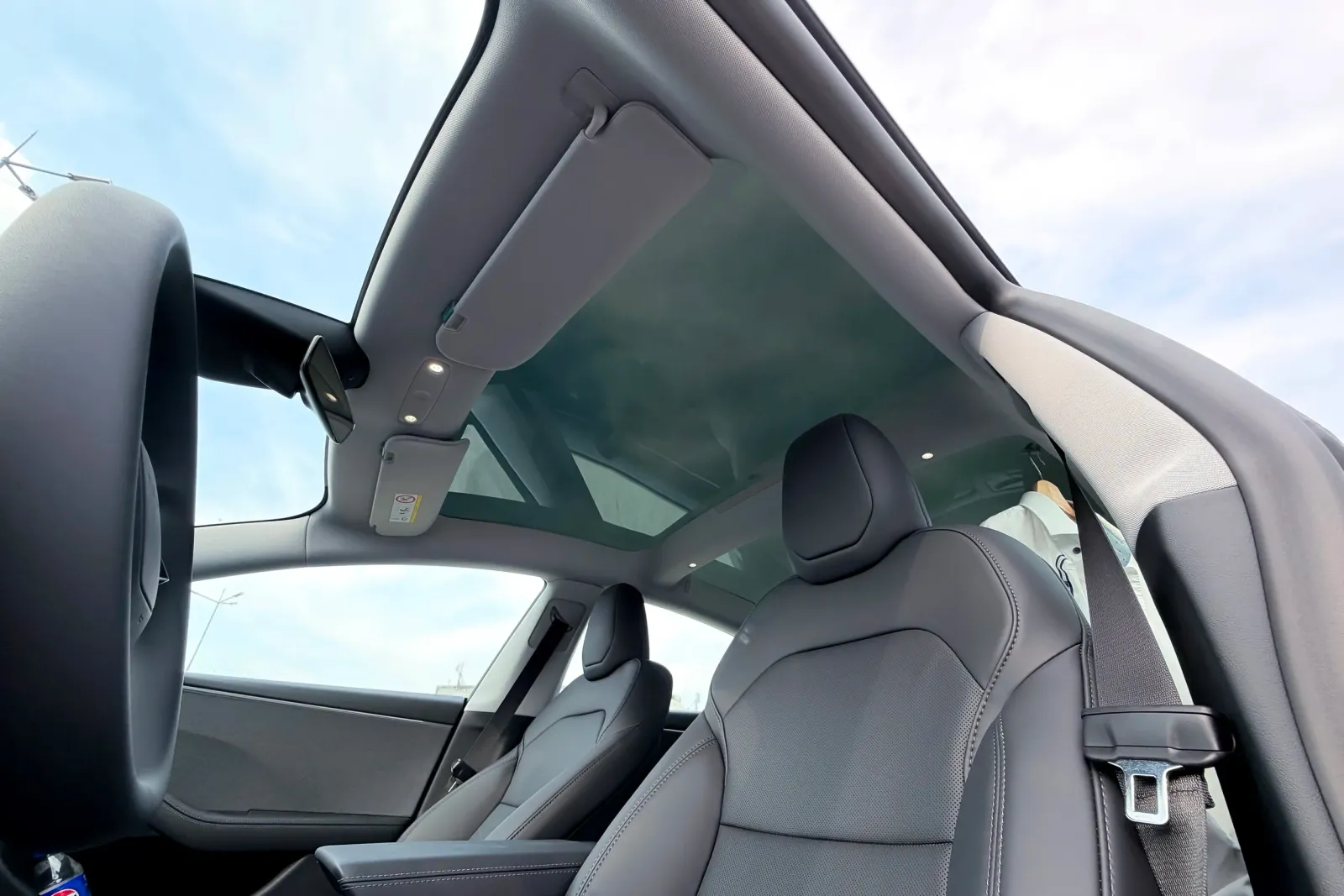
Tesla also abandoned the controversial idea of controlling turn signals with buttons — the classic knob was reinstated. Standard features include a panoramic glass roof, heated seats and steering wheel, matrix LED headlights, eight cameras, and basic Autopilot. The base version also lacks seat ventilation, a rear passenger screen, and some audio equipment (7 speakers instead of 9 or 15). There is no ambient lighting either. But is this a bad thing?
Tesla Model 3: Practicality and Space
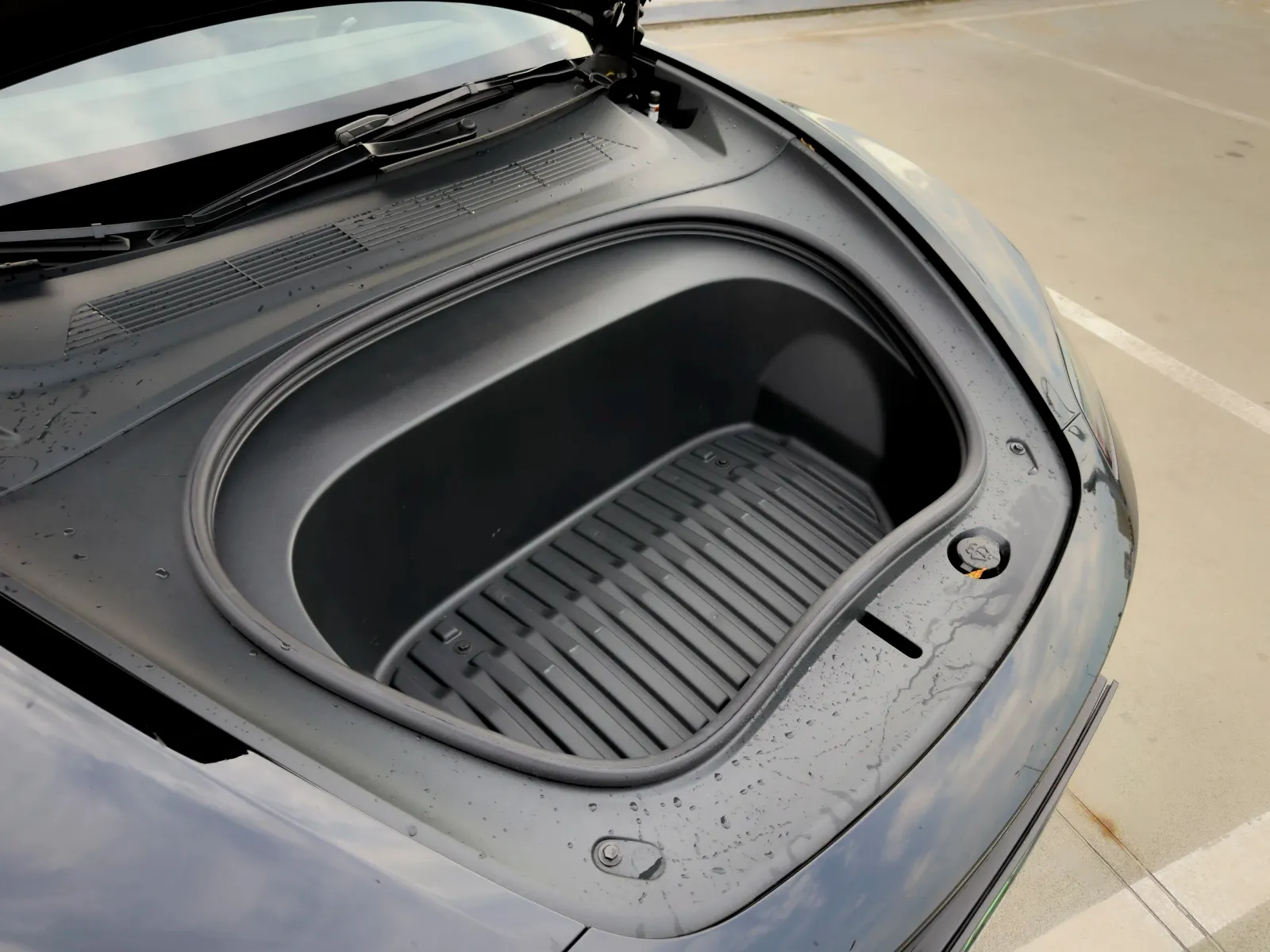
The Tesla Model 3 looks sleek but isn’t a small car – it has a length of 4720 mm and a long wheelbase of 2875 mm, resulting in a spacious interior and a flat floor at the back. The total cargo space is over 680 liters: 594 liters in the main trunk (up to 1659 liters when the seats are folded down) plus 88 liters in the front trunk. It’s worth noting that despite its sizable trunk lid, it’s a sedan rather than a hatchback. With the tow hook installed, the Tesla can also pull a light trailer, or it works well for carrying a bike rack.
Tesla Model 3: What’s Not Included in the Price List
To fully understand the situation with this car, it’s necessary to consider the aging model lineup and increasing competitive pressure. This is a clear signal that Tesla needs to make changes in order to maintain its significant advantage over competitors. Nevertheless, there are currently no signs that anything will change regarding aspects such as charging. Additionally, more and more independent tests confirm that battery degradation in this American manufacturer’s vehicles is greater—though not significantly—than in many of its competitors.
Tesla Model 3: Math Trumps Emotions
The cheapest and smallest Tesla isn’t without flaws — the lack of CarPlay, compromises in basic equipment, and residual value concerns are real factors to consider. But in terms of pure price-to-range ratio, performance, space, charging infrastructure, and features, the cheapest Tesla remains today a proposition that its traditional competitors — both gasoline and electric — have little to match. For a pragmatist seeking the maximum value within a budget of around 175,000 zł, it’s still one of the strongest offerings on the market.
Tesla Model 3: gallery
Maciej Gis
Photo by Author