
The Mitsubishi ASX VR-e will arrive in Australia in 2026. It is the Foxtron Bria, similar to the E-Zee 2.
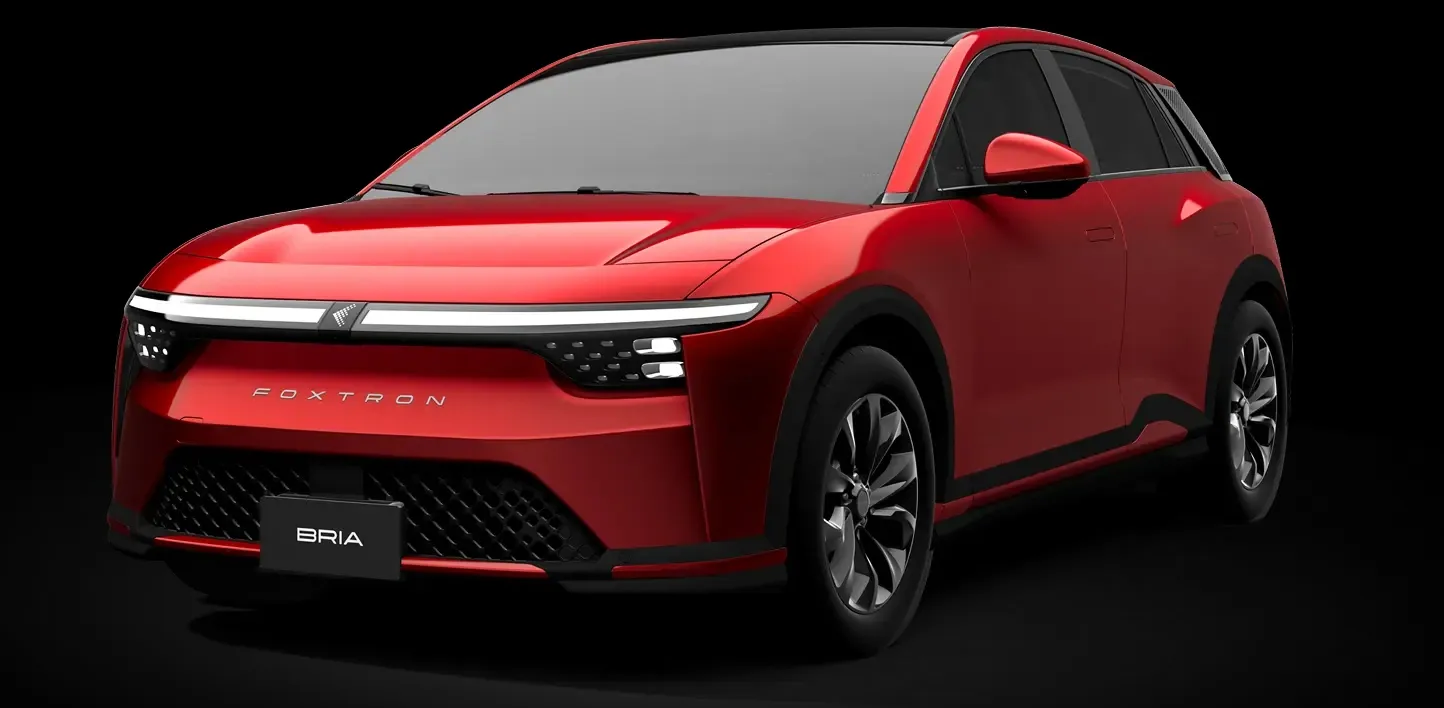
Mitsubishi has unveiled the ASX VR-e, an electric crossover sized similar to the Mazda CX-30, which is set to arrive in Australia and New Zealand by the end of 2026. The vehicle isn’t an original Mitsubishi design; it’s essentially the Foxtron Bria with different branding and minor changes to its exterior style. Another interesting point for us is that this could represent the path future “Izera 2” models might take, meaning fully assembled vehicles from Asia with a local makeover.
Mitsubishi obtains the vehicle from Foxtron, which is a partnership between Yulon and Foxconn
The ASX VR-e has no connection to Nissan, although Mitsubishi has relied on such partnerships for years. This time, the partner is Foxtron, a brand created by Taiwanese automakers Yulon and Foxconn—the same company that assembles iPhones.
The partnership didn’t fall from the sky. As early as 2025, a memorandum was signed between Mitsubishi and Foxtron, with the goal of launching the car in Australia and New Zealand in the second half of 2026. It now seems to have simply ended up as a Mitsubishi disguise for the Bria.
There aren’t many changes. The exterior features Mitsubishi badges, front and rear markings, as well as its own wheel designs. Inside, it’s even simpler: the cabin looks just like that of the Bria, with one major exception—the Mitsubishi logo on the steering wheel. That’s it. This isn’t a deep rebadge, just a very straightforward one.
The specifications on paper are good, but the range is given in NEDC terms
Mitsubishi has not yet announced the official power output of the ASX VR-e, but its Taiwanese counterpart provides a good indication. The base Foxtron Bria has 229 horsepower, rear-wheel drive, and an acceleration time of 0-100 km/h in 6.8 seconds. The AWD version with two engines boosts horsepower to 400 and reduces the 0-100 km/h sprint time to 3.9 seconds.
Both versions use the same 57.7 kWh battery. Foxtron claims a maximum of 320 miles NEDC for the RWD version and 290 miles NEDC for the AWD version, which translates to approximately 515 km and 467 km under the old, more optimistic standards. NEDC is not WLTP, and certainly not Polish winters, so on paper it looks better than in reality.
The VR-e name is meant to reference Mitsubishi’s older sports models, such as the Galant VR-4. With 400 horsepower, it’s at least defensible in marketing materials.
Foxtron wanted to enter the U.S. market but has backed off for now
The second important issue concerns Foxtron itself. The company has been announcing its entry into the U.S. for years, even purchasing an old GM factory in Lordstown, Ohio, but it failed to produce a single car there for almost three years. In June, it officially halted its American EV plans, citing tariffs as the reason.
This makes Australia Foxtron’s first major export test. Aside from Taiwan, the brand has not sold its electric vehicles on a larger scale before, and the ASX VR-e will be its most significant entry into foreign markets.
For Mitsubishi as well, this is no trivial matter. In Australia, it will be the brand’s first electric vehicle since the i-MiEV, which disappeared from there in 2016. The problem is that the market is much more competitive today, filled with well-known and proven Chinese models. Therefore, Foxtron and Mitsubishi are not entering an untapped market but rather competing directly with established players.
The most interesting aspect of this story isn’t Mitsubishi itself, but rather how much this project resembles the scenario of “taking a ready-made car from Asia and building a local brand around it.” What do you think: does such an honest rebadge still make sense these days, with well-developed cars from China already on the market?
LovEV Newsletter
Want more content like this?
Sign up — we’ll send you a weekly summary once the newsletter starts.