
MiSpeL draft: Industry fears overly high barriers to loading Bidi
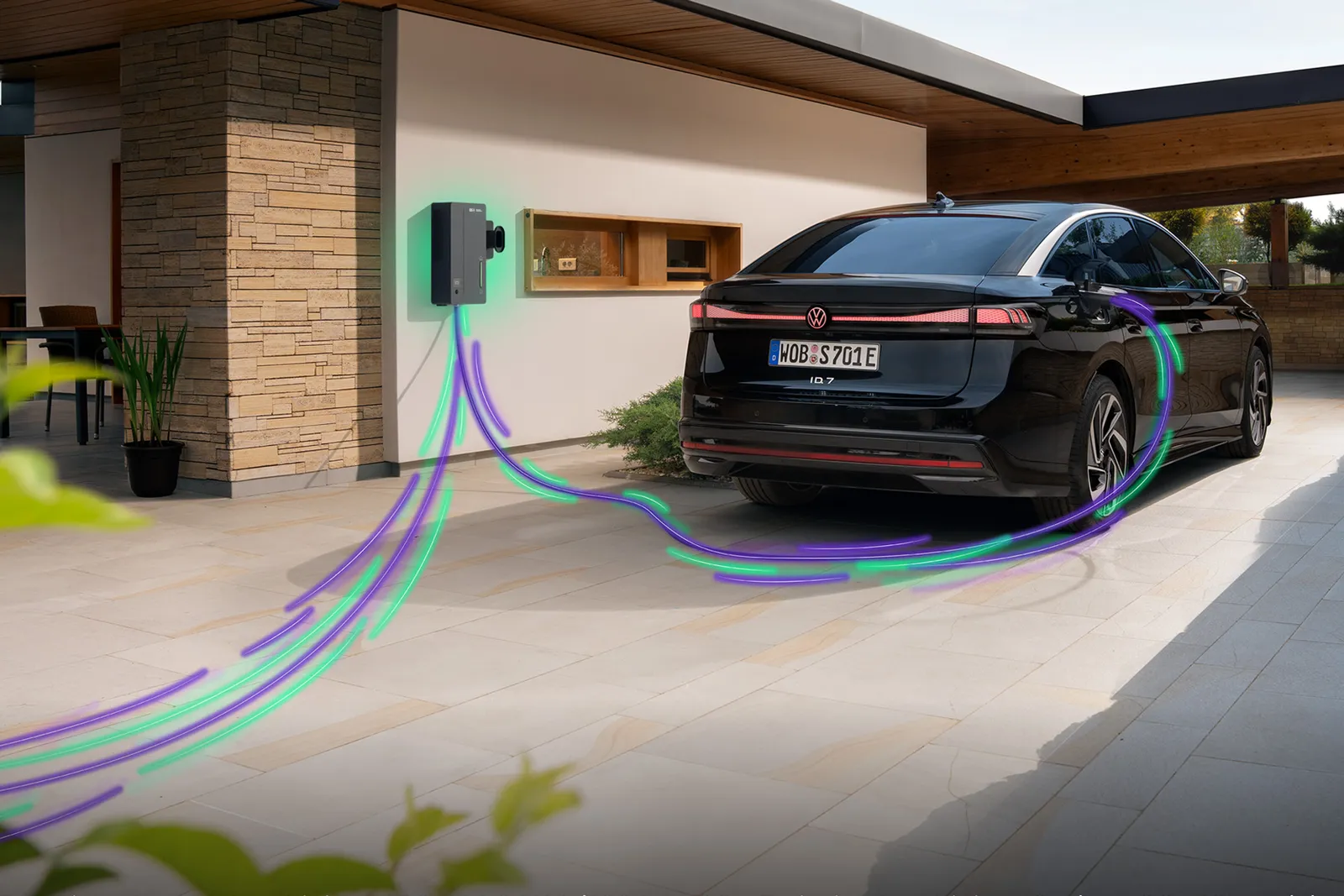
The Federal Network Agency recently released an update on the legal market integration of energy storage systems – the so-called MiSpeL regulations represent a crucial step forward for two-way charging in Germany. However, the automotive and energy industries are now issuing fierce criticism just days before the regulations are set to be finalized.
Image: Volkswagen AG
The Federal Network Agency has been working simultaneously for some time to reform electricity grid fees and the market integration of energy storage, through the legislative initiatives AgNes (“General Grid Fee System for Electricity”) and MiSpeL (“Market Integration of Energy Storage and Charging Points”). The hope among local industry is that combining these two reforms will pave the way for bidirectional charging, by exempting grid electricity fed back during such charging from consumption-based fees and surcharges. However, the progress report on MiSpeL presented at the beginning of August discourages those who want to capitalize on it in the short to medium term.
According to the “Handelsblatt,” automakers BMW, Ford, and VW’s electric vehicle subsidiary Elli, along with energy companies such as E.On, Octopus Energy, The Mobility House, and Enpal, sent a letter to the Federal Network Agency. The “Handelsblatt” claims to have obtained this letter. It states that while the agency is pursuing “the right goal in principle” with its draft regulations, the current version “contains significant technical, economic, and operational barriers that threaten the rollout of two-way charging in the market.”
Loic Geipel, spokesperson for climate protection policy at the Association of the Automotive Industry (VDA), was quoted by Handelsblatt as saying, “What the Federal Network Agency is planning currently makes two-way charging economically unattractive. This will prevent it from becoming a mass-market solution.” A similarly unnamed “major German manufacturer” also reportedly told the business magazine that the current situation “would be an industrial policy defeat.”
Technically possible, regulatorially unattractive
What’s the issue? MiSpeL is seen as a mechanism to enable the use of electric cars as energy storage, something that is technically feasible today but hindered by regulatory barriers. Currently, every kilowatt hour stored temporarily in a vehicle and then fed back into the grid is treated under grid fee regulations as if it were permanently consumed electricity.
In simple terms, MiSpeL is intended to determine which amounts of electricity counted as consumption during bidirectional charging and which are merely considered temporarily stored grid electricity to be returned later. AgNes then decides the corresponding grid fees. This is meant to prevent electricity from being charged twice with volume-based costs during charging and refeeding into the grid.
MiSpeL is intended to assign electricity volumes at charging points and, most importantly, determine which measured volumes can be taken into account for allocation privileges under the Energy Financing Act or for the EEG market premium. These rules apply explicitly to both public and non-public charging points. The main criticism is that after two years of work on MiSpeL, a complex set of rules has emerged that, in the industry’s view, outlines two overly restrictive approaches to how Bidi-charging stations can operate economically.
Brache fears too high a barrier to entry
The first option is to install a second meter that accurately records the amount of electricity going into the car and then back out — in short, it’s just as transparent as it is expensive. “The modification of the meter box often required for this significantly limits potential earnings and could deter many consumers,” according to the industry’s stance as reported by the “Handelsblatt.”
The second option is a one-size-fits-all solution intended only for owners of photovoltaic systems. In this case, the existing meter at the household connection is sufficient. For the first 500 kilowatt-hours fed into the grid, consumers receive the standard government subsidy through the EEG. Electricity generated just above this threshold falls into a buffer zone (with no solar subsidies or reimbursement of fees or surcharges), and even higher amounts are treated as electricity stored in electric vehicle batteries, for which reimbursement of the paid grid fees and surcharges is intended.
The Federal Network Agency adopted this framework following consultations on MiSpeL that began in 2025 to prevent abuse — “for example, by registering a charging point without actually owning an electric vehicle,” according to the Handelsblatt. The signatories of the open letter disagree with this approach: in their view, such high barriers are not proportionate to any potential risk of abuse. The one-size-fits-all option, which requires majority approval, thus becomes “completely unattractive for many.” The letter writers propose eliminating the buffer zone and replacing it with a requirement for direct marketing. “State subsidies under the EEG would then be completely removed for the one-size-fits-all option, thereby preventing such abuse.” They also state, “Consumers without their own solar panels should also be able to use the one-size-fits-all option,” as quoted by the Handelsblatt.
the letter. Otherwise, one loses the potential for the mass market and the financial incentive to continue investing in electric mobility.The Federal Network Agency, for its part, points out that the process is not yet complete. “We have released an interim version on which we are still working. Our goal remains to sustainably improve the market integration of energy storage systems and charging stations,” the agency said in response to a query from Handelsblatt.