
MINGA Project: Munich Tests First Autonomous E-Shuttles
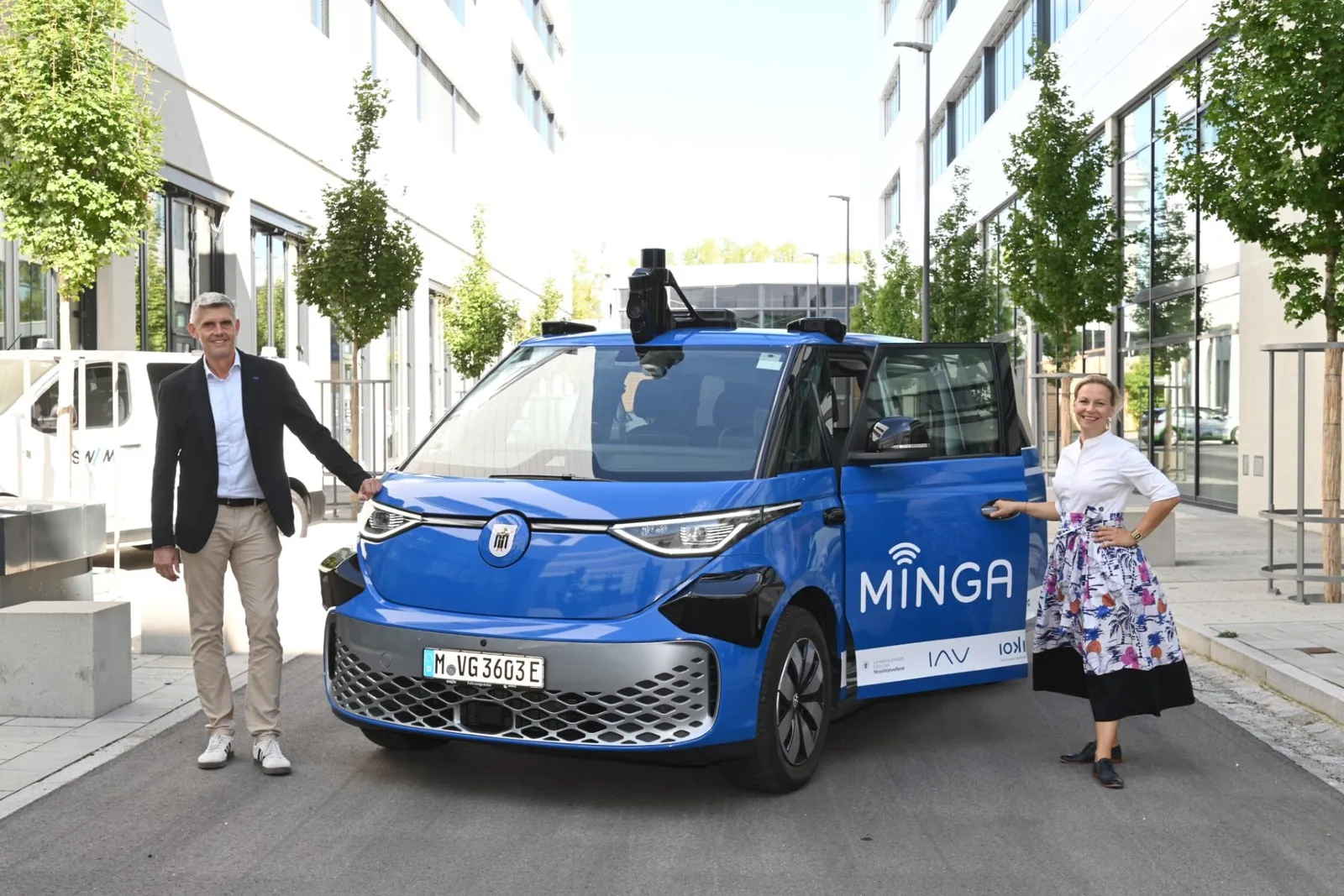
In Munich, autonomous on-demand vehicles are set to debut on public roads as part of the MINGA research project. Testing will begin in the Gern district of Neuhausen-Nymphenburg with three self-driving VW ID. Buzz vehicles — initially without passengers and accompanied by a safety driver.
Image: MVG
Munich’s city utilities company (SWM), the Munich Transport Company (MVG), and the Engineering Society for Cars and Transportation (IAV) are testing autonomous on-demand vehicles in public road traffic for the first time in Bavaria’s capital city. According to the initiators, these test drives follow intensive preparations, technical integrations, and consultations with the relevant regulatory authorities.
The IAV has carried out the necessary development work: Based on a VW ID. Buzz, the company’s engineers created a high-tech shuttle equipped with modern sensors and self-driving software. As stated, the vehicle can “perceive its surroundings in detail, analyze traffic situations, and drive autonomously along predefined routes.” However, safety drivers are on board throughout the testing period to monitor operations and intervene at any time. The basis for these tests is a testing permit under the Regulation on the Authorization and Operation of Vehicles with Autonomous Driving Functions (AFGBV), which SWM and MVG have held since mid-August 2026.
In addition to technical performance, the MINGA project also focuses on the requirements for future passenger operations. These include, among other things, passenger information systems, interior design, safety concepts, as well as integration into MVG’s operations and control center. The insights gained from test drives are intended to feed back into the further development of autonomous public transportation services for Munich.
Gradual Approach to Passenger Operations
In the first phase, testing will initially focus on the safe and stable deployment of the autonomous driving system in public road areas. “The vehicles travel along designated routes in the test area, collecting data on driving behavior, environmental perception, traffic interaction, and operational stability,” says MVG. Once the system operates reliably, the scope will be expanded in a second phase to integrate the on-demand system from technology partner ioki. This software company from Frankfurt is already involved in a similar project (KIRA) in the Rhine-Main region.
In this phase, the vehicles follow their routes based on short-term ride requests. “The software allows passengers to book rides through an app, enables multiple rides to be combined on a single vehicle, and ensures the vehicles are deployed exactly where they are needed at that moment,” explains MVG. During the trial phase, the necessary interfaces, data flows, and operational processes between the ioki platform and the vehicles will be tested step by step.
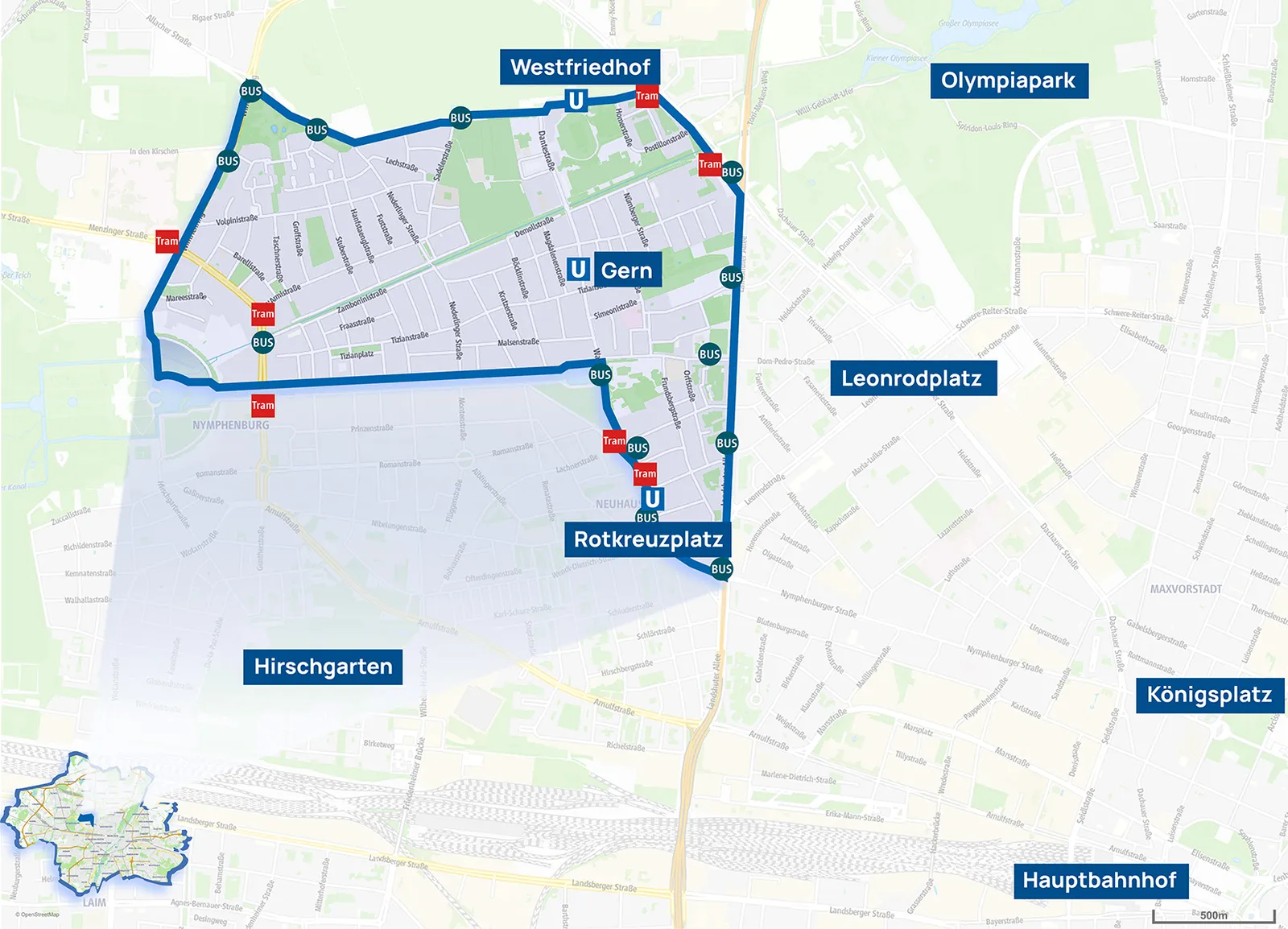
And: After successful integration and completion of the necessary adjustments, bringing selected test users along is also planned in a later phase of the project. Interested parties can register in advance.
An autonomous route bus and a bus platoon are to follow
The project name MINGA stands for “Münchens automatisierter Nahverkehr mit Ridepooling, Solobus und Bus-Platoons.” This project aims to explore how autonomous mobility services can be integrated into public transportation in the future. To this end, 16 partners from government, research, business, and industry are working together under the leadership of Munich’s transportation department. In addition to on-demand testing, an autonomous scheduled bus and a bus platoon are also set to be tested under real conditions by mid-2027. The project is funded by the Federal Ministry of Transport with around 13 million euros.
Christian Hirte, Parliamentary State Secretary at the Federal Minister for Transport, commented: “Autonomous driving offers a great opportunity to rethink mobility. Autonomous vehicles can effectively complement public transportation services and connect people better and more flexibly. That’s why we are also supporting this forward-thinking initiative in Munich’s public transport with funding of around 13 million euros. The MINGA research project is now testing autonomous on-demand vehicles in public road spaces for the first time, thereby laying important foundations for similar projects in Germany.”
Sinaida Cordes, SWM/MVG’s legal representative, added: “With the start of these test drives, autonomous public transportation will become visible on Munich’s streets for the first time. This phase is crucial for us to integrate technology, operation, and safety under real conditions and make them scalable. In this way, we gain valuable experience on how autonomous on-demand services can effectively complement existing public transportation in the future.”