
As fuel prices soar, Lidl shocks the market with electricity priced at 18 cents per kWh
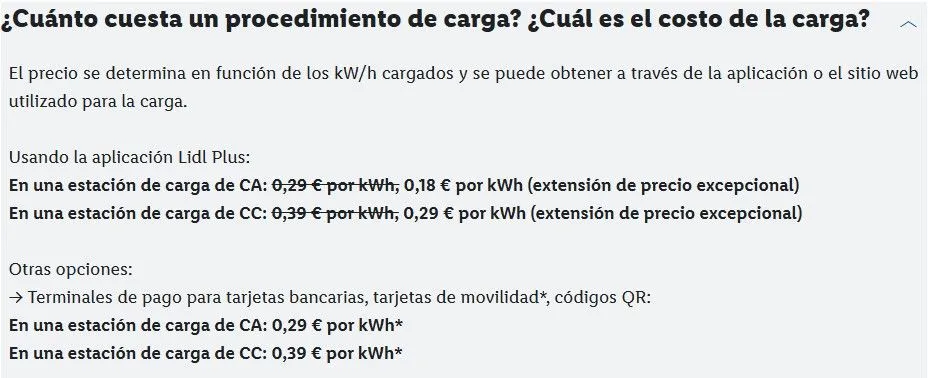
As the cost of filling up a car with a combustion engine soars again in Europe, charging electric vehicles is heading in a very different direction. A good example can be found in France, where the German supermarket chain Lidl has recently significantly reduced the price of its AC charging to just 0.18 euros per kWh.
The difference is becoming quite substantial. On September 17, the average price of gasoline in France was 2.16 euros per liter, while diesel reached 2.37 euros per liter. Moreover, the price of diesel was already very close to the highest level recorded during the spring of 2026.
In response to this situation, Lidl has decided to exceptionally extend a tariff that sets the cost of charging with alternating current at 0.18 euros per kWh, down from the previous rate of 0.29 euros. This represents a 37.9% reduction, making the energy needed to travel hundreds of kilometers particularly inexpensive. This tariff applies when using the Lidl Plus app.
At this price, charging 50 kWh—enough for just over 300 kilometers of range—only costs 9 euros. This amount shows how much the usage cost of an electric car can change when a cheap charging rate is available. Moreover, this isn’t limited to just a few kilowatts: Lidl maintains a price of 0.18 euros per kWh for its AC charging points up to 22 kW.
The difference compared to a gasoline or diesel car becomes even more apparent when calculating the cost per distance. With an assumed consumption of 16 kWh/100 km, those 0.18 euros per kWh amount to about 2.8 euros per 100 kilometers. This is a figure that’s hard for a car with an internal combustion engine to match, even if its consumption is relatively low.
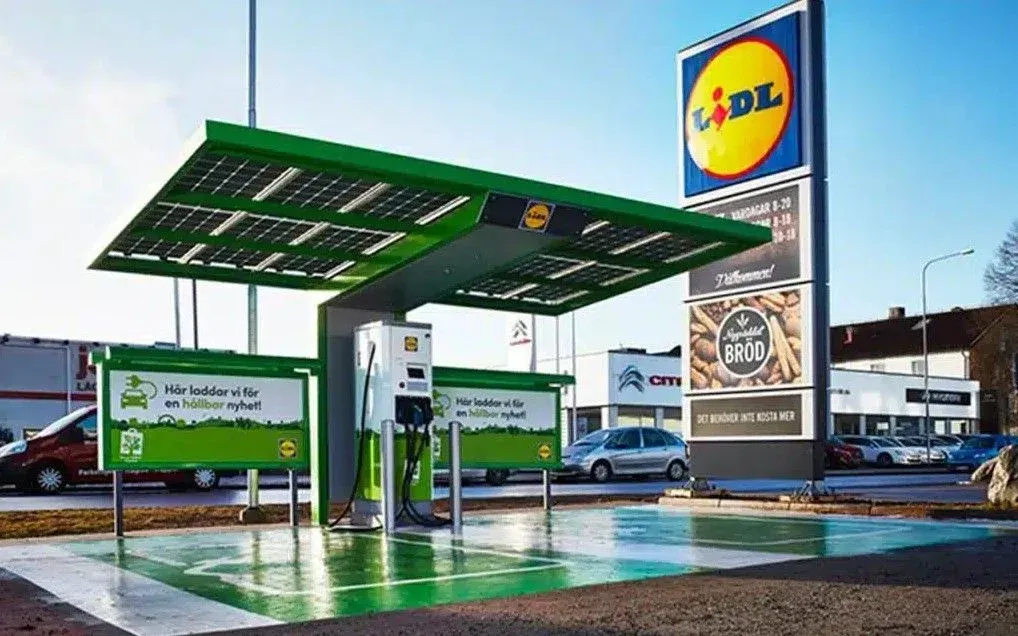
And here lies one of the key points in this comparison. Not all electric car drivers pay 0.18 euros per kWh, nor are all charges done using alternating current. Lidl’s rate is particularly attractive for those who can leave their car plugged in while shopping, but it doesn’t necessarily reflect the cost of a quick charge during a trip.
But if we’re in more of a hurry and can’t leave the car plugged in for long, Lidl also offers fast chargers. And here too, there are no good news for gasoline car owners. In this case, the cost of charging with direct current is around 29 cents per kWh, which is quite competitive.
Even with those 0.29 euros per kWh, the result remains competitive. A car that consumes 16 kWh per 100 km would have an energy cost of around 4.6 euros for every 100 kilometers. This is more than using Lidl’s AC charging, but it’s still well below the approximately 12-13 euros that a gasoline car might require to cover the same distance.
The developments over the past few months are particularly noteworthy because they are occurring in both directions at the same time. On one hand, fuel prices are seeing further increases. On the other hand, some charging networks are lowering their rates or offering discounts to attract drivers. In France, diesel prices exceeded 2.39 euros per liter on September 18, setting a new record based on prices recorded at over 9,000 stations.
In Spain, the situation also reflects this ongoing price surge that seems to have no end. As of mid-September, the average price was around 1.92 euros per liter for both gasoline and diesel, according to official data compiled by the Ministry for Ecological Transition. At these prices, filling a 55-liter tank costs approximately 105.5 euros, enough to travel around 800 kilometers. In contrast, an electric car can cover about 3,600 kilometers on a single charge using those same 105 euros.
This makes it easier to understand the comparison between the two technologies. The cost of using an electric car depends heavily on where and how it is charged, but when access to charging rates of 0.18–0.29 euros per kWh is available, the difference compared to traditional fuels can be substantial.
The only requirement to access these rates is having the Lidl plus app, which is completely free. If we don’t have the app, we’ll have to add 10 cents to the price per kWh.
Energy
Reference price
Cost with 14 kWh/100 km or equivalent consumption
Lidl alternative
0.18 euros/kWh
2.52 euros/100 km
Lidl regular
0.29 euros/kWh
4.06 euros/100 km
Gasoline
2.16 euros/liter
12.98 euros/100 km at 6 l/100 km
Diesel
2.37 euros/liter
11.85 euros/100 km at 5 l/100 km
Source | Lidl