
Miele has ordered 840 electric vans from Volkswagen Nutzfahrzeuge.
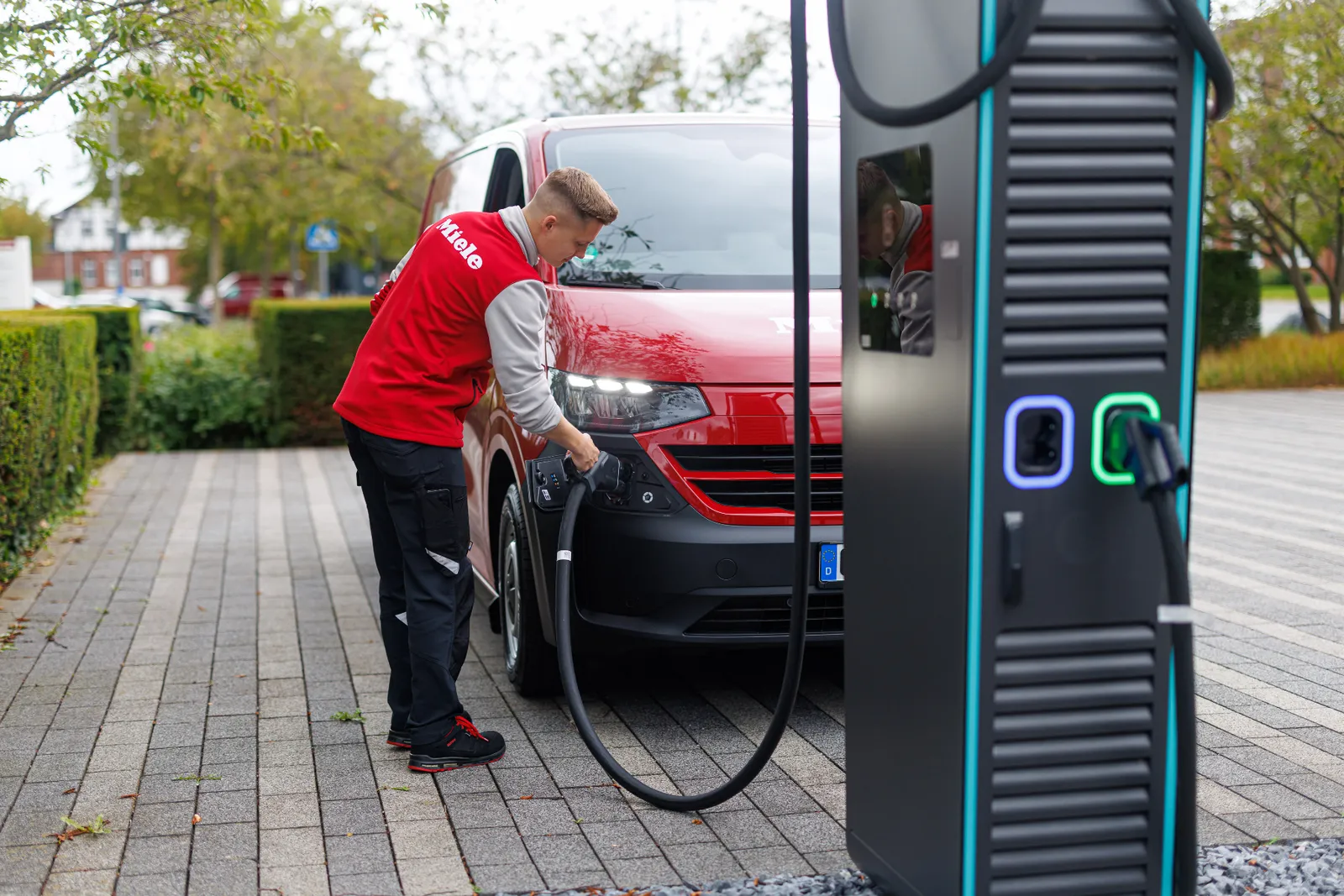
Miele will expand its European service fleet with 840 battery-electric vans from Volkswagen Nutzfahrzeuge. 440 of these vehicles are set to be used in Germany.
In its professional customer service, Miele has achieved an electrification rate of nearly 100 percent.
Image: Miele
The vehicles are designed for use with residential and commercial customers across Europe. This decision followed an EU-wide tender process launched by Miele for 2026 and 2027. Volkswagen Nutzfahrzeuge (VWN) was ultimately awarded the contract. The vehicles will also be equipped with Sortimo systems for storing tools and spare parts.
Almost half of the total 840 electric delivery vehicles are destined for Germany, where 440 of them will be used. Miele has made particular progress in transitioning its professional customer service team, with nearly all of the around 420 employees set to use battery-electric delivery vehicles in the future. Miele reports an electric vehicle ratio of almost 100 percent.
30 Percent Electric Vehicles in Miele’s Home Service Division
The proportion is significantly lower in the home service division. According to the company, around 30 percent of the vehicles currently in use there are fully electric. This figure is expected to rise as more vehicles are replaced. Miele does not specify a target value or timeline for complete electrification.
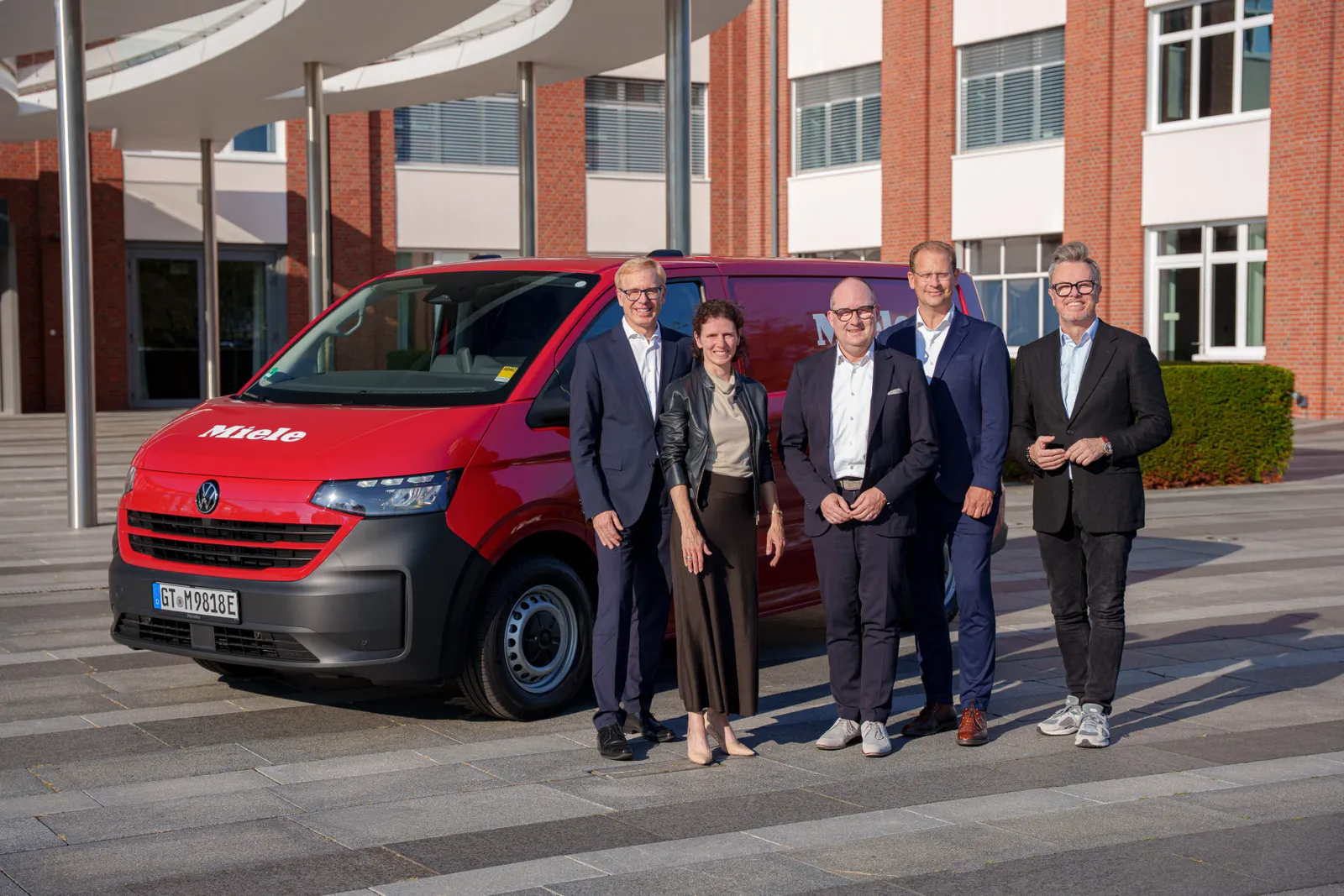
The partnership between Miele and Volkswagen Nutzfahrzeuge dates back several years. When the ID. Buzz Cargo was launched, Miele deployed five vehicles in customer service centers in Germany, Austria, the United Kingdom, Norway, and Spain in 2022. From the start, these vehicles were equipped with an interior layout tailored specifically for customer service, including storage for materials, spare parts, and tools.
This initial effort has since evolved into a much larger fleet renovation project. According to Miele, insights gained regarding range, charging times, energy consumption, and practicality in daily use, along with feedback from service technicians, were incorporated into the requirements for the new tender.
In addition to electric propulsion, the vehicle’s interior design also plays a crucial role. Miele and VWN emphasize the use of lightweight Sortimo equipment, which is intended to limit additional vehicle weight and thereby reduce energy consumption. However, the companies do not provide specific figures on potential weight savings or vehicle energy usage. By making this transition, Miele aims to reduce the direct CO₂ emissions from its customer service operations.