
It is 5.28 meters long, has 6 seats, and 857 horsepower, but this new Chinese hybrid SUV aspires to resemble a BYD.
13/09/2026 11:00
Updated to
13/09/2026 11:00
Avatr is preparing to launch its most ambitious model to date. The new T09 has just appeared in the records of China’s Ministry of Industry and Information Technology (MIIT), revealing almost all of its technical specifications before its official release. It will be a massive 6-seater plug-in hybrid SUV with a length of 5,285 mm, positioned at the top of the manufacturer’s lineup backed by Changan, CATL, and Huawei.
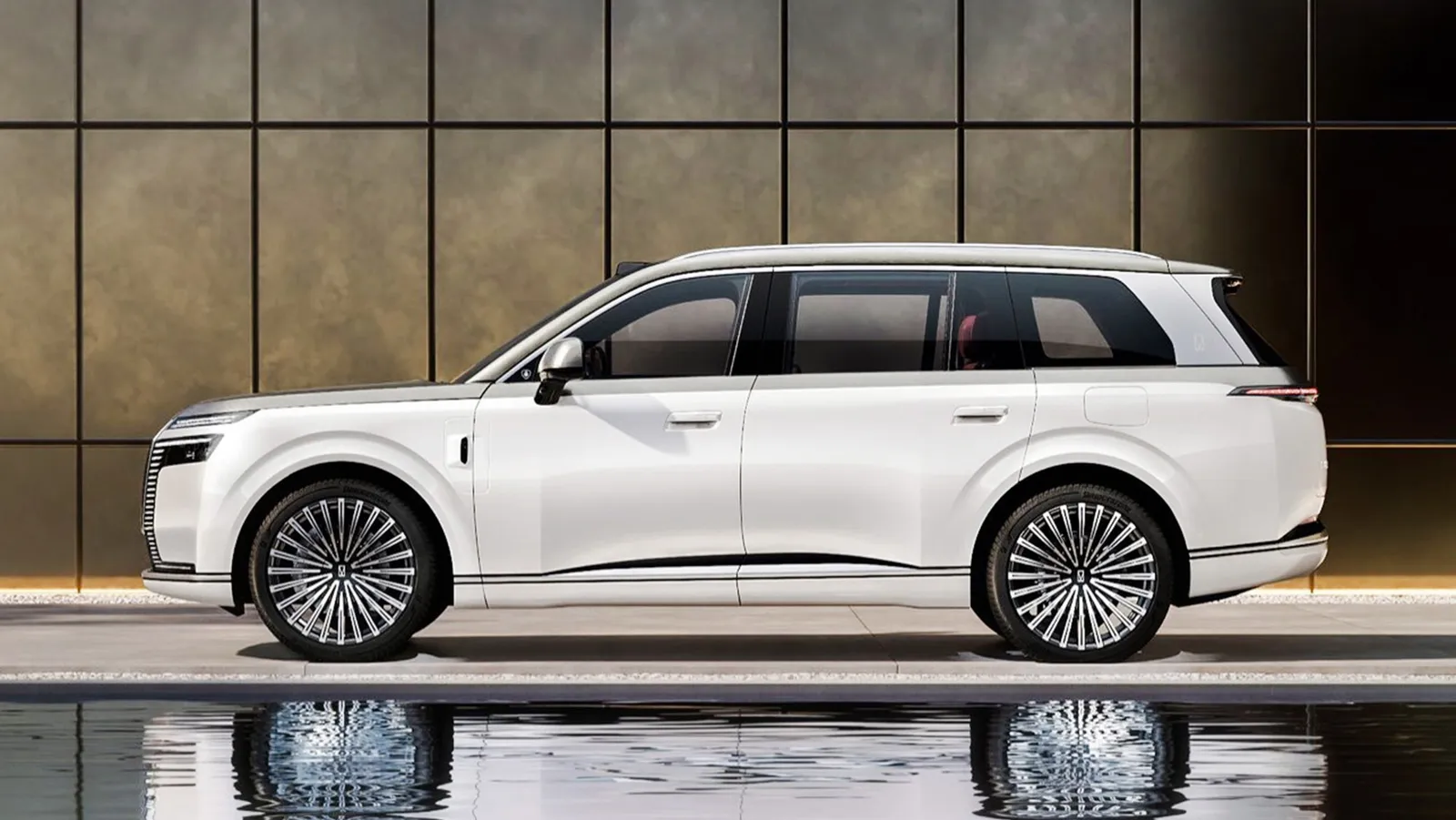
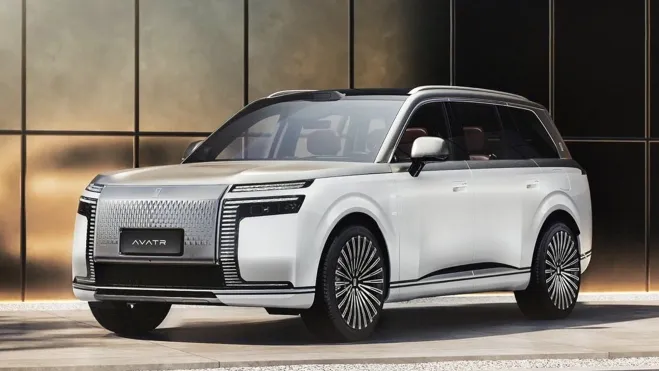
However, there is something that catches attention even before knowing its specifications. Avatr had become one of China’s brands with the most recognizable aesthetic identity. Yet, the T09 breaks away from this philosophy. Its tall, square, and robustly shaped body follows the pattern adopted by many Chinese luxury SUVs, drawing particular similarities to BYD’s Yangwang U8.
A massive 5,285 mm SUV with six seats
The new Avatr T09 is 5,285 mm long, 2,025 mm wide, and 1,820 mm high. The wheelbase measures 3,150 mm, and its cabin is designed to accommodate 6 passengers. Thus, it features dimensions similar to other large Chinese SUVs that are gaining popularity in the premium segment.
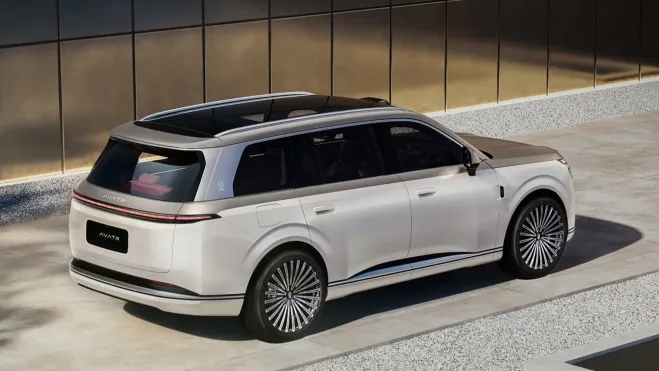
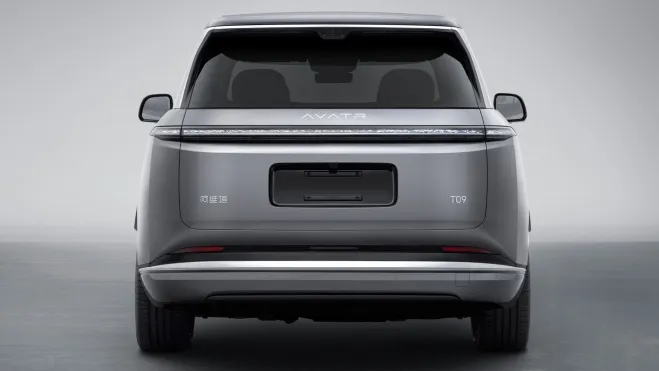
Its exterior design features a much more vertical body shape compared to other Avatr models. The front end retains a split lighting signature, but the overall proportions, large wheelbase, raised hood, and nearly vertical rear end convey a significantly more robust image. The MIIT catalog also confirms various designs for the front end, tires, bumpers, and underbody protections, as well as electric side mirrors, roof rails, two-tone body colors, and different decorative elements.
Up to three electric motors and over 850 HP
Regulatory documents reveal two mechanical configurations, both plug-in hybrids equipped with a massive 71.24 kWh battery supplied by a CATL subsidiary. According to additional information released about the model, this capacity will allow driving ranges of 300 to 330 kilometers using electricity alone, though the documents do not explicitly specify the homologation cycle used.
The first variant uses a 1.5-liter turbocharged gasoline engine with 150 HP, along with two electric motors. The front motor produces 245 HP while the rear one generates 420 HP. In other words, just the electric system alone delivers around 666 HP. The curb weight will be either 2,880 or 2,968 kg depending on the configuration.
The top-tier version is even more impressive. It replaces the 1.5-liter gasoline engine with a 2.0-liter turbo engine producing 210 HP, and it features as many as three electric motors: one front motor with 245 HP and two rear motors, each with 305 HP. Together, these three motors provide approximately 857 HP electrically. Its weight reaches 3,035 kg, and like the two-motor version, it can reach 220 km/h.
Huawei will play a significant role in the new T09
Avatr has not yet officially revealed the interior, but this model will also be particularly significant due to its connection with Huawei. A company official previously described it as Avatr’s first vehicle developed through a truly comprehensive partnership with Huawei. Its commercial launch is scheduled before the end of 2026.
The information released so far suggests the new Huawei Qiankun ADS 5 advanced driving assistance system and a sensor architecture consisting of four LiDARs. Avatr and Huawei have been collaborating for years on software, driver assistance, and components, but the T09 aims to take this partnership to the next level.
The price remains one of the major unknowns. Avatr has not disclosed it, and the MIIT registration also provides no reference, although its status as a new six-seater flagship will place it above the Avatr 07L, which was recently launched in China at 219,900 yuan (around 28,200 euros at the current exchange rate).