
It measures 4.17 meters, has a range of 437 km, and costs less than 30,000 €: this is Renault 5’s ‘Made in Spain’ rival
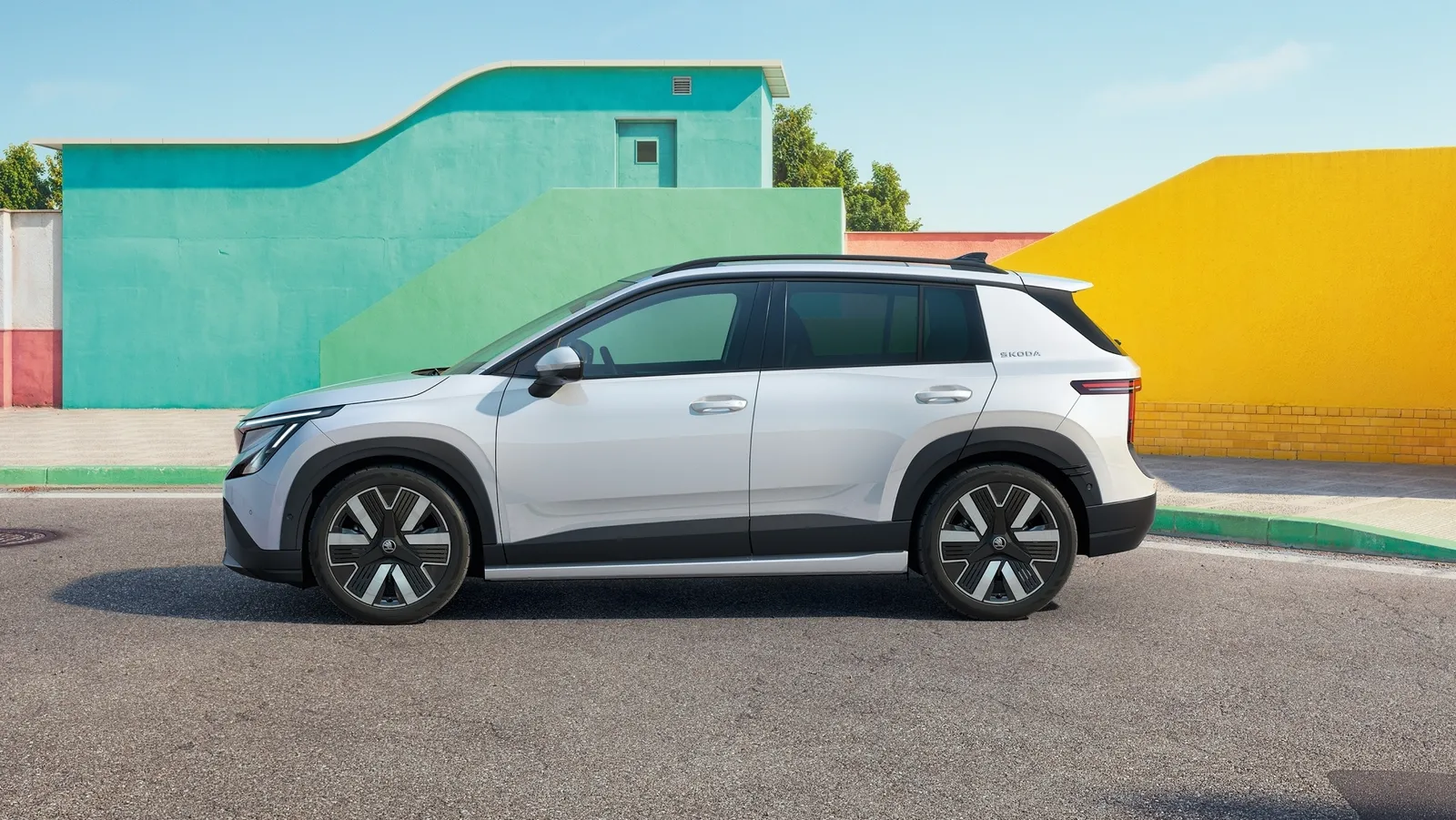
With Europe demanding more electric cars, drivers continue to wait for a generation of vehicles that will offer them an affordable and versatile battery-powered car. There are increasingly more options available at dealerships. Skoda can now claim to have a small electric car with features sufficient to make it a sales leader. It is called the Skoda Epiq.
In fact, Skoda already had a small and inexpensive electric car, the Citigo. Developed in the mid-2010s, the trio consisting of the Volkswagen e-Up!, Skoda Citigo, and SEAT Mii proved that driving an electric car was possible. However, none of the three were allowed to survive despite clear signs of their potential success. Now, the Epiq tries to revive that concept with more and better technology, though at a price several thousand euros higher.
Technical specs
Vehicle type
SUV
Dimensions
4,171 x 1.798 x 1.581 mm
Weight
1,542 - 1,581 Kg
Seats
5
Battery type
LFP / NMC
Battery capacity
37 - 51.7 kWh (net)
Range
310 - 437 Km
Power/Torque
116 - 211 HP / 267 - 290 Nm
WLTP fuel consumption
13 - 14.1 kWh/100 Km
Environmental badge
ZERO
CO2 emissions
0 g CO2/Km
Acceleration
7.1 - 11 seconds
Trunk volume
475 + 25 liters
Driving assistance
Traffic sign reader
Parking camera
Blind spot sensors
Cruise control
Infotainment
Digital dashboard (5.3 inches)
Multimedia system (13 inches)
Price
Starting at 29,130 euros
Skoda Epiq prices
The price is and has always been a powerful selling point. If markets truly want to increase the presence of zero-emission cars, it is absolutely necessary to lower prices. To reach a broader audience, the Skoda Epic launches in Spain at an starting price of 29,130 euros, without discounts and without any additional support or subsidies. It cannot be considered a affordable or inexpensive option, although it should also be noted that the most economical versions have not yet arrived in the fleet.
Under the most favorable conditions possible, including promotional discounts and financing savings, as well as government subsidies, the minimum starting price for the small Epiq is 21,810 euros. The two expected entry-level variants should bring the final price below the 20,000 euros mark, though this would mean giving up all the car’s premium features, with reduced performance and a more modest range.
Mechanics and Engines
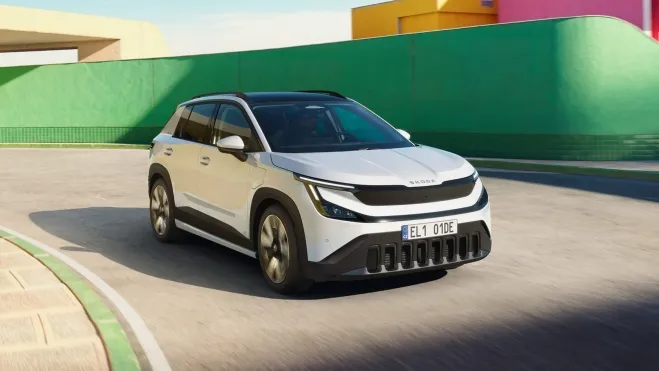
As we mentioned earlier, Skoda offers various configurations for its smallest electric car. The entry-level model, the Epiq 35, features a single front motor with 116 horsepower and 267 Nm of torque. It has an energy consumption rating of 13 kWh per 100 kilometers and a range of 310 kilometers (WLTP) thanks to a 37 kWh net capacity LFP battery. Next is the Epiq 40, which has 135 horsepower and the same range and battery capacity. Its DC charging speed is limited to 50 kW, while the Epiq 40 supports 90 kW.
The highest-performance version is reserved for the Skoda Epic 55. It is also the most versatile model overall due to its greater certified range. It features a single front engine producing 211 horsepower and 290 Nm of torque. Powered by a lithium battery with a net capacity of 51.7 kWh, it achieves a certified range of up to 437 kilometers, with an official fuel consumption of 13.8 kWh/100 kilometers (WLTP). For charging, it is equipped with chargers capable of up to 105 kW in direct current and up to 11 kW in alternating current. Under ideal conditions, it can restore from 10% to 80% of its range in 24 minutes.
Dimensions of the Skoda Epiq
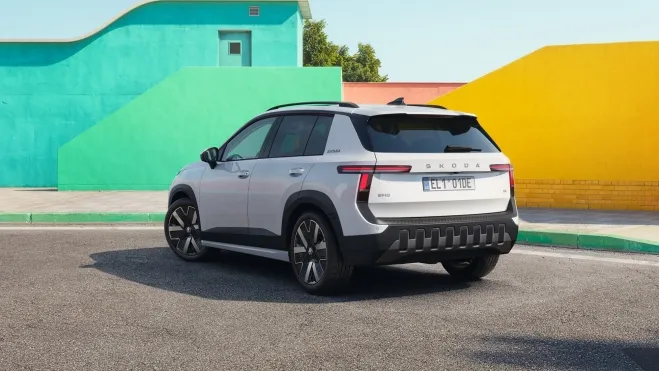
Volkswagen Group has decided to re-enter the electric vehicle market with its unique offensive trio. Unlike Volkswagen, Skoda has chosen to make the Epiq its sole representative in the A-segment. Volkswagen offers the ID.Polo and ID.Cross, which are cousins to this Epiq. Both are positioned as SUVs, but their low ground clearance limits their capabilities. In contrast, the Epiq can be considered a crossover—a hybrid between a sedan and an SUV. This classification puts it up against numerous strong competitors, including the CUPRA Raval, BYD Dolphin Surf, and the Renault 5, the leading model in this category across Europe.
At first glance, the Epiq is deceptive. It’s larger than it appears. With a measuring tape, its length is 4,171 meters, width is 1,798 meters (without mirrors), and height is 1,581 meters. To these compact dimensions must be added an axle distance of 2,601 meters, a drag coefficient of 0.28, and a curb weight ranging from 1,542 to 1,618 kilograms depending on the selected variant. This high figure highlights the weight issue associated with electric cars.
Interior
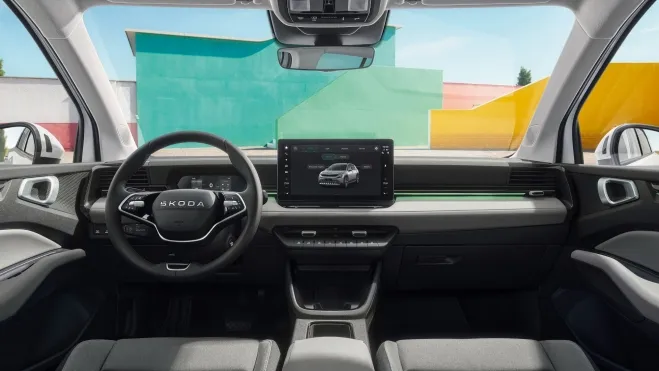
In segment A, finish quality has not always been excellent. These are low-priced cars that sacrifice the use of good materials to keep costs down. However, the Skoda Epiq stands out with its attractive design and superior interior construction. It features an abundance of soft, pleasant-to-touch materials. While there are some hard plastics as well, the overall perceived quality is among the highest in its class.
In terms of technology, Skoda offers different trim levels: Urban, Selection, and First Edition. The latter is available for a limited time during its initial sales phase. Notable features include keyless entry and start, LED headlights, wireless connectivity for mobile devices, 20-inch wheels, V2L charging, a 5.3-inch digital dashboard, a 13-inch central multimedia screen, automatic climate control, parking cameras and sensors, along with a comprehensive set of standard driving assistants and active and passive safety systems.
Despite its compact dimensions, the Epiq once again demonstrates Skoda’s ability to make the most of every available centimeter. While modest, the rear seating row provides enough space for two adults up to 1.85 meters tall to sit comfortably. The completely flat floor makes it possible to fit a third passenger, though the width is limited. The rear seat area doesn’t offer much luxury, but it does stand out for its ease of access.
Skoda Epiq Trunk
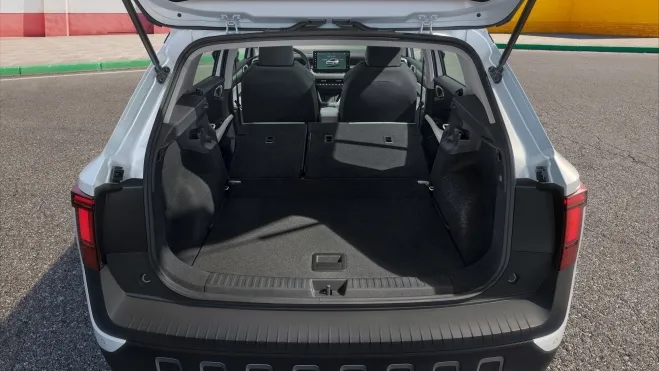
The fact that it is small does not mean the Epiq is inevitably tied to urban environments. In fact, its status as an urban vehicle disappears once the trunk lid is opened. This reveals a vast cargo space with a minimum capacity of 475 liters—a figure usually associated with cars in two segments higher. The Skoda Karoq’s 525 liters of trunk space serves as an example. As a true electric vehicle, the Skoda Epiq can also feature a second trunk area on the front axle, offering an additional 25 liters of space. This is sufficient to store small items such as charging cables.
Conclusions
Skoda is returning to a segment that seems essential for continuing to drive growth in the electric vehicle market. The Skoda Epiq offers a highly successful approach, with standout features including material quality, equipment, interior space, driving experience, and efficiency. The price of the best and most versatile versions may be somewhat high, though it should not be considered an exclusively electric car. The entry-level models are cheaper, but their range and charging capacity are much more limited.