
Michelin enters the electric vehicle charging market with a new card designed for professionals.
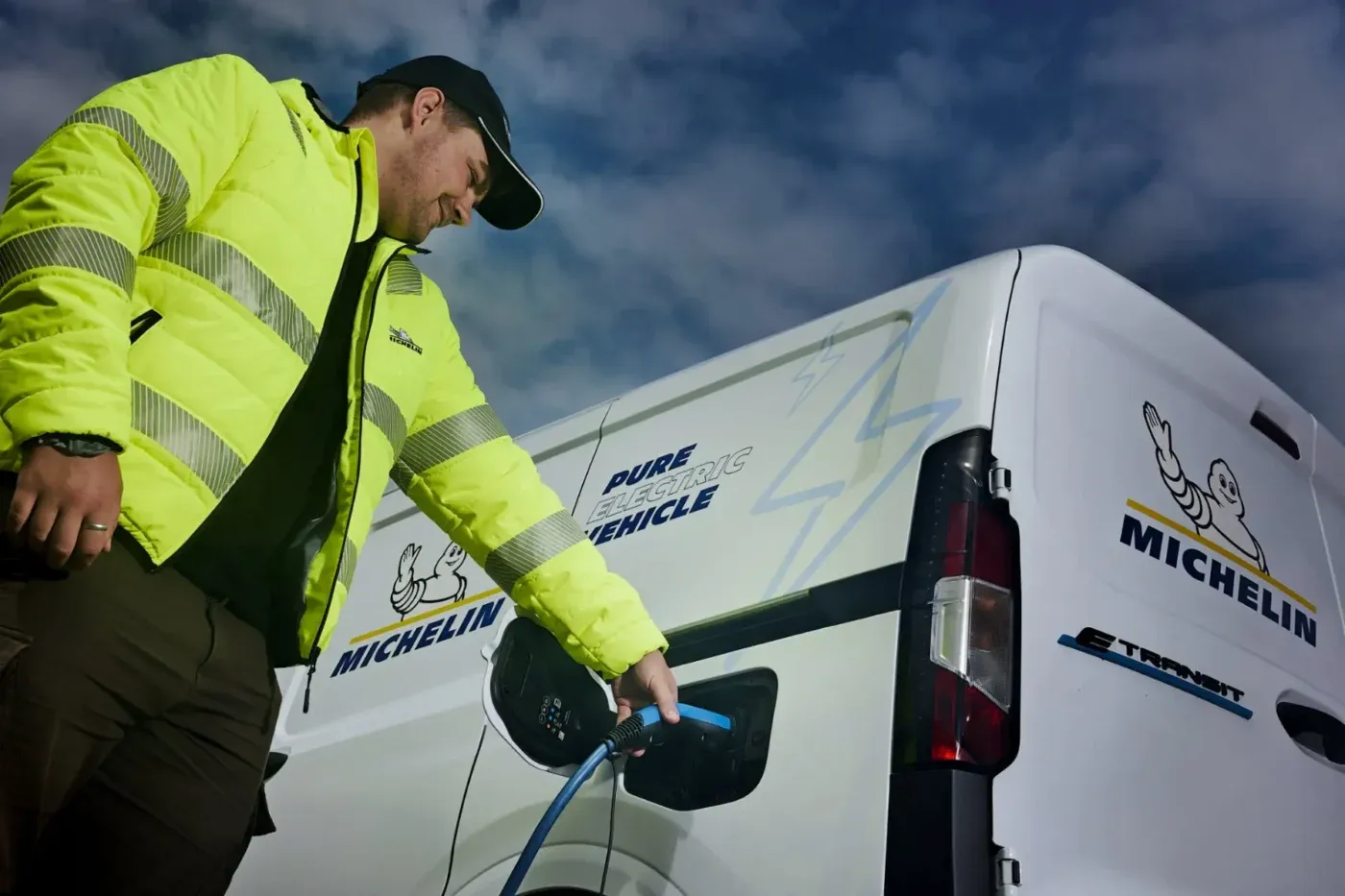
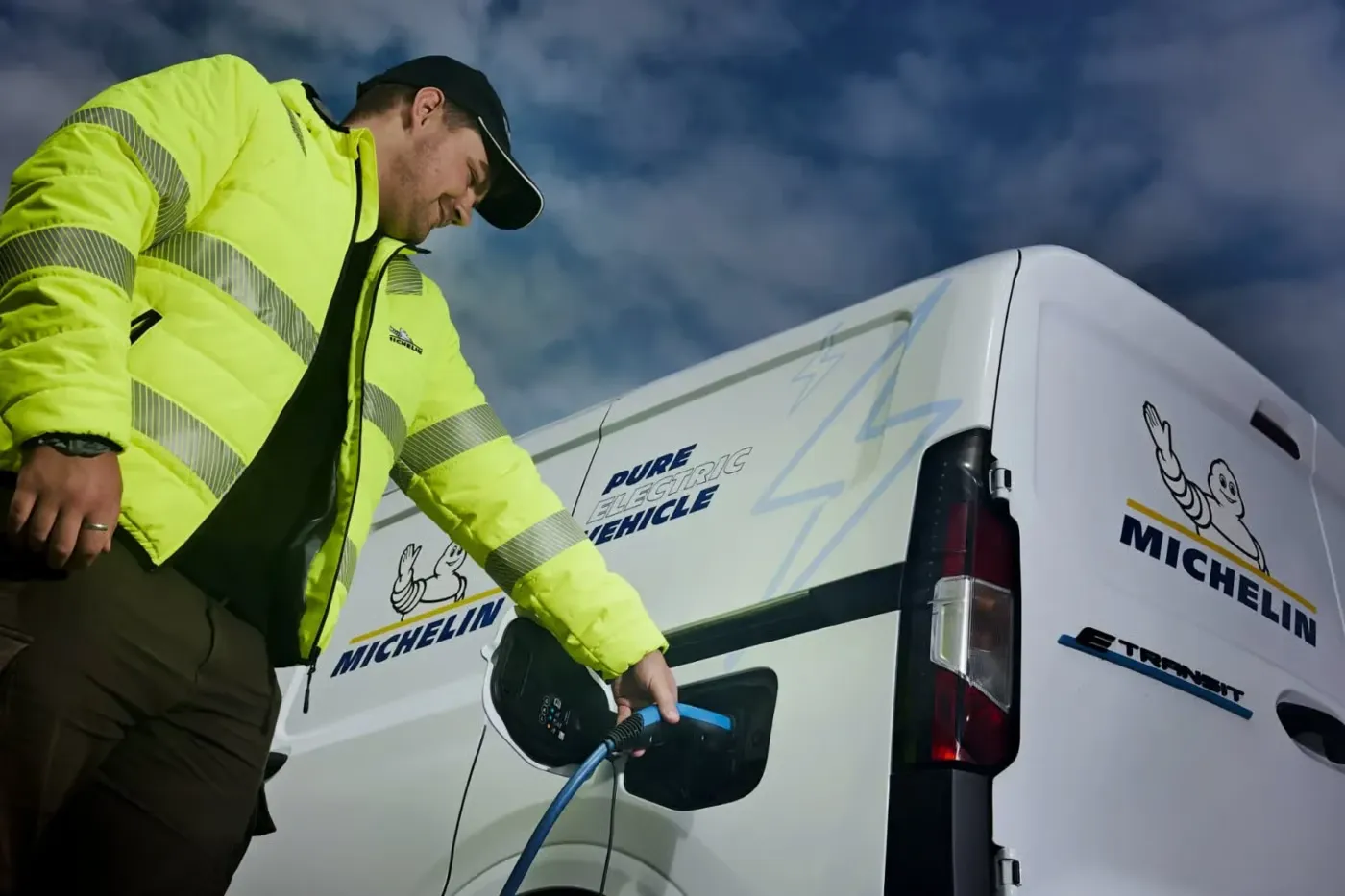
Michelin now aims not only to equip cars but also to facilitate their charging. With EV Charge, the French company introduces a new card that provides access to over 1.2 million charging stations across Europe. This initiative is targeted at corporate fleets, with a key advantage: better control over charging costs through vehicle data.
The electrification of corporate fleets represents a new opportunity for Michelin. Through its subsidiary Michelin Connected Fleet, the company launches EV Charge, a solution that combines a charging card, mobile app, and management tools. Its goal is to simplify drivers’ lives while enabling companies to better manage their energy expenses.
Also read
Home charging for service vehicles: Ewera reimburses per kWh, without chargers or boxes
Charging data cross-referenced with vehicle data
With EV Charge, Michelin focuses first on simplicity. The new card provides access to over 1.2 million public charging points across Europe, without the need for multiple subscriptions or payment methods. A dedicated app assists drivers by allowing them to locate charging stations, check their availability, plan trips, and select charging solutions suited to their needs. Michelin promises transparent pricing, without additional fees imposed by partner networks, and mentions the possibility of enjoying negotiated rates in certain cases. So far, it offers nothing particularly different from what already exists, such as Chargemap or the new Electra card.
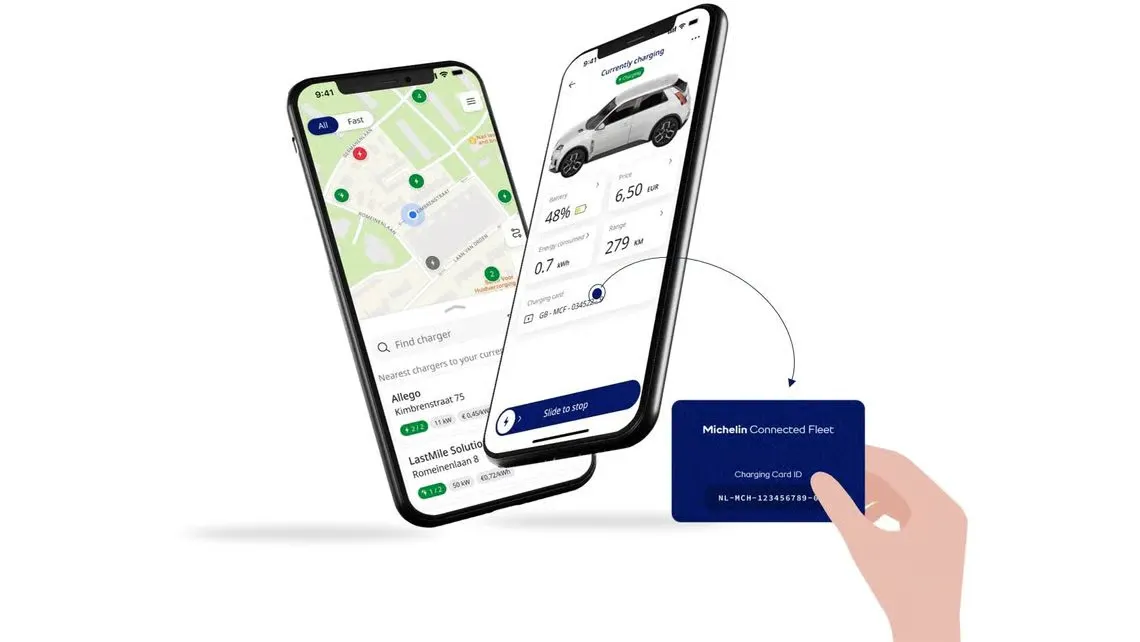
The real differentiating factor of the Michelin EV Charge offering lies not in the card itself, but in its integration with MyConnectedFleet, Michelin’s existing telematics platform. Charging data is automatically cross-referenced with vehicle information such as routes taken, energy consumption, battery levels, and driver habits. This allows managers to gain a more comprehensive overview of their fleet and identify the most expensive or least efficient charging sessions.
To develop this new service, Michelin’s teams relied on Deftpower, a Dutch company specializing in electric charging services. Its MSP-2.0 platform, offered as a white-label solution, enables mobility providers to manage access to charging stations, payments, billing, and analysis of charging sessions.
A strengthened ecosystem
For Michelin, EV Charge represents another component of an already well-developed system focused on electrifying commercial vehicles. The MyConnectedFleet platform, in particular, helps identify vehicles that can be replaced with electric models based on their actual usage patterns. It also monitors battery health and range.
Meanwhile, Watèa by Michelin has offered subscription services for electric vans since 2021, expanding these to include hydrogen vehicles, along with related infrastructure and services.
Michelin vs. Chargemap, TotalEnergies, and Octopus Energy
While Michelin has a globally recognized brand, its new card enters a highly competitive French market. TotalEnergies holds a significant position among businesses. Its Fleet card claims compatibility with 99% of public charging stations in France and over 900,000 charging points across Europe. The company also offers a 15% discount on its own high-power charging stations as an option.
On its part, Chargemap Business (Chargemap belongs to the same group as Automobile Propre) focuses on centralizing expenses. Its pass works across more than 1,700 networks, and its platform allows tracking of charges made at public charging stations, in company premises, or at employees’ homes. The Strasbourg-based company has even recently added telematics to its offerings to further simplify the management of mobility costs.
Octopus Energy is also trying to establish itself through Octopus Fleet. Its approach relies on a subscription fee of 5.50 euros before tax per month per driver, with no markup on the energy cost, along with claimed access to 97% of public charging stations in France. The provider has also partnered with Powerdot to offer discounted rates based on charging volume. Even charging operators are developing their own solutions for professionals, such as Ionity with its new Ionity Fleet card.
Michelin will therefore need to convince customers on another front: data. By linking telematics information with energy consumption, the company promises a more detailed analysis than what a simple charging card can provide. Will that be enough to convince customers? Only time will tell…