
Michelin wants to streamline the charging of electric fleets. One card, 1.2 million points, and full control over costs
In short:
Managing charging in fleets is becoming one of the key operational challenges
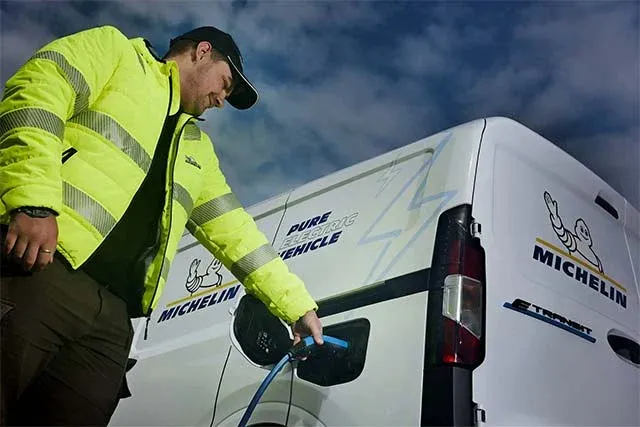
Michelin addresses this issue with its new MICHELIN EV Charge service
It aims to provide drivers access to over 1.2 million charging points across Europe
Fleet managers will be able to better control energy costs by combining charging data with vehicle usage information
Will Michelin reduce charging costs?
The electrification of corporate fleets in Europe is accelerating, and with it, the importance of tools that enable efficient management of energy replenishment. Michelin’s response to these needs is the new MICHELIN EV Charge service, which simplifies access to public charging infrastructure and helps businesses better control their energy-related expenses.
This new solution is primarily aimed at companies operating electric fleets. According to the manufacturer, drivers will have access to over 1.2 million charging points across Europe using a single card and a dedicated mobile app. This eliminates the need to use multiple different access systems for various charging networks, as has been the case until now.
The app will allow users to search for charging stations, check the availability of points, and plan trips based on energy replenishment options. Michelin also emphasizes that the solution provides clear insight into charging costs, eliminates additional network fees, and, in selected cases, offers access to negotiated rates.
More than half of fleets already have electric vehicles
The introduction of this service aligns with the current trend observed in the European fleet market. According to data from the Arval Mobility Observatory 2026 barometer, 57% of fleets on the Old Continent already use electric vehicles, with another 19% of companies planning to adopt them within the next three years. As the number of such vehicles increases, managing various charging networks, tariffs, and access methods becomes an increasingly complex challenge.
A key feature of MICHELIN EV Charge is its integration with the MyConnectedFleet platform, which is part of the MICHELIN Connected Fleet ecosystem. This allows charging data to be linked with telematics information collected from vehicles.
In practice, this means that fleet managers will be able to analyze performance, energy consumption, battery charge levels, and charger usage patterns in one place. Such a compilation of data is intended to help identify particularly costly charging sessions and suggest actions to reduce expenses, according to Fuel Cell Works.
Michelin and the Data That Can Help
Michelin emphasizes that integrated data can be used to identify cost-inefficient practices and develop specific recommendations for how to charge vehicles. The goal is to improve energy planning for fleets and reduce current operating costs.
Sophie Foucque, president of MICHELIN Connected Fleet, notes: “MICHELIN EV Charge is far more than just a regular charging solution. By combining charging data with information on fleet vehicles, we provide companies with a more detailed overview of vehicle usage and specific tools to help reduce energy costs. This new solution gives us even greater capabilities to support fleet managers at every stage of transitioning to more sustainable mobility, balancing operational needs with cost control.”
Simplifying public charging
The new service expands MICHELIN Connected Fleet’s offerings related to the electrification of transportation. The company emphasizes that its solutions aim to assist businesses both in assessing which vehicles are suitable for replacement with electric models and in subsequently monitoring battery health, range, and daily operating costs. According to the announcement, MICHELIN EV Charge focuses primarily on simplifying public charging and making better use of data to reduce energy expenses.
In a situation where energy costs become one of the key factors in the total ownership cost of an electric vehicle, solutions that allow combining charging information with telematics data can become just as important for fleet operators as access to charging stations themselves. It goes without saying that Michelin hopes this combination of a wide network of chargers and advanced data analysis will be one of the arguments in favor of further electrification of corporate vehicle fleets.
Oskar Włostowski