
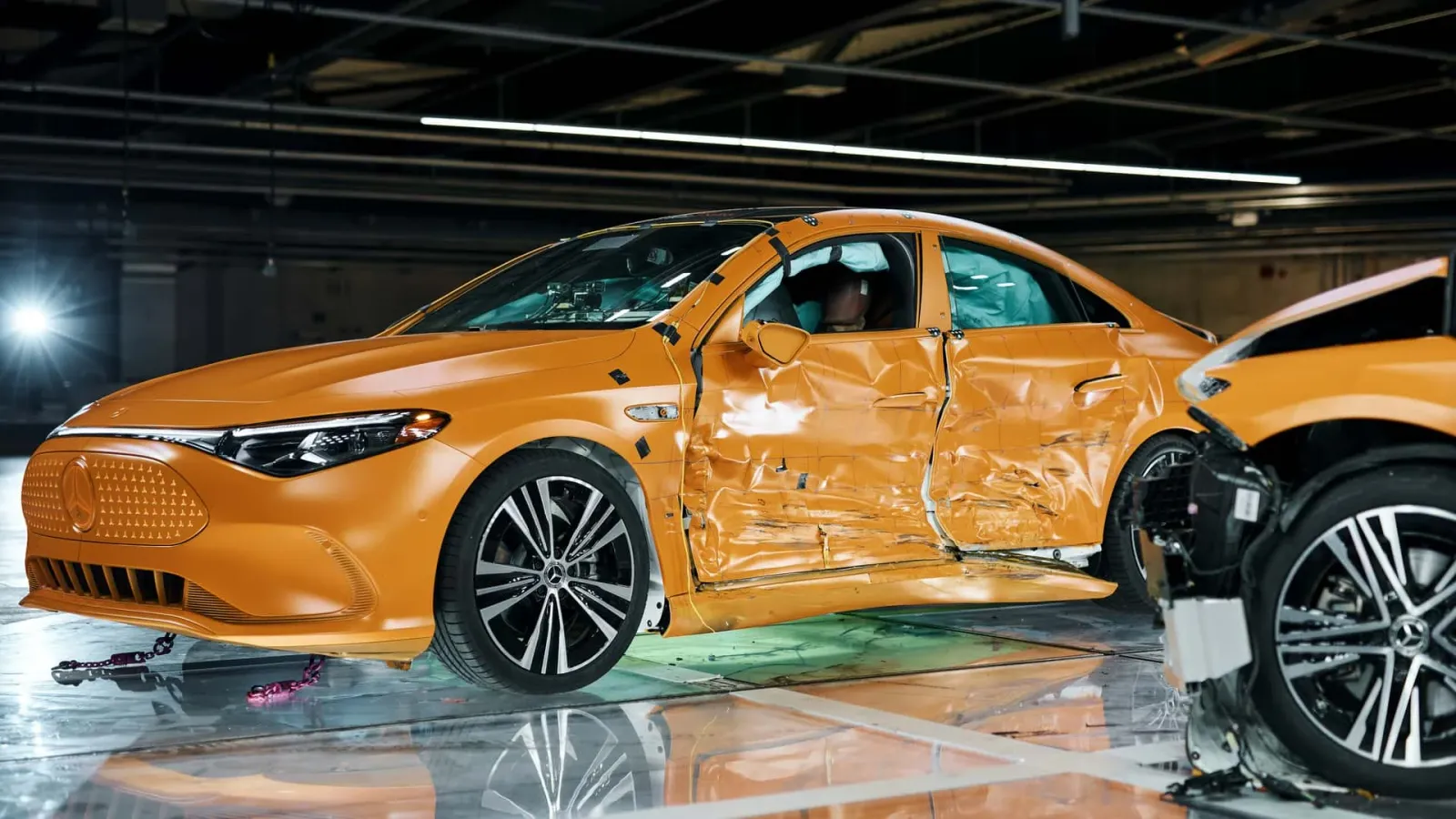
Mercedes crashed two CLA models with different powertrains. The passenger compartments remained stable, and the battery housing survived.
In short:
How to convince a customer to buy a car? Definitely with price
Passenger safety is also important, which is ensured by modern technology used in battery-powered cars as well
To prove this, Mercedes conducted an unusual crash test comparing the new electric CLA with its gasoline counterpart
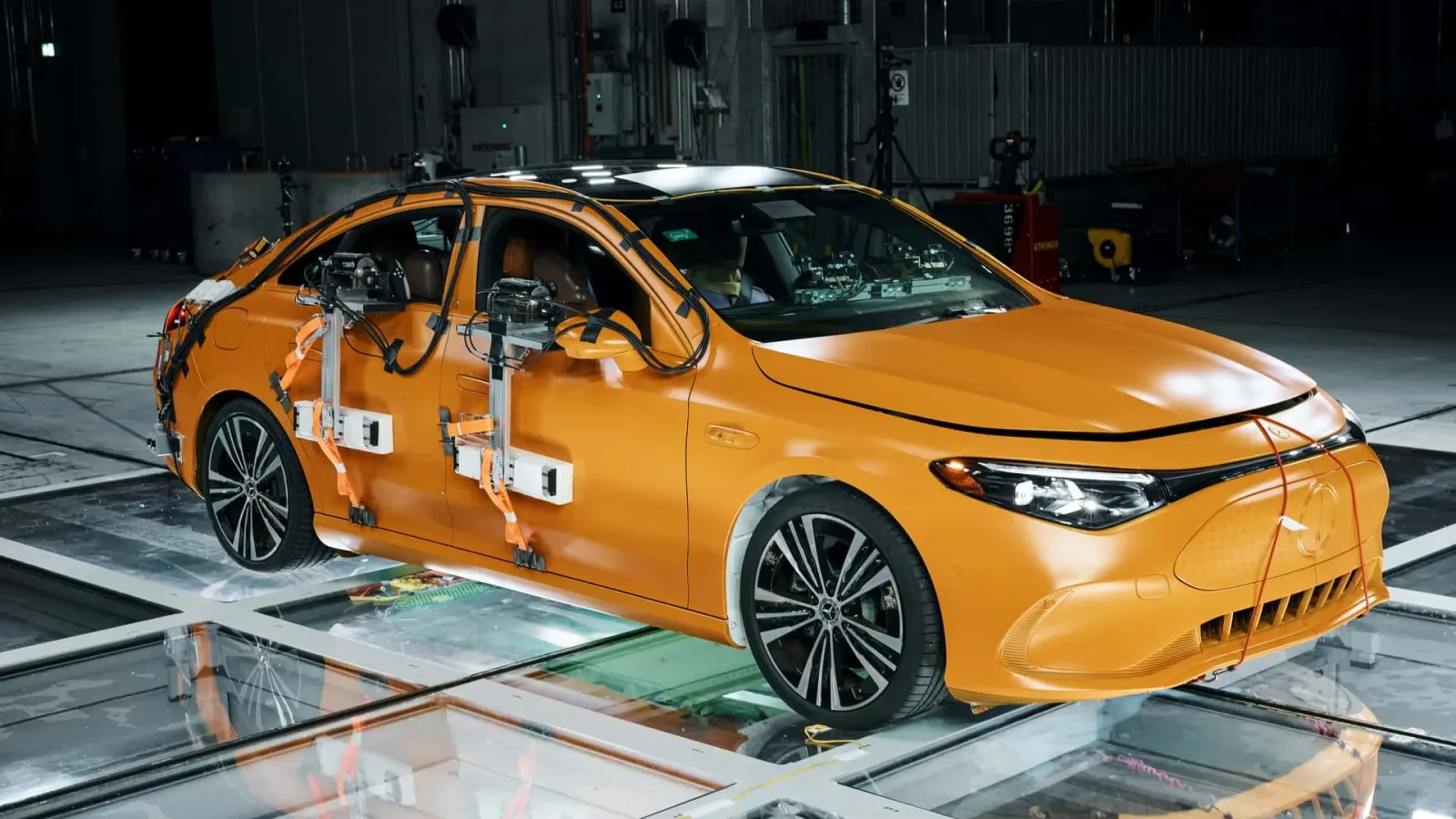
Instead of a barrier, two standard cars were used
The cars collided at 56 km/h without braking
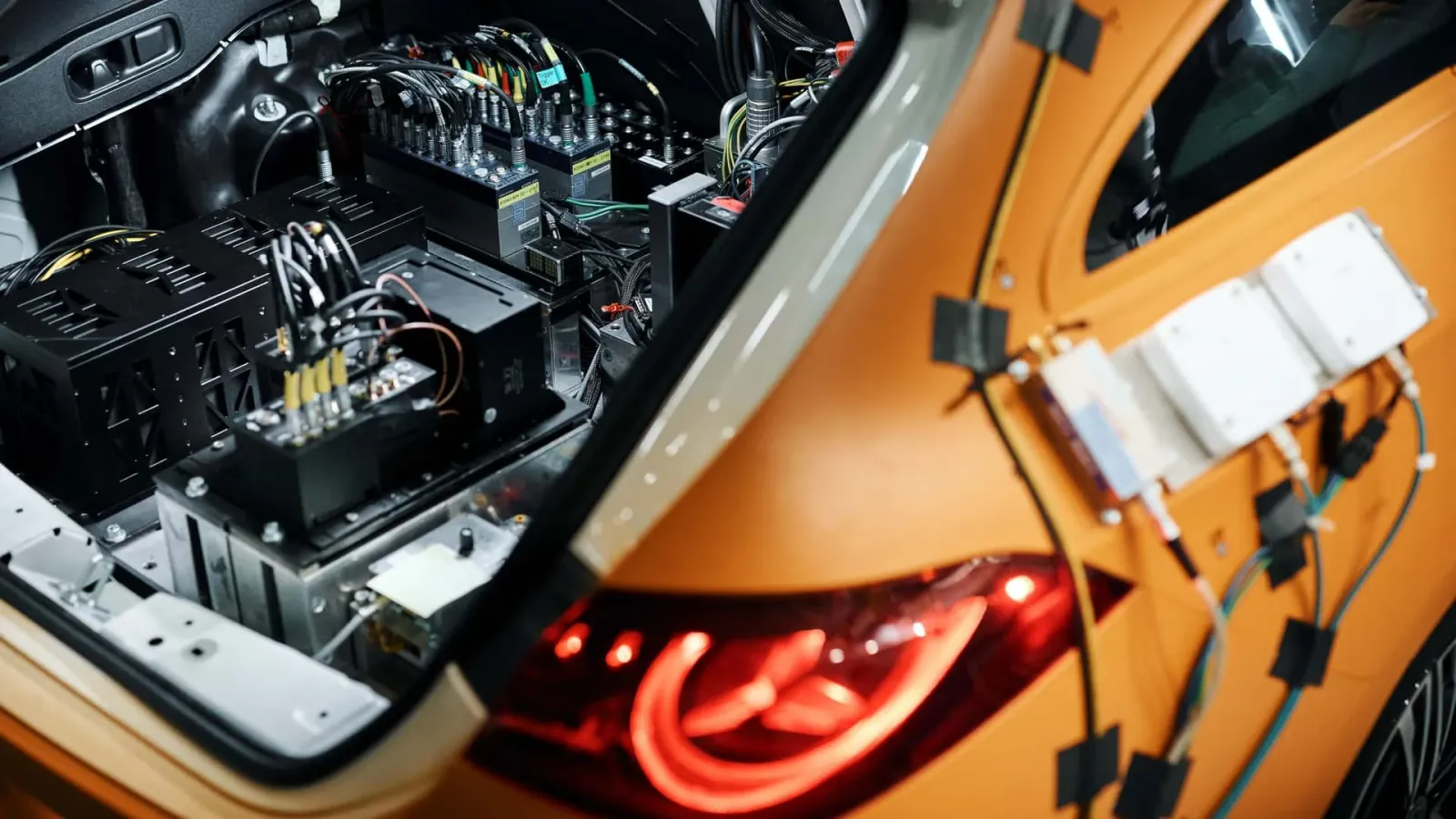
Hundreds of sensors measuring various parameters were installed in eight dummies
Mercedes simulates accidents
Standard crash tests are described in detail. The car hits a specific barrier, or a moving platform strikes a stationary car at a defined speed and angle. This allows for comparing the results of different models.
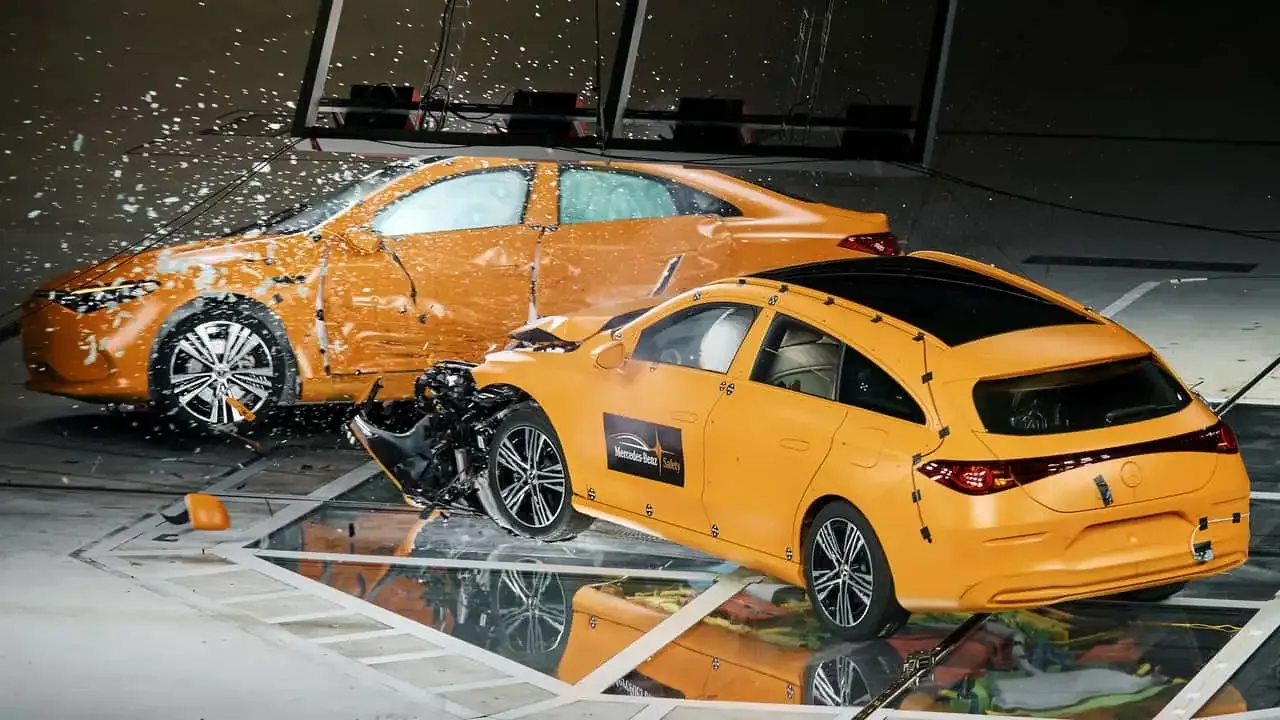
Mercedes decided to test the new CLA in a scenario more resembling a real accident at an intersection. Two production cars were prepared, accelerated to 56 km/h, and driven toward each other without prior braking.
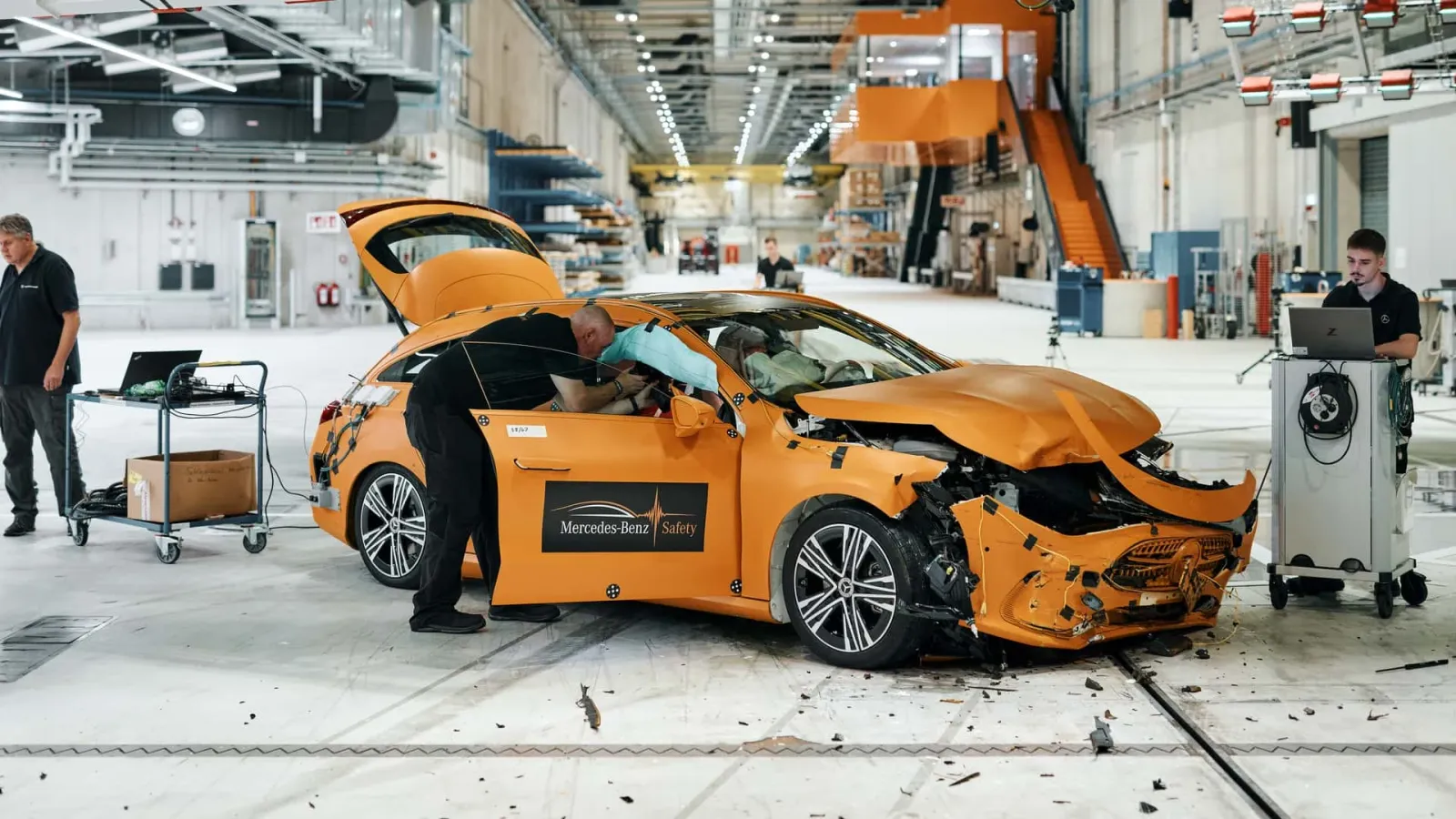
The CLA Shooting Brake with an electrified internal combustion engine struck the driver’s door of the fully electric CLA head-on. Mercedes describes this attempt as the world’s first public high-speed side impact test involving two moving production vehicles.
Two cars, over two tons each
The conditions were much more difficult than in many standard homologation tests.
Both CLA models weighed over two tons and were moving at 56 km/h. According to Mercedes’ crash studies, this speed level corresponds to the upper limit of speeds encountered in severe collisions at intersections.
The situation was particularly challenging for the electric CLA. The vehicle was hit directly on the side, where there is significantly less space for controlled deformation between the second vehicle and the passengers compared to a frontal impact.
There is also a large high-voltage battery under the floor. Thus, the collision was designed to test both the cabin structure, passenger protection systems, and battery durability.
Eight dummies in two vehicles
Mercedes installed a total of eight dummies in both CLA models — four representing adults and four representing children.
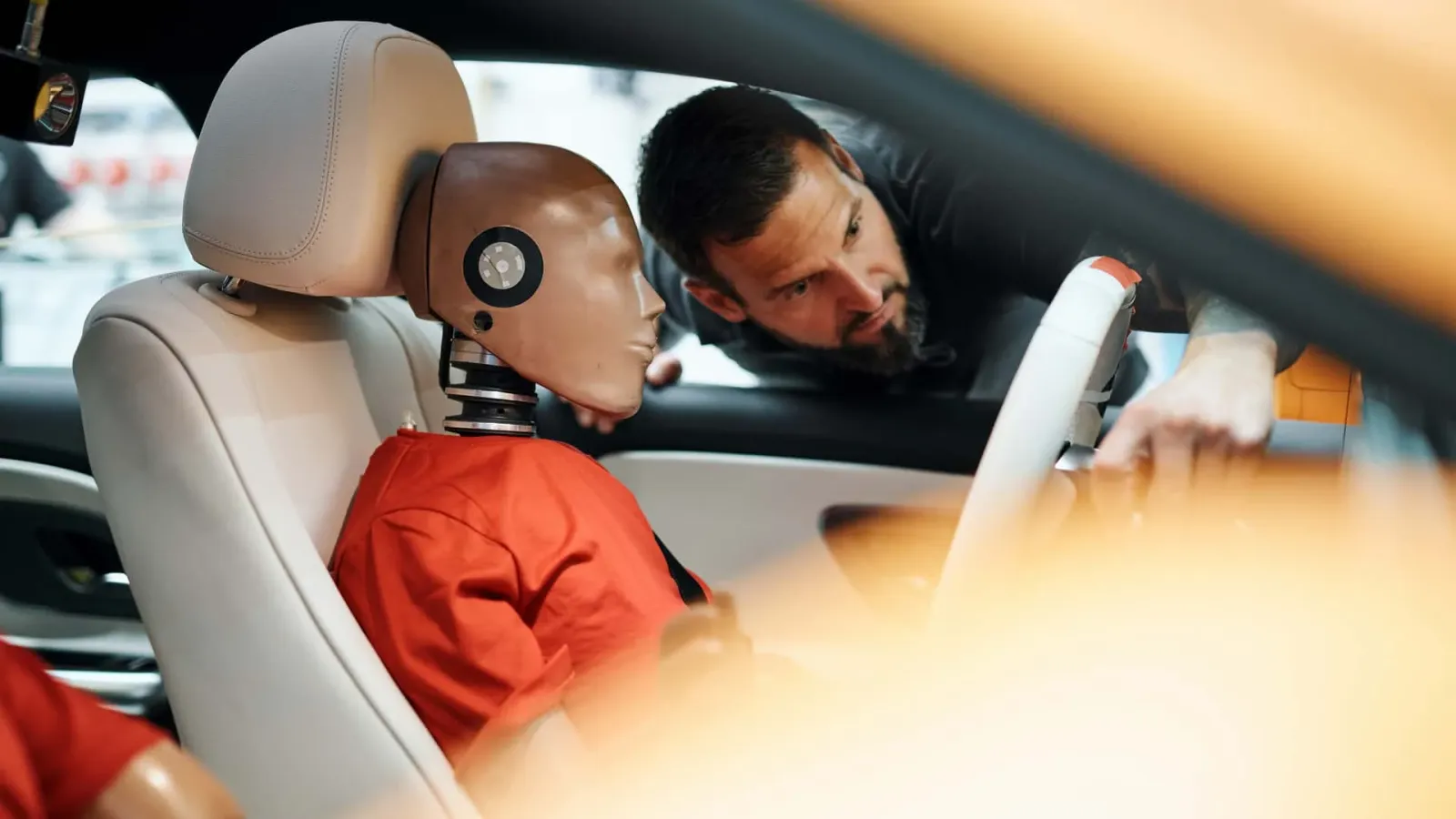
Each dummy was equipped with a set of sensors. The most advanced dummies collected data from as many as 150 measurement points, recording stresses and forces acting on various body parts.
According to the manufacturer, all values remained below the established biomechanical limits. Mercedes estimates that under this scenario, the risk of serious or life-threatening injuries would be low.
However, what was most important was what happened to the cars themselves. Despite the high impact energy, the passenger compartments of both CLA models stayed stable.
What happened to the battery in the electric CLA?
The battery was one of the most crucial elements of the entire experiment.
The electric CLA was struck on the side precisely at the area where the battery is located. Mercedes states that despite body deformation, the battery enclosure remained intact, and the cells were not damaged.
Upon detecting the collision, the vehicle also automatically disconnected the high-voltage system.
This is important not only for the passengers but also for subsequent rescue operations. After a serious accident, one of the key tasks for the vehicle’s systems is to isolate the high-voltage wiring and reduce the risk associated with battery damage.
Mercedes also notes that modern driver assistance systems should attempt to avoid a collision or at least reduce its impact energy before a similar accident occurs. In this test, this element of the scenario was intentionally disabled, causing both vehicles to collide without braking.
This is not a standard Euro NCAP test
Neither approval regulations nor organizations conducting consumer safety tests require such a scenario.
In side impact tests, a moving barrier typically hits a stationary vehicle. This allows for very precise replication of the test and comparison between different vehicle designs. Here, both vehicles were in motion.
Mercedes explains that the scenario was developed based on data from real accidents. According to the manufacturer, about one quarter of road incidents involving injuries are side impacts.
The company has been conducting its own crash tests since 1969. To date, teams working in countries such as Germany, China, and India have analyzed and reconstructed around 6000 real-world accidents.
Data from such incidents is then fed to designers of vehicle bodies, safety systems, and airbag serta seatbelt mechanisms.
15,000 simulations and about 150 crashed cars per model
A physical crash test is now only part of the car design process.
Mercedes states that it performs around 15,000 computer simulations of accidents for each new model. Only afterward are actual tests conducted.
In total, there are about 150 physical crash tests per new model. The company notes that some of these tests go beyond the requirements set by homologation processes or organizations like Euro NCAP.
The public collision between two CLA models was designed to demonstrate one such challenging scenario.
“Those who want to build the safest cars must include knowledge derived from real accidents in their requirements. We call this Real-Life Safety,” said Paul Dick, head of vehicle safety at Mercedes-Benz.
The car will transmit information to rescuers on its own
During the crash test, Mercedes also showcased another solution set to appear in cars starting in 2027.
Mercedes-Benz Rescue Intelligence is designed to provide emergency services with information about the car even before firefighters or rescuers arrive at the accident scene.
Depending on the vehicle and available infrastructure, rescuers will be able to receive information such as the number of people inside the car, the status of airbags and seat belts, open doors, battery temperature, and the condition of the high-voltage system.
This will allow for an earlier assessment of the situation and preparation of the appropriate equipment even while en route to the scene.
The test of the two CLAs was an impressive way to demonstrate the capabilities of the new design, but its most interesting aspect isn’t just seeing two Mercedeses crash. What’s far more significant is that, despite a very strong side impact, the electric vehicle’s cabin remained safe, and the battery located directly under the impact site survived without any cell damage.
Piotr Sobczyk