
Mercedes pulls back: its cheapest car will finally get a new hybrid and electric version soon
14/09/2026 14:00
Updated to
14/09/2026 14:00
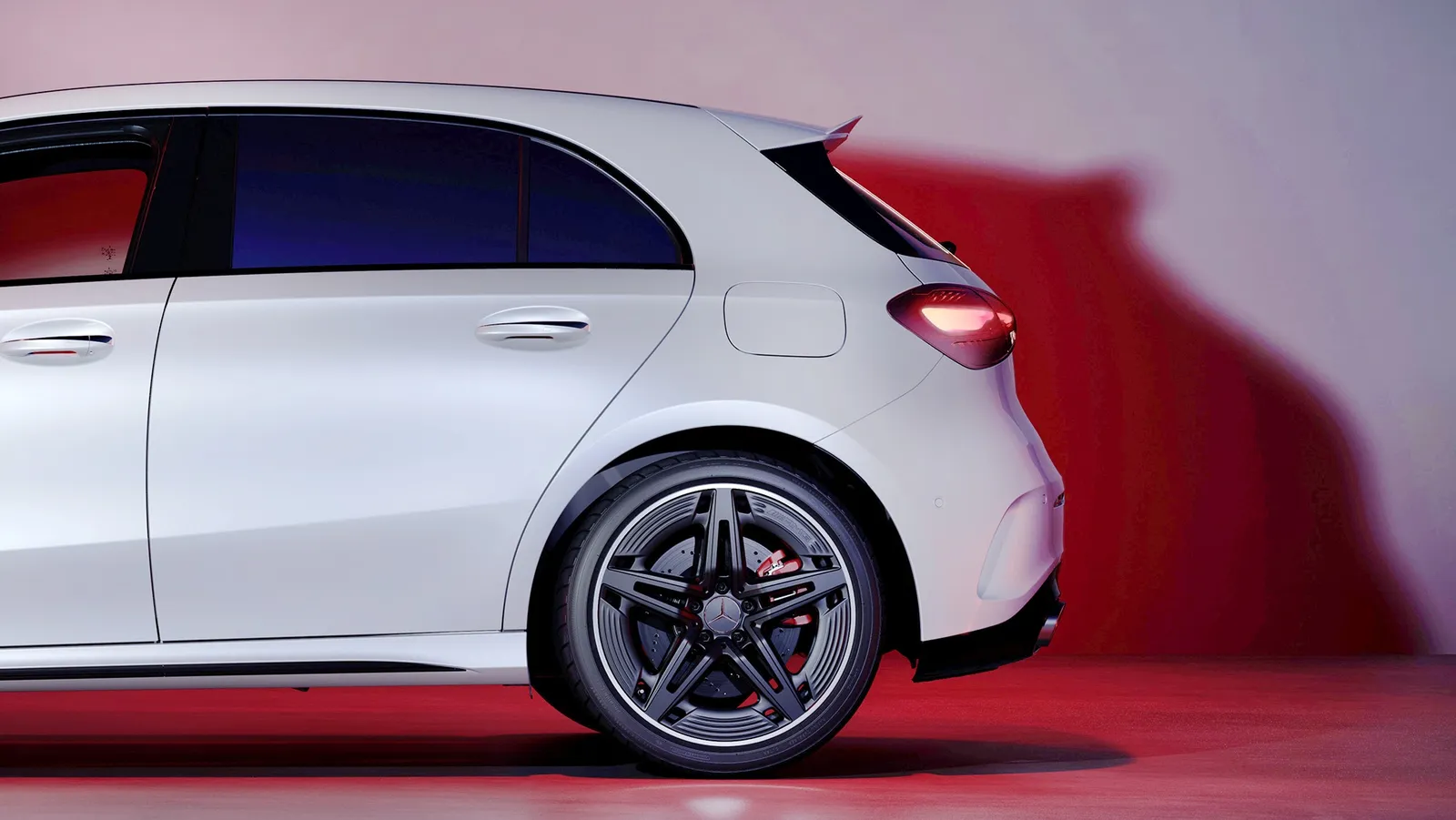
The Mercedes Class A seemed destined to disappear from the German brand’s lineup just a few months ago. The strategy announced over the past years involved reducing the number of compact models and focusing on vehicles with higher profit margins, with the new Mercedes CLA taking over much of the space previously occupied by the compact model. However, Mercedes appears to have changed its mind and is now working on a new generation.
According to some German media outlets, citing company sources, the next A-Class will enter the market by the end of 2028. It will also feature an important distinction: it will be available both as a 100% electric vehicle and with combustion engines enhanced by hybrid technology. Mercedes has not officially confirmed these plans, but the project would extend the life of one of its entry-level models, even though everything pointed in the opposite direction until recently.
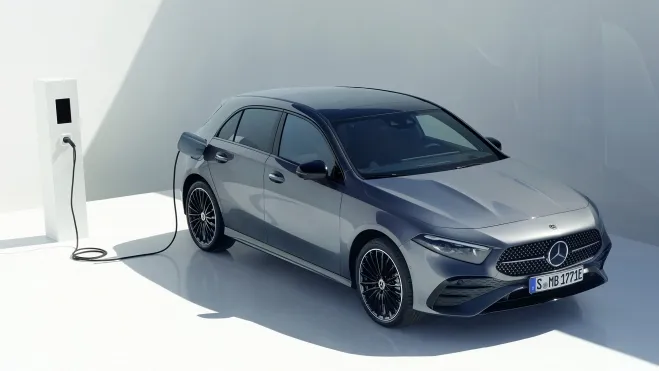
The A-Class was set to disappear, but Mercedes backs down
The current generation of the Mercedes Classe A was launched in 2018, with production initially planned to last until 2026. Mercedes later decided to extend it until 2028, a first sign that there was still sufficient demand to keep the model in production. Now the company appears to have gone a step further by approving a new generation directly.
The drive behind this change is likely the demand for relatively affordable cars within Mercedes’ lineup. L'Automobile notes that the manufacturer has found many customers still seeking a model below the CLA, and completely dropping that tier could create too much of a gap between the brand’s entry-level offerings and its higher-end products. The decision also aligns with a more flexible strategy in which Mercedes aims to offer various propulsion technologies for longer periods.
The new generation would use the ‘Mercedes-Benz Modular Architecture’, better known as ‘MMA’, introduced with the new CLA. This architecture is primarily designed around electric propulsion, though it also allows for hybrid systems with internal combustion engines. This would enable Mercedes to develop both versions of the A-Class on the same platform without needing completely separate architectures.
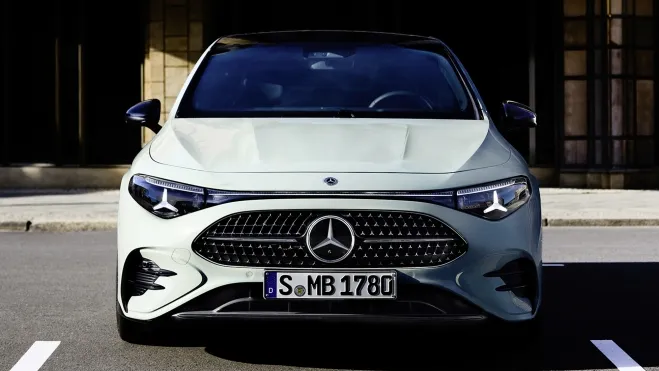
The new A-Class will leverage technology from the electric CLA
Although there are still no specifications for the future A-Class, the CLA allows us to anticipate much of the technology it might use. Its electric version features an 800-volt architecture, has batteries with up to 85 kWh of usable capacity, and can achieve ranges of over 700 km in its most efficient configurations. It also supports charging speeds of up to 320 kW, enabling it to regain hundreds of kilometers of range in approximately 10 minutes of charging.
This doesn’t mean that the future A-Class will achieve exactly these figures. A smaller and more affordable model might use batteries with lower capacity and different mechanical configurations to cut costs. However, the MMA platform allows Mercedes to transfer technologies developed initially for the CLA and other models in this new generation to its compact car.
The Mild Hybrid option should also be closely related to the one currently offered in the CLA. The latter uses a 1.5-liter gasoline engine combined with a small electric motor integrated into an 8-speed electrified transmission and a 48-volt battery. Again, there is no confirmation that the A-Class will use exactly this configuration, though sharing the architecture would allow reuse of many of the components.
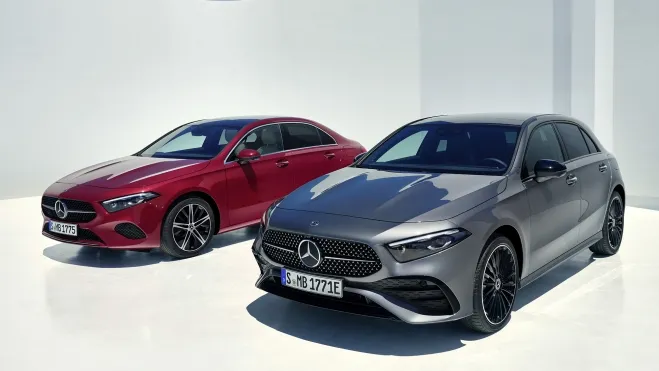
It is expected to arrive by the end of 2028 and could be manufactured in Hungary
Another significant change would affect its production. The current Class A is manufactured, among other locations, in Rastatt, Germany, but the future model might be moved to Kecskemét, Hungary. Mercedes is significantly expanding this facility, and lower labor costs would allow for improved profitability on a car positioned at the bottom of its lineup.
This move is particularly meaningful within Mercedes’ recent strategy. In 2022, the company announced its intention to reduce its compact lineup from seven to four models and focus more on higher-end segments. The new family already has the CLA as its core model and will continue to expand, but the possible survival of the Class A shows that the withdrawal of more affordable models might not be as thorough as expected.
If the information is confirmed, the current Class A will thus have an exceptionally long commercial lifespan before being replaced. Its successor is expected to appear by the end of 2028, and Mercedes will retain something it seemed ready to abandon: a traditional compact car positioned below the CLA. The major difference will be that, for the first time, the Class A could be chosen as a pure electric or Mild Hybrid model, allowing Mercedes to keep both technologies available while assessing where European demand is truly heading.