
Mercedes is preparing to control individual cells in the battery. Microcontrollers, direct DC and AC control
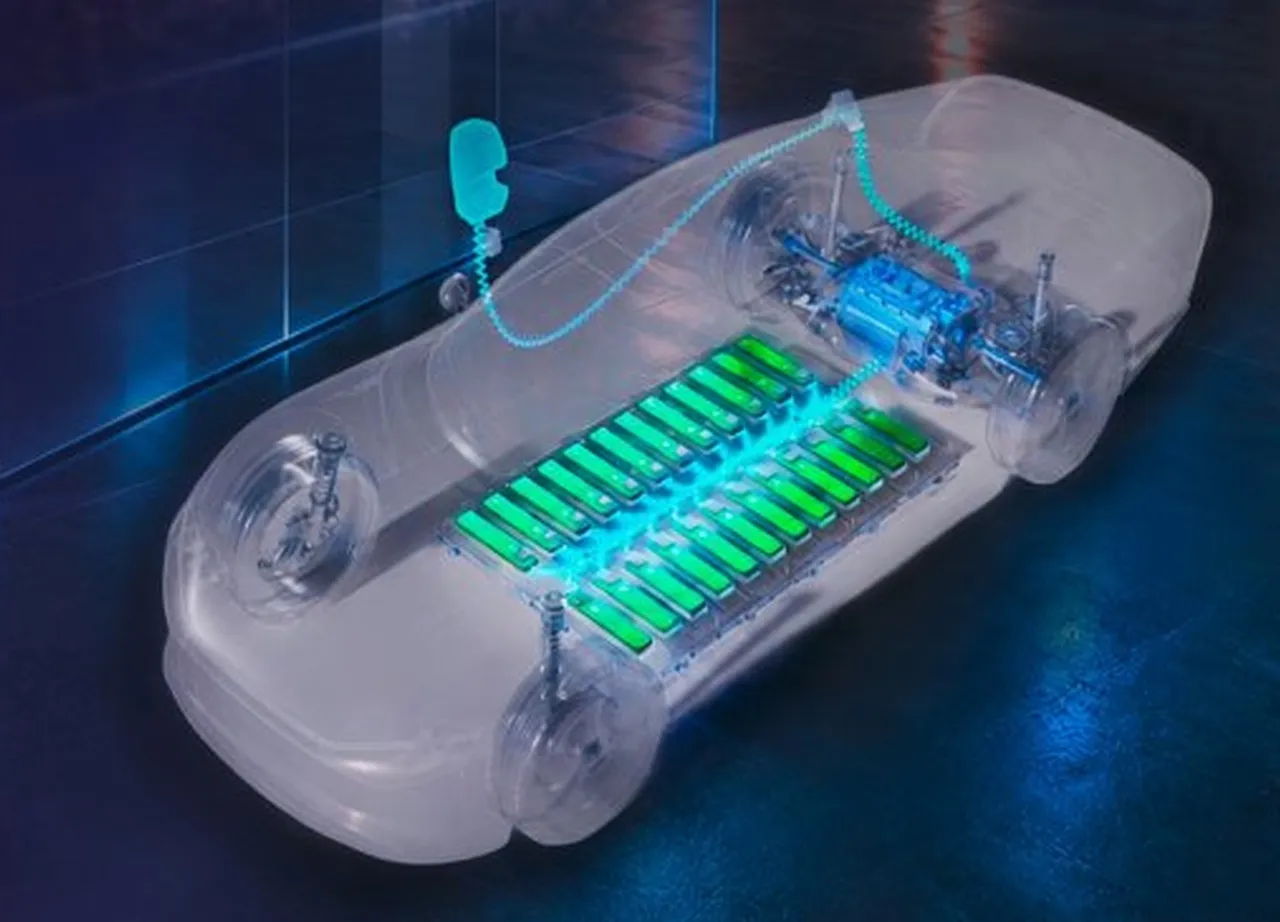
Mercedes is working on a Power Converter project, under which each [small] cell group in the battery would have its own microcontroller with a microconverter. This would control the flow of energy so that the voltages and currents at the battery output match exactly what is needed. The technology is still in its very early stages, but it already enables power outputs of up to 3 kW. The direction of development looks promising.
Parallel connections and microcontrollers. It’s not as expensive as it might seem.
Table of contents
Parallel connections and microcontrollers. It’s not as expensive as it might seem.
And what’s the current status?
Let’s start with what the manufacturer promises: through the parallel connection of cell packs—presumably along with communication modules—the entire system can coordinate so that the battery can power the engine directly, regardless of the charge level or age of the cells (source), of course within the limits permitted by physics. The company would no longer need to design the car around a specific architecture (400 V, 800 V, etc.), as the software in the battery would determine that instead.
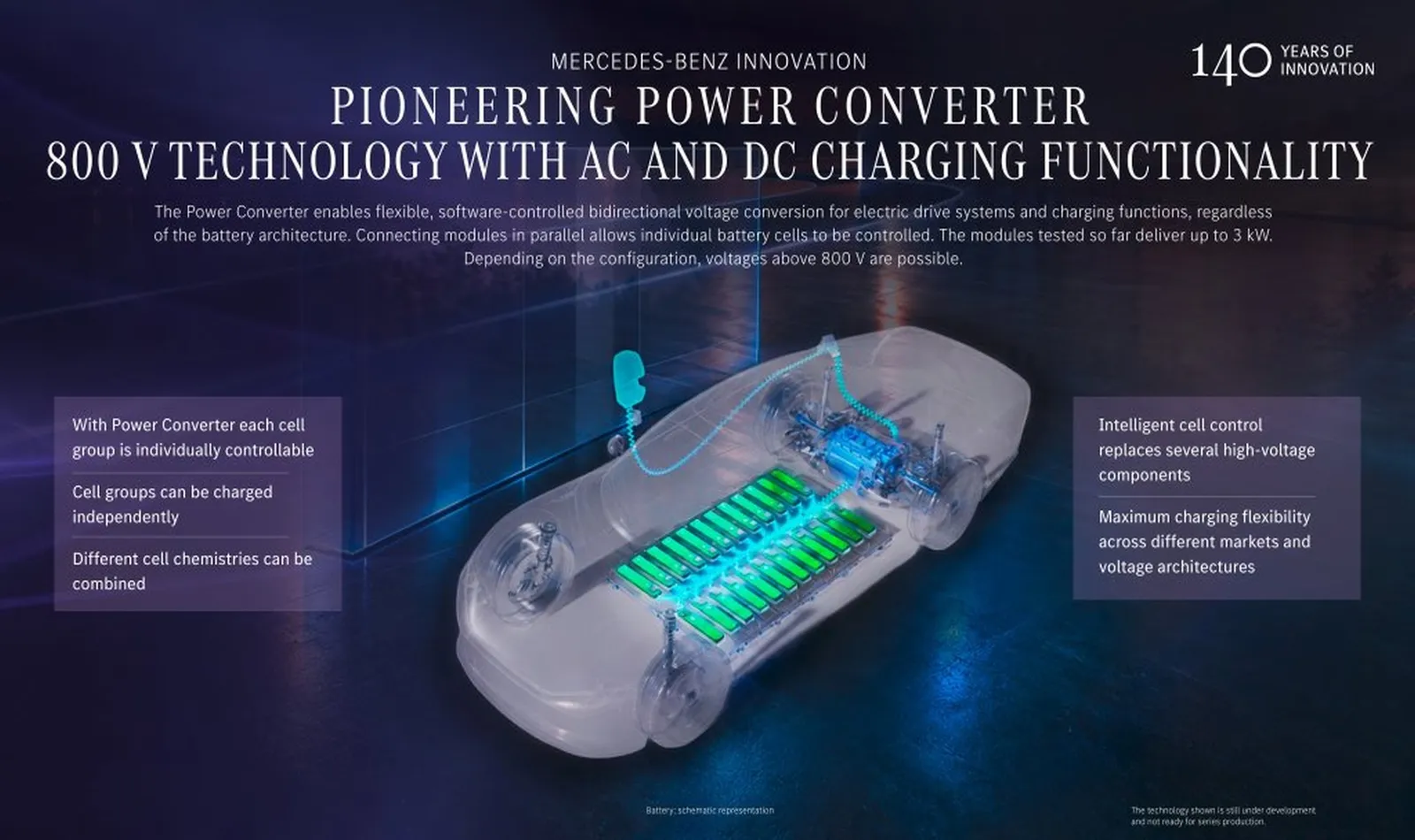
The control systems located within the package housing would cause inverters to cease performing one of their key functions in electric vehicle installations. The battery would transmit energy to the main consumers on its own, as microconverters can provide either direct current (DC) or alternating current (AC) at their output. The same applies to external devices (V2L) or energy flow in the reverse direction, namely charging. Microconverters would take in alternating current and convert it into direct current to supply the battery cells, without the need for onboard AC-DC chargers.
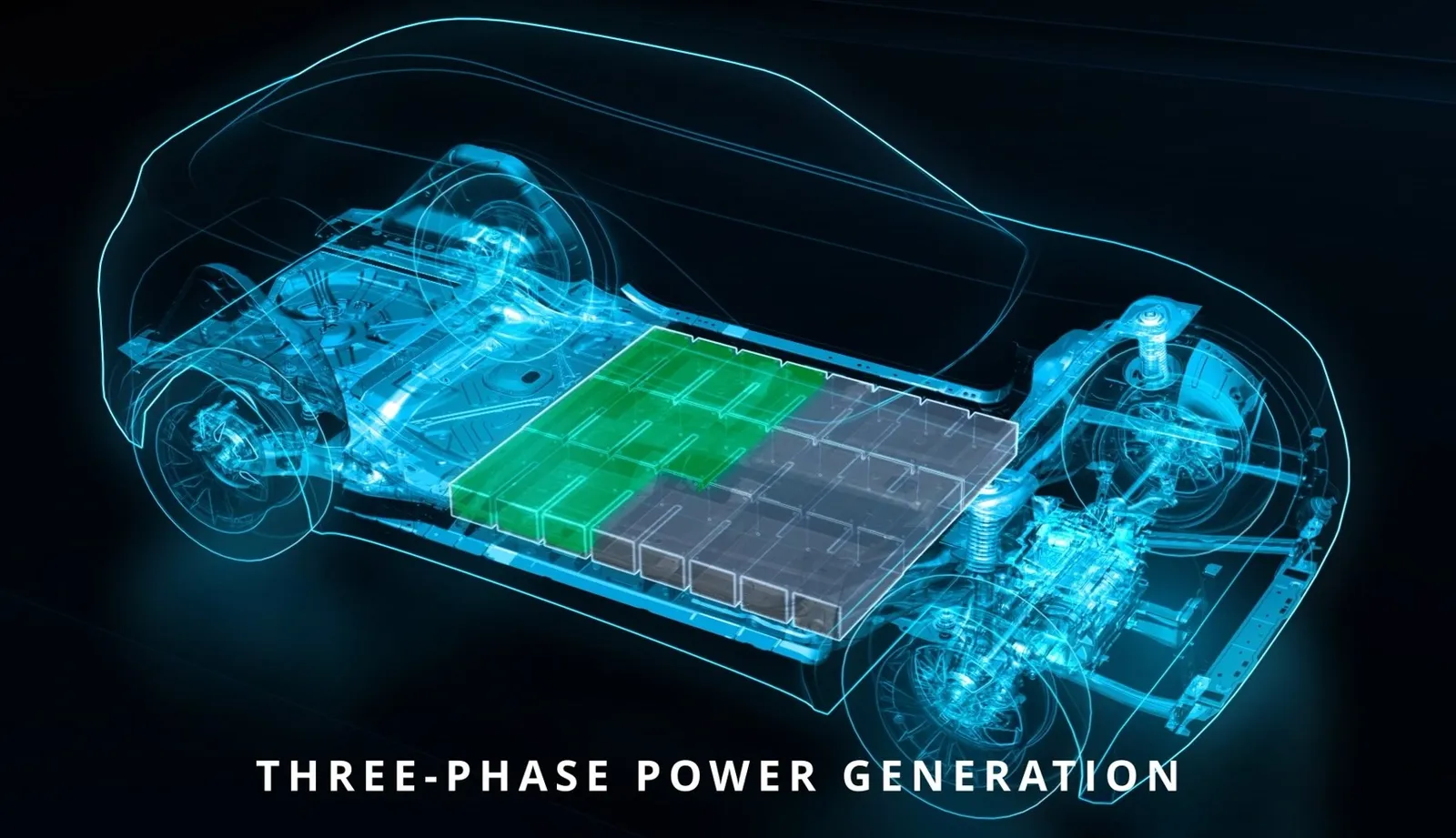
Stellantis has a similar idea for getting rid of expensive inverters: each battery module would have its own control system (micro-inverter), allowing engines to be connected directly to the battery terminals.
But that’s not all: since the Li-ion cell would change from a simple metal cylinder to one with a communication interface, each cell could have a different age and chemistry. The electronics would still ensure that the current output meets specific parameters. And if a cell were to degrade and fail to stay within certain limits, it would be permanently disconnected. To the driver, the change would be imperceptible, as we’re talking about removing just one of the several hundred or thousands of components from the system.
So what’s the situation today?
Today, the situation is completely different: even a single cell that deviates from the rest can cause the entire battery to operate only within parameters that are safe for it. A large voltage variation results in the battery charging only to its factory-set 80 percent [because some cells reach dangerously high voltages at that point] and discharging to 40 percent [because other cells reach dangerously low voltages]. In other words, out of the original 100 percent capacity, the user actually has 40 percent available.
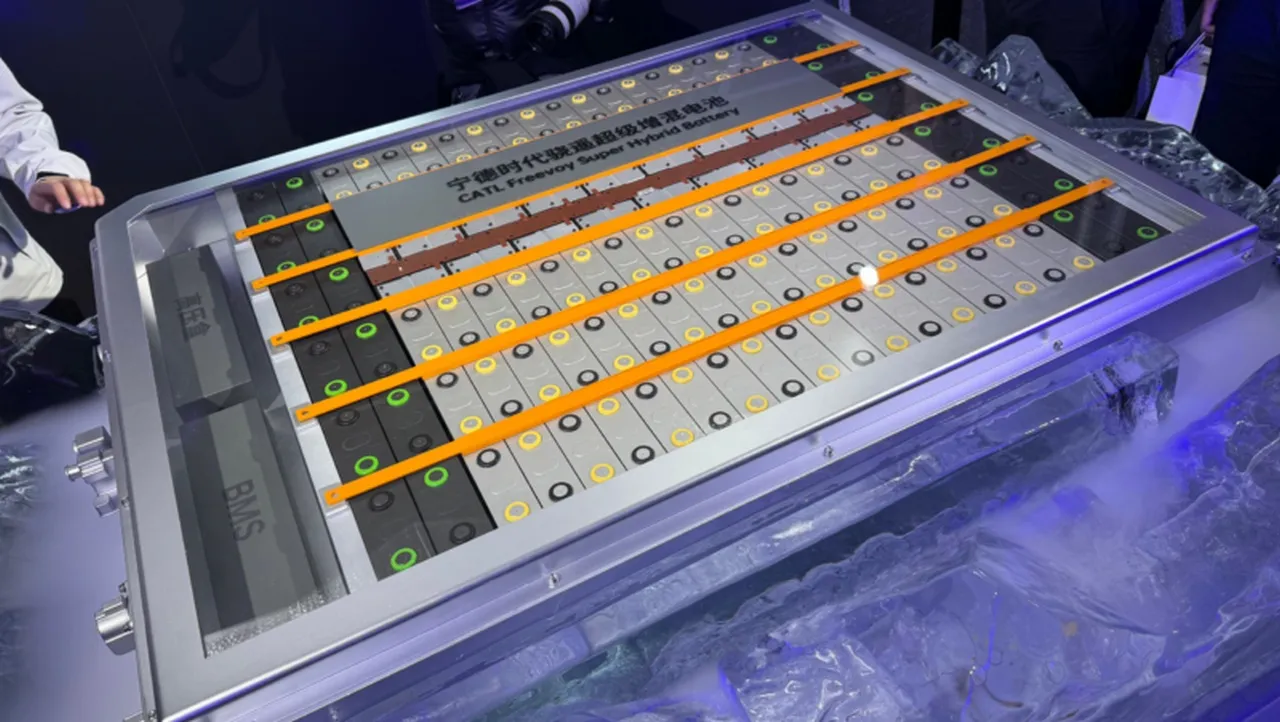
It should be added that combining cells with different chemistries is not a new idea; Chinese company CATL already offers such packages (CATL Freevoy, illustrated below). However, they are designed with great care, featuring various operating strategies for different chemistries. In Mercedes’ concept, the main BMS wouldn’t even need to know exactly what it is managing, as micro-management would be handled by a microcontroller at the level of a single cell or several cells.
Article Rating
Readers’ Ratings
[Total: 1 vote Average: 5]
Don’t miss new content — CLICK and FOLLOW Elektrowoz.pl on Google News. You might also be interested in the following ads: