
Mercedes Power Converter: New Technology for 800 Volt Introduced
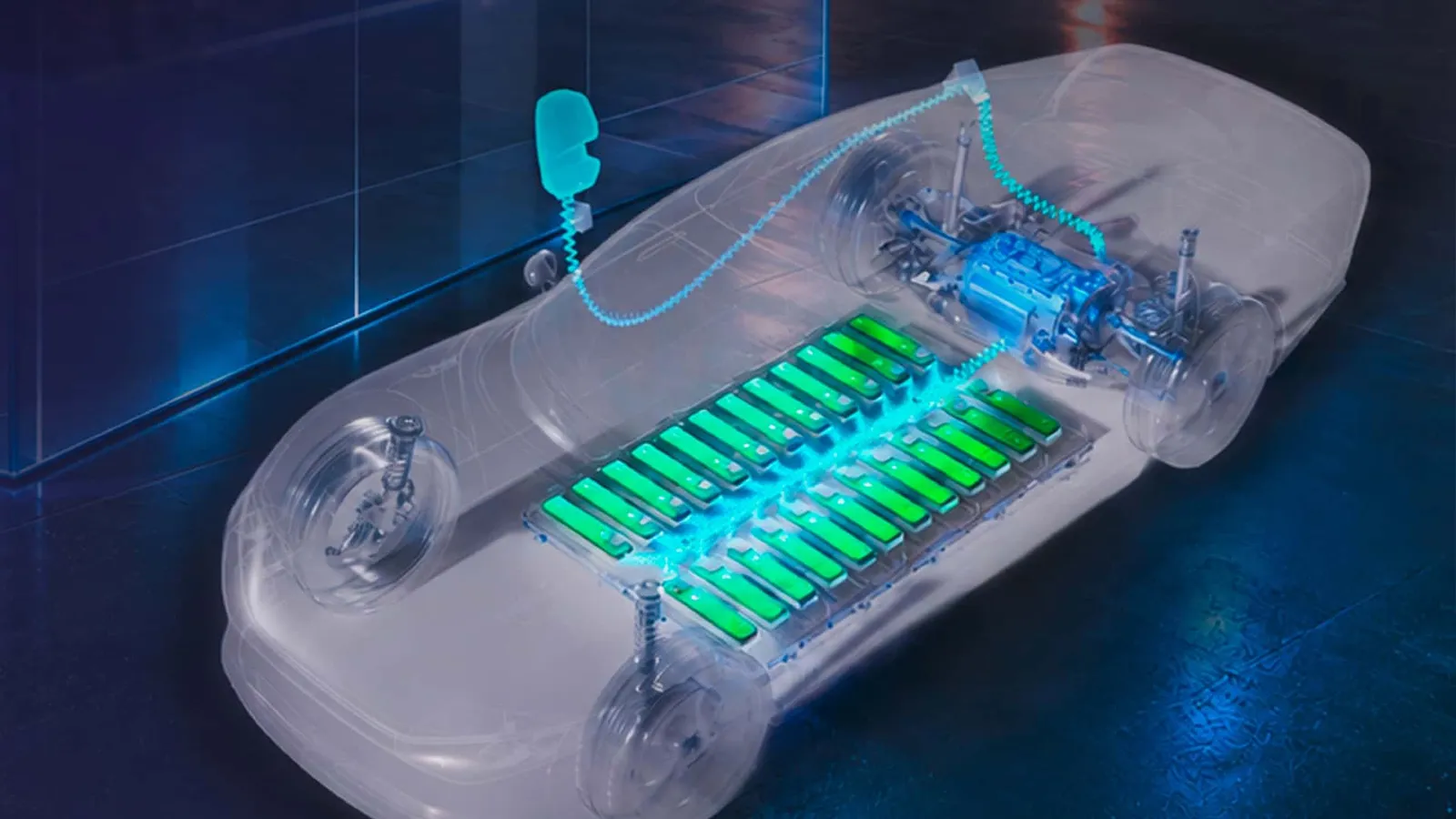
By developing a novel power electronics system called the Power Converter, Mercedes is introducing a key technology for future electric vehicles. This system utilizes programmable microconverters to individually control energy flows at the level of individual battery cells or small cell groups.
In this way, a constant high-voltage output of up to 800 volts can be provided, which remains largely unaffected by the current charging status or aging condition of the individual battery cells. The software-based control thus decouples high-voltage generation from the traditional series connection of cells in the battery and assigns this task to the decentralized electronics.
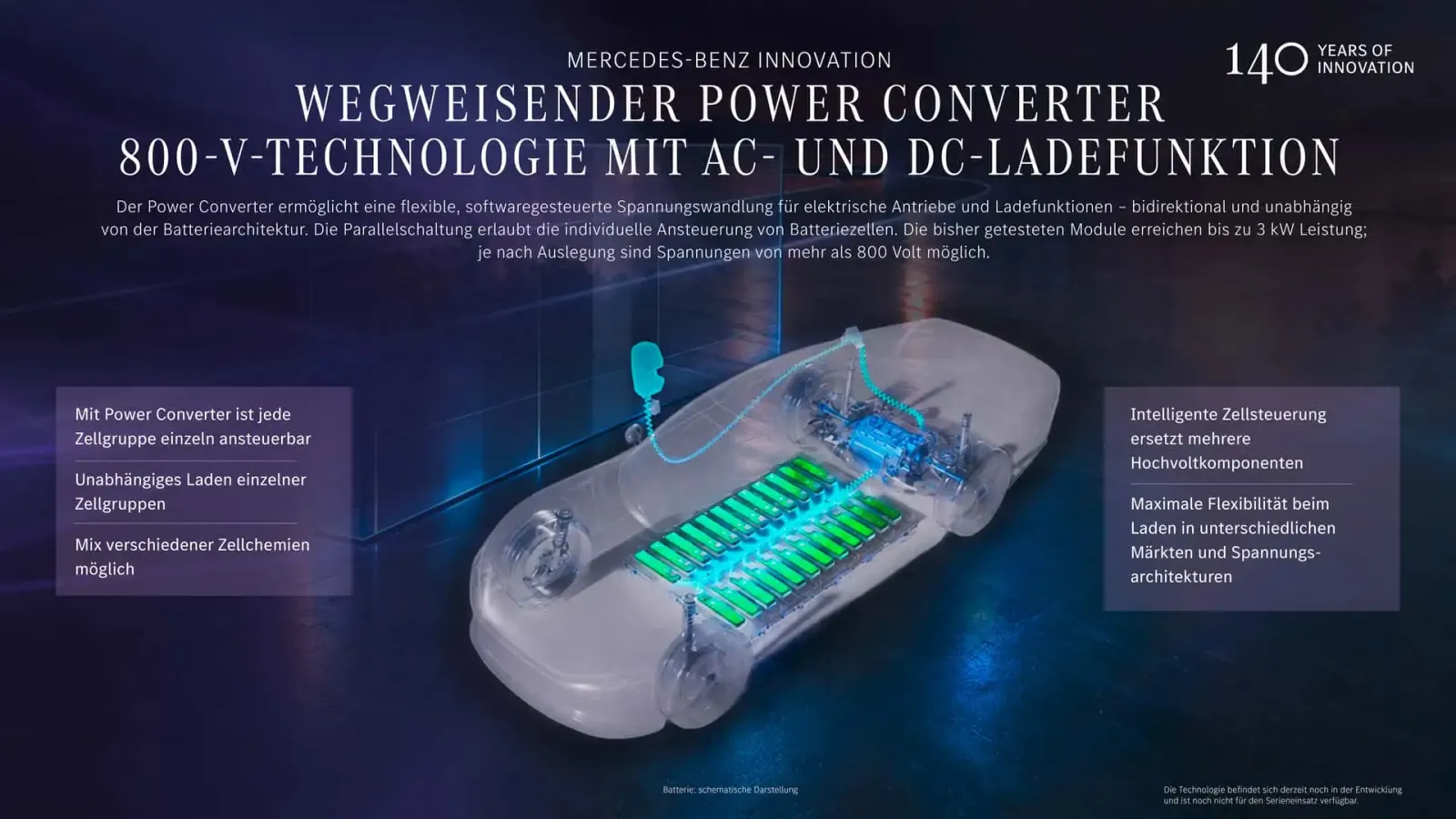
Mercedes Power Converter
Image source: Mercedes-Benz
In practice, the concept relies on several micro-power electronics components connected in parallel, whose combined operation enables demand-based and flexible scaling of the total power output. The current development stage achieves a power output of up to 3 kW for 800-volt applications and is designed for both alternating current (AC) and direct current (DC) applications. This modular approach offers the potential to integrate previously separate components within the vehicle architecture into a single hardware unit.
Smaller and lighter
The combination results in new degrees of freedom when designing batteries, powertrains, and charging systems. In addition to a more compact design and reduced overall weight, the power converter enables the integration of various charging functions.
The system supports both AC and DC charging processes and creates the technical conditions for bidirectional charging. This allows for use cases such as Vehicle-to-Home (V2H) or Vehicle-to-Grid (V2G), where the vehicle serves as a buffer storage for buildings or the public power grid.
In addition, decentralized control enhances the overall efficiency of the electric drive. By compensating for the aging process of individual battery cells, range losses over the vehicle’s lifetime can be minimized.
At the same time, decoupling voltage from the number of cells facilitates the modularization of drives, making it easier to apply this technology in both purely battery-electric vehicles and plug-in hybrids. According to Mercedes, the technology is currently in the development stage and is not yet available for mass production.
More from Mercedes: