
The Mercedes EQS now has an 800 V system and a WLTP range of 926 km. There’s an exterior facelift, but underneath it’s different.
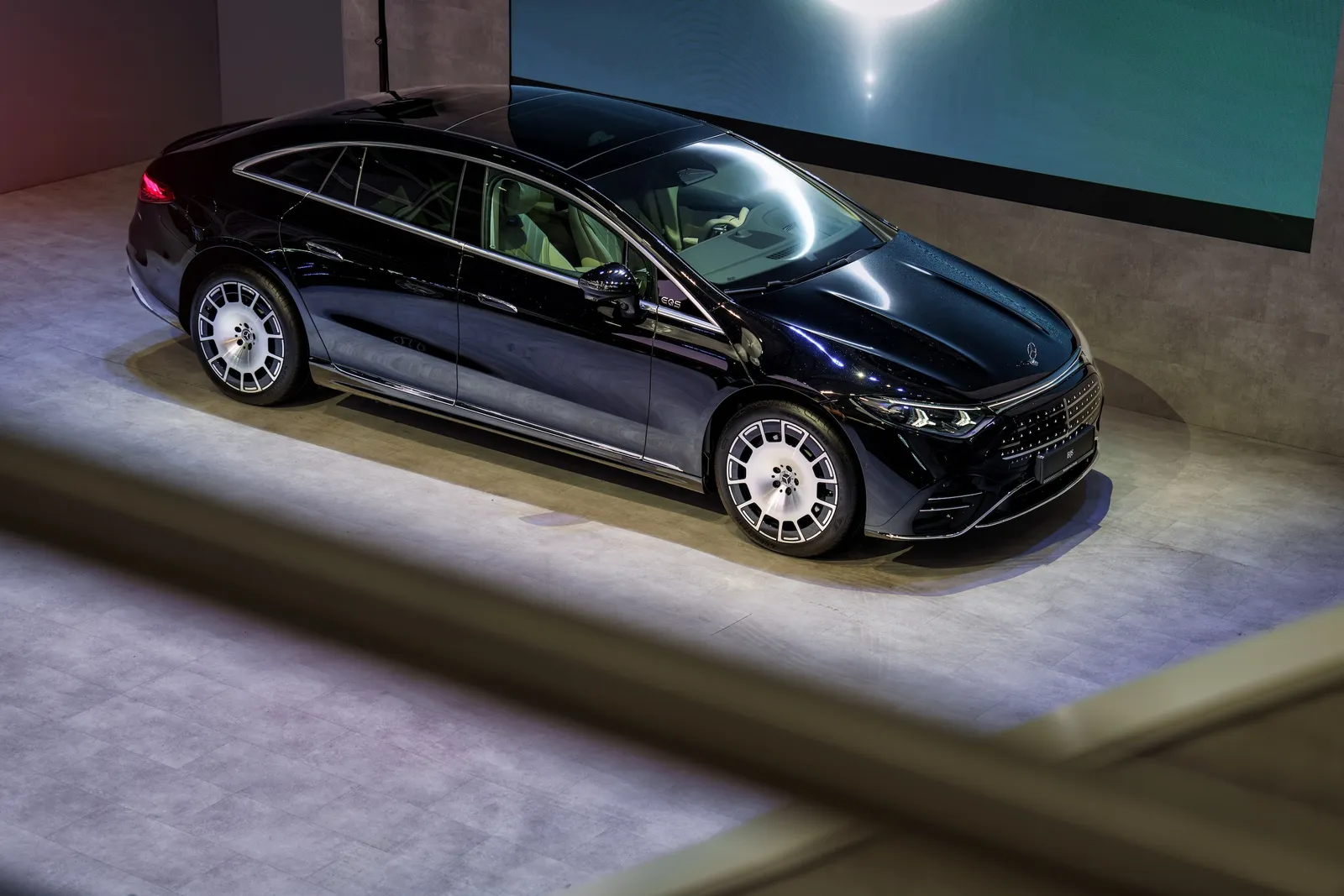
Mercedes unveiled the upgraded EQS in Warsaw, a model available since 2021. The most significant changes aren’t found in the headlights or bumpers but rather in the technology: an 800 V architecture, a battery with up to 122 kWh capacity, and a WLTP range of 926 km. For drivers, this means faster charging and fewer compromises on the road, at least in theory.
New powertrain, larger battery, and charging up to 350 kW
Mercedes claims it has replaced over a quarter of the components in the refreshed EQS. The vehicle features a new electric architecture, proprietary power units, a two-speed transmission at the rear axle, new batteries, and the MB.OS system. These upgrades are hardly visible on the exterior of the car.
The farthest range is offered by the EQS 450+, which is the rear-wheel-drive version with 408 horsepower and 505 Nm of torque. It features a battery with a usable capacity of 122 kWh, accelerates to 100 km/h in 5.9 seconds, and according to Mercedes, achieves a WLTP range of 926 km—13% more than before. WLTP isn’t exactly a Polish highway in winter, but the figure is impressive nonetheless.
Two 4×4 variants come next. The EQS 500 4MATIC has 476 horsepower and 750 Nm of torque, accelerates to 100 km/h in 4.5 seconds, and offers a WLTP range of up to 868 km. The EQS 580 4MATIC delivers 585 horsepower and 800 Nm of torque, reaches 100 km/h in 4.1 seconds, and also boasts a claimed WLTP range of 868 km. All three models top out at 210 km/h.
The EQS 400 with rear-wheel drive will later join the lineup, featuring 367 horsepower, 505 Nm of torque, a 112 kWh battery, and a WLTP range of up to 817 km.
Finally, 800 V has also been introduced. In the 450+, 500 4MATIC, and 580 4MATIC versions, the maximum DC charging power is now 350 kW. Mercedes claims that 10 minutes of charging using a sufficiently powerful charger can provide up to 320 km of range for the EQS 450+, with a 10-80% charge taking 27 minutes.
What’s more interesting is how the car will interact with 400 V chargers. The battery can be electrically divided into two sections so that both receive power in parallel. If this works as described, the EQS won’t be as problematic when using older charging infrastructure.
Mercedes has also increased the battery capacity in the higher trims from 118 to 122 kWh while maintaining the same dimensions. The manufacturer cites a modified cell chemistry with silicon oxide added to the anode. Additionally, there’s a two-speed transmission on the rear axle and regenerative braking up to 385 kW, which is about one-third more than before.
Steer-by-wire and a new front end, but no full model overhaul
In a few months, the EQS will be available with steer-by-wire, which is a steering system without a mechanical connection between the steering wheel and the wheels. This system works alongside a responsive rear axle, whose wheels can tilt up to 10 degrees. Mercedes has implemented a dual electronics architecture with two independent signal transmission paths, while those preferring tradition can still use the classic steering system.
When parked, such a steering wheel likely requires some getting used to. Those who have driven a Tesla or Lexus RZ will adapt more quickly.
There are few stylistic changes. New star motifs in the lights appear at the front, along with a classic illuminated star on the grille in the Electric Art version. There are also Digital Light headlights with micro-LEDs. Mercedes claims a 40% larger lighting area, up to 50% lower energy consumption for the modules, and Ultra Range headlights with a range of up to 600 meters. Aerodynamics remain a strong point of this car, with a Cd value of 0.20.
The price in Poland starts at 499,900 zł for the EQS 450+. The EQS 500 4MATIC costs from 526,900 zł, while the EQS 580 4MATIC starts at 624,900 zł. And here comes the real test: is half a million for significantly improved technology enough, since it still looks like a regular EQS from the outside?
LovEV Newsletter
Want more content like this?
Sign up — we’ll send you a weekly summary once the newsletter starts.