
Mercedes-Benz is abandoning charging stations in Europe – Electra is taking over
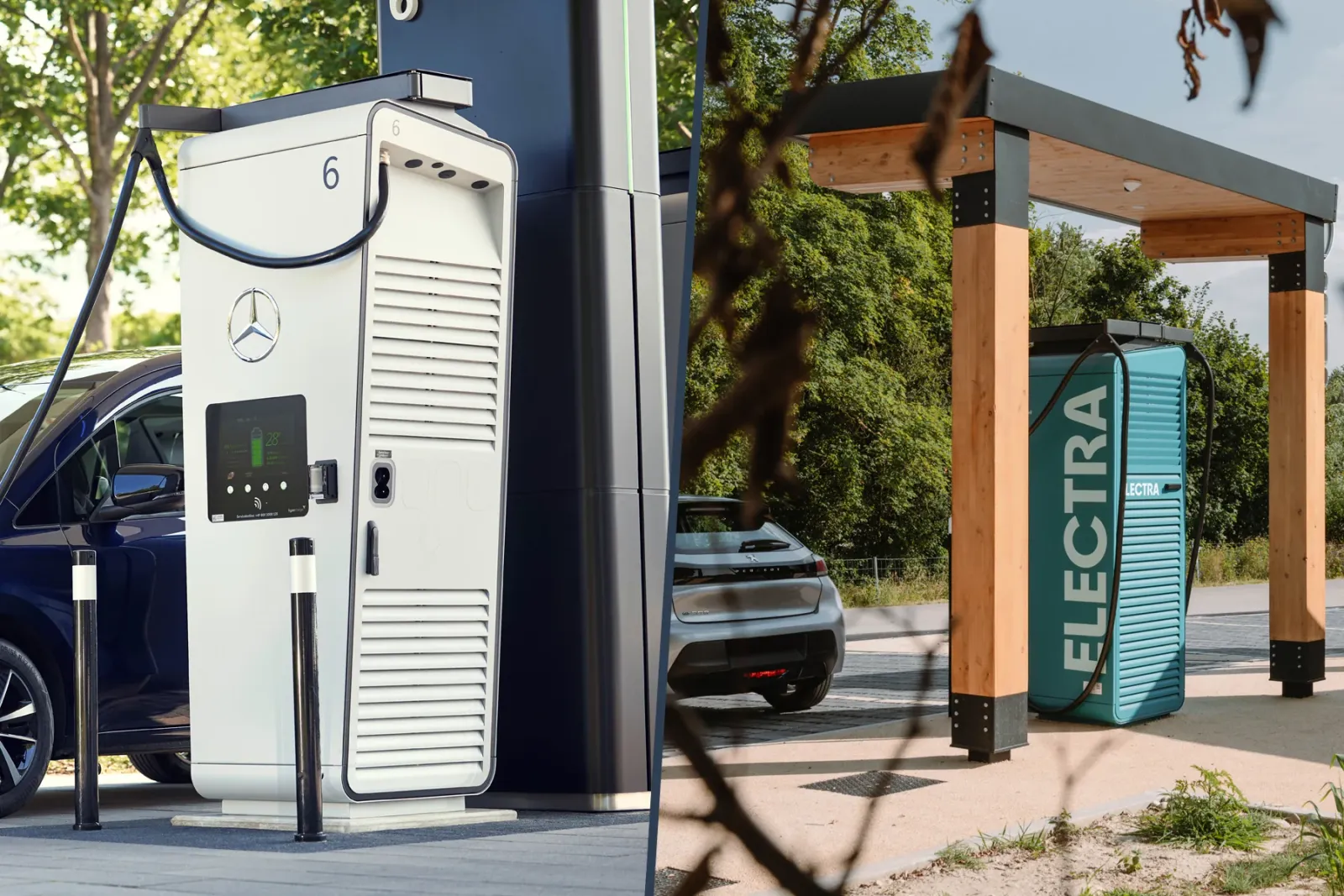
Mercedes-Benz is handing over its HPC network in Europe to the French charging provider Electra. As a result, 47 locations with 374 fast charging stations are changing owners. Just a year ago, Mercedes had announced plans to expand its European fast charging network. Instead, Mercedes customers can now charge at lower costs at Electra’s stations.
Mercedes-Benz’s fast charging stations are now under Electra’s control.
Images: Mercedes-Benz, Electra / Collage: electrive
The transaction is part of a new partnership between the two companies. Electra is integrating existing Mercedes-Benz charging stations in Europe into its fast-charging network. Meanwhile, Mercedes-Benz customers can enjoy discounted roaming rates at over 800 Electra locations with more than 5,000 charging points across ten European countries through the MB.CHARGE Public charging service under the “Premium Partner” category. The only other premium partner in Mercedes’ charging service is currently the Ionity fast-charging network, in which Mercedes has a stake. The cooperation takes effect immediately.
Of the 47 charging parks acquired, 31 are located in Germany and six in Austria. The remaining locations are spread across other European markets. For Electra, this acquisition represents an important step in growth: In Germany, where the French company launched in May 2025, the network is expanding from 50 to 81 charging parks, according to the company, which is a growth of over 60 percent.
Mercedes-Benz shifts from its own charging network to partnerships
It is quite remarkable that Mercedes-Benz is giving up its European fast-charging stations. The company originally had much larger plans with the Mercedes-Benz Charging Network, launched in 2023. Just a year ago, it was said that the network was growing continuously and was set to expand to as many as eight additional countries within a year, in addition to the existing markets in Germany, the U.S., and China.
By the end of the decade, Mercedes-Benz aimed to operate more than 10,000 fast-charging stations worldwide. As of September 2025, 80 charging parks were already in operation globally. The automaker also announced a new generation of its charging infrastructure: starting in 2026, the HYC1000 charging system from South Tyrolean manufacturer Alpitronic was set to be installed at new Mercedes-Benz charging parks in Europe and North America. With this, Mercedes sought to achieve charging speeds in its HPC network that would set new standards. Indeed, the first HYC1000 charging systems have already been installed in Mercedes-Benz’s HPC network in Hamburg-Wandsbek and at the 24-Autohof in Wörrstadt, and they are now being integrated into the Electra network accordingly.
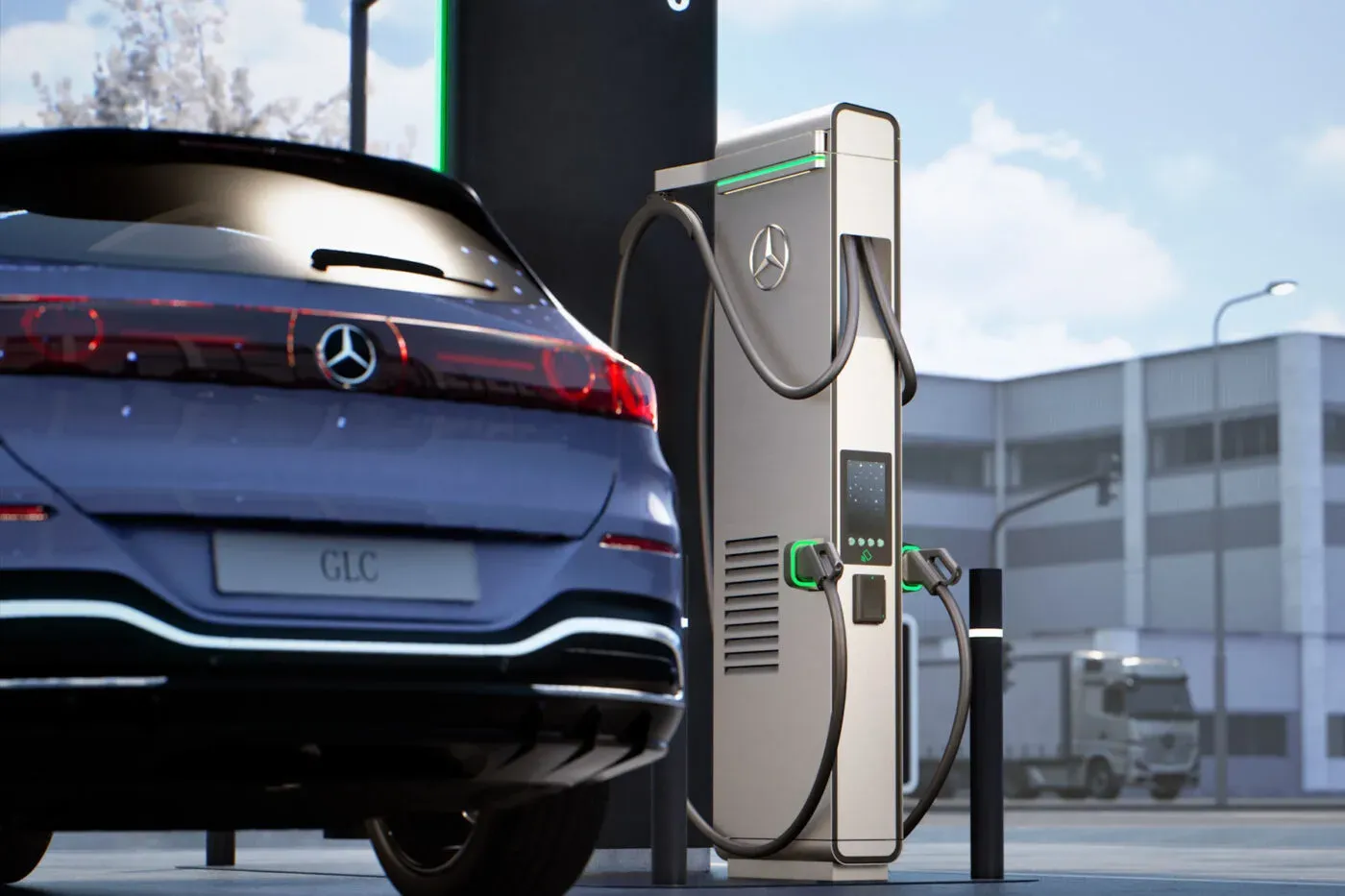
At least in Europe, Mercedes-Benz will no longer pursue this strategy on its own. As recently revealed, the board of directors of Mercedes-Benz Group AG decided as early as July 2026 to sell the company’s own fast-charging network in Europe. This is indicated in Mercedes-Benz’s new quarterly report. The purchase contract was reportedly signed on August 3, but the partners have remained silent since then.
Although Electra and Mercedes-Benz do not disclose a specific purchase price, Mercedes’ quarterly report indicates that the fast-charging network now sold in Europe was last valued at 99 million euros, of which 73 million euros was for fixed assets. This is offset by debts of 21 million euros.
Electra expands its business through the acquisition
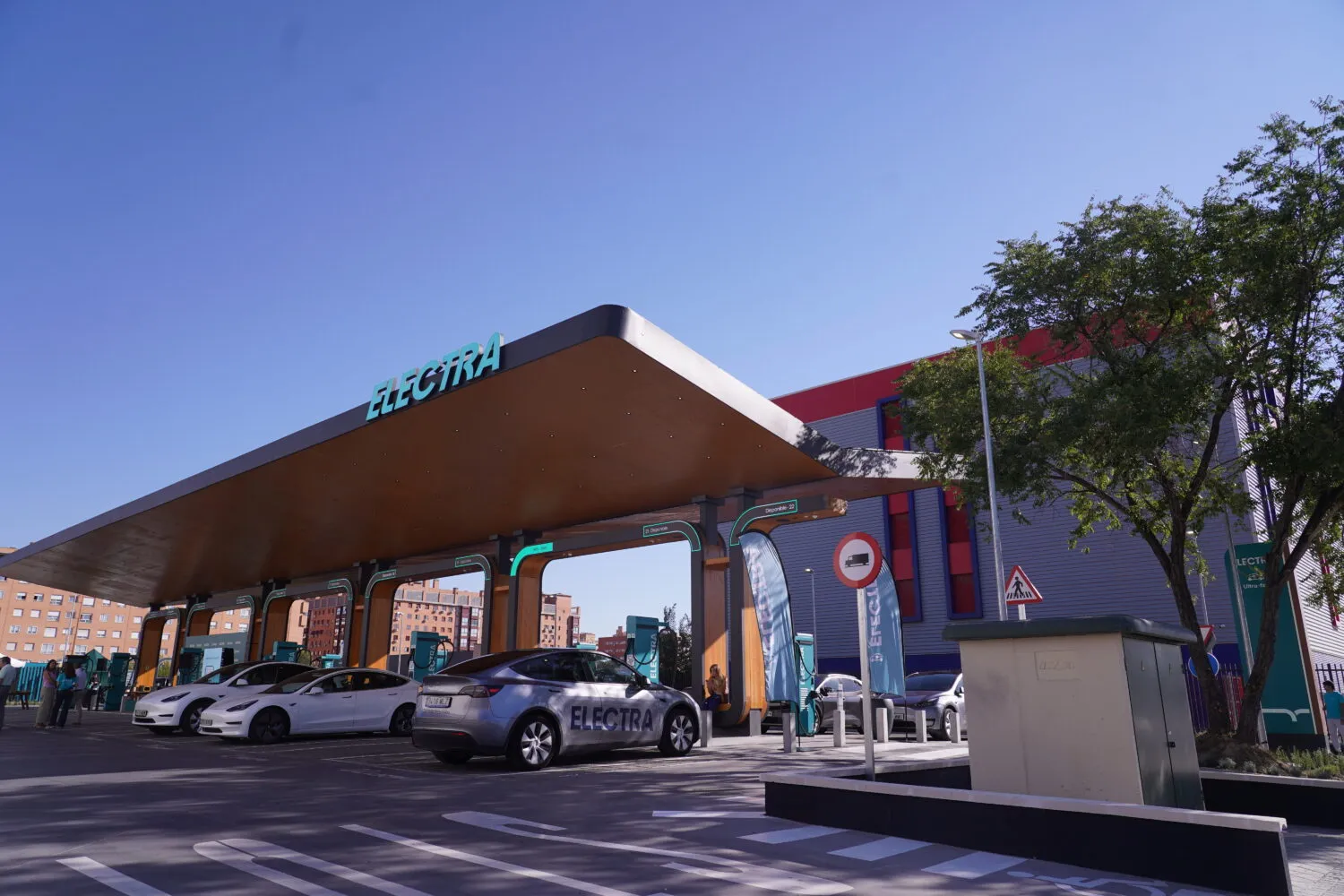
For Electra, this deal represents an important step in strengthening its market position. The company has so far pursued a strategy combining organic growth with targeted acquisitions. “We will continue to grow organically, as that’s part of our strategy, but we also keep an eye on interesting store networks available in the market,” said Paul Tonini, General Manager Germany at Electra, in an interview with electrive. The company has already acquired the charging network of HomE of Mobility in Wertheim recently.
The acquisition of Mercedes-Benz’s fast-charging parks is on a different scale. Electra not only gains additional charging stations but can also use them to strengthen its presence in key locations across Germany and Europe. “We will see that the market is increasingly consolidating around larger providers,” said Electra Germany’s head, Tonini, regarding the industry’s consolidation.
The Electra-Manager identifies economic factors as the main cause. Operators of fast-charging networks face significant challenges during regular operation. These can only be resolved if a company reaches a sufficient scale. “The costs would otherwise be too high for the revenue I can generate from it,” explained Tonini.
Mercedes customers retain their premium access
For Mercedes-Benz customers, the change in operator should result in minimal disruption. The familiar charging experience at existing locations will remain unchanged. At the same time, the offerings will be significantly expanded: premium rates and features such as charging station reservations, which were previously limited to Mercedes-Benz’s own charging parks, will now also be available at Electra locations. Electra stations can be found and used through the Mercedes-Benz charging ecosystem in the vehicle or via the Mercedes-Benz app.
Mercedes-Benz places customer benefit at the forefront of this partnership: “Electrification means more than just the vehicle. At Mercedes-Benz, our goal is to provide our customers with a seamless and exceptional experience, regardless of the powertrain type,” said Nico Dettmer, Global Head of Mercedes-Benz Charging Solutions. Together with Electra, they aim to make fast charging in Europe “even more accessible and comfortable.”
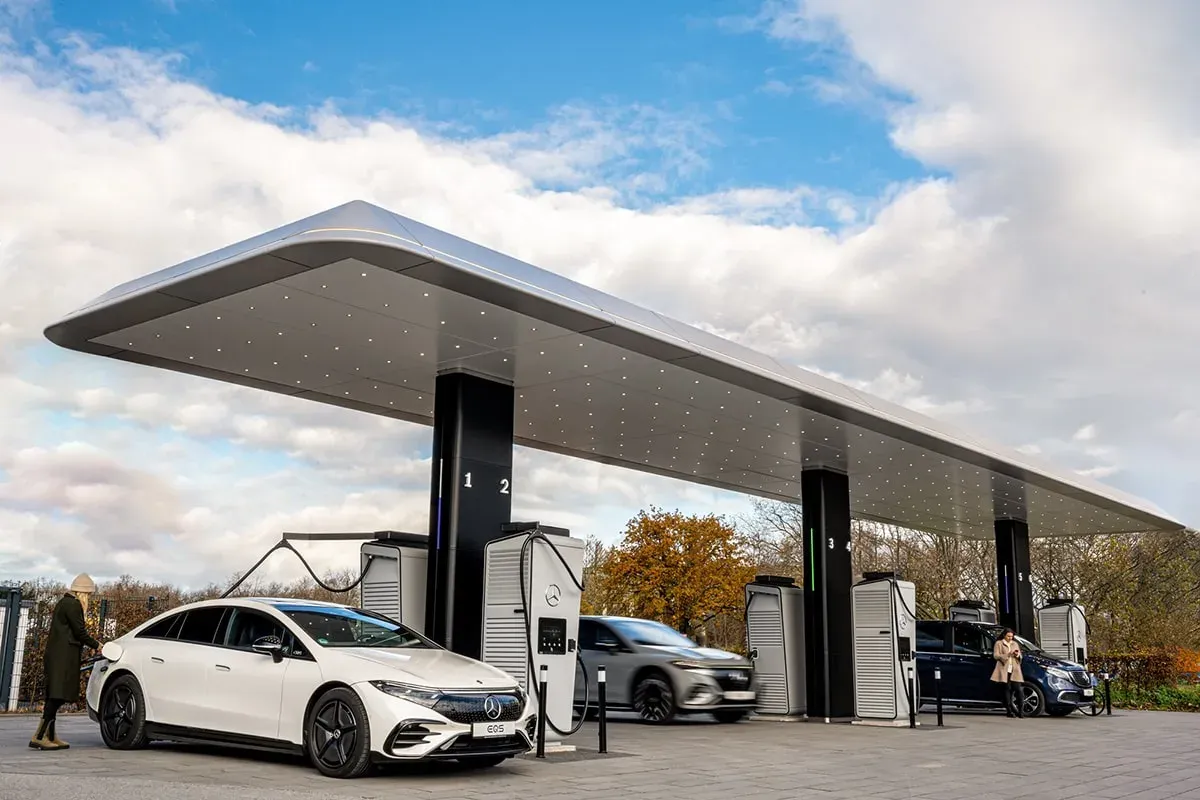
Dettmer also described the cooperation as an expansion of the premium partner network, which previously included only Ionity, to over 800 locations. By doing this, Mercedes-Benz emphasizes its new approach: the focus is no longer on operating as many charging stations as possible on its own, but rather on providing access to a large network through partners, offering customers discounted roaming rates.
Technical transition has already taken place
The technical and organizational transition is intended to occur very quickly and with minimal disruptions. This is possible because the deal itself has already been finalized. Over the weekend, Electra migrated the existing Mercedes-Benz charging stations to its backend and displayed a message on the stations’ screens indicating that they now belong to Electra. The former Mercedes charging locations also appear as Electra charging points in various charging apps. In the coming days, the payment terminals for ad-hoc payments will also be replaced. Naturally, the charging columns will be quickly repainted with an Electra design and covered with Electra’s branding. The distinctive Mercedes-Benz stars on the charging stations will accordingly disappear.
Employees are not affected by this acquisition; it only concerns the charging locations themselves and customer access. “No staff are involved,” Tonini clarified. He could not yet provide details on the duration of the premium partnership.
Meanwhile, Electra plans to continue its growth. In Germany alone, the company intends to invest 200 million euros in the coming year. According to Electra, it already operates more than 800 charging parks with around 5,000 charging points in ten countries across Europe. By 2030, the network is set to expand to 15,000 fast charging points.
Strategic U-turn for Mercedes-Benz
For Mercedes-Benz, the deal represents a strategic shift instead. The company is giving up its goal of operating large-scale fast-charging networks in Europe. The Mercedes-Benz Charging Network, originally announced as a global growth project, will thus not be pursued in its original form at least on the European continent, although the company will continue to operate its own fast-charging stations in China and the U.S. for now. Rather than expanding its own charging infrastructure, Mercedes-Benz is leaving the European market to its stakeholder Ionity and its competitors. However, it would not be surprising if the strategy were adjusted in other markets as well. The automaker is under pressure, and the costly hardware business involving its own charging network is not part of its core business.