
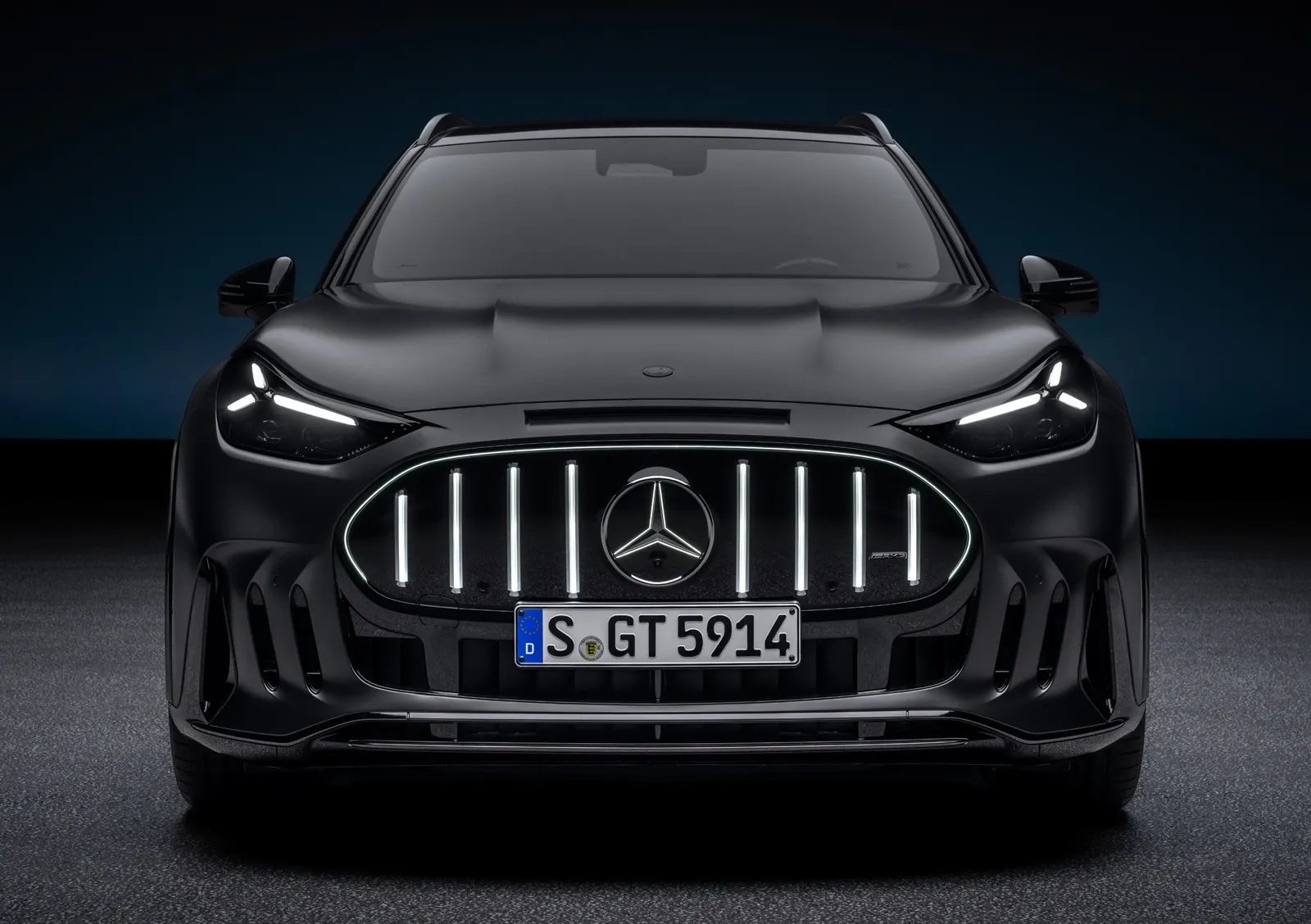
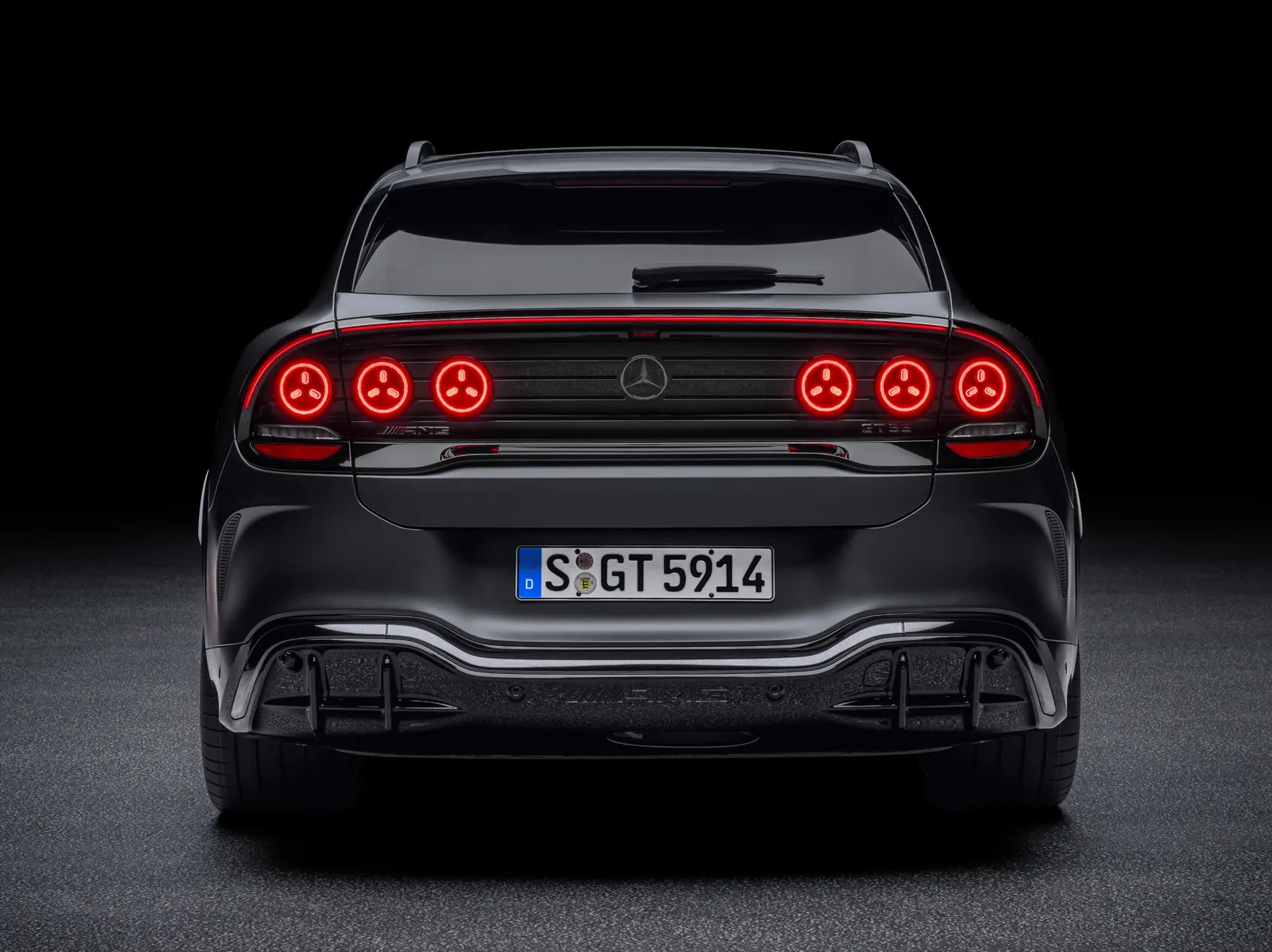
Mercedes-AMG GT SUV unveiled. PRICE starting at 113,050 euros (~511,000 zł), front end from the Deepal, rear end from the Nissan Leaf, noisy and ugly
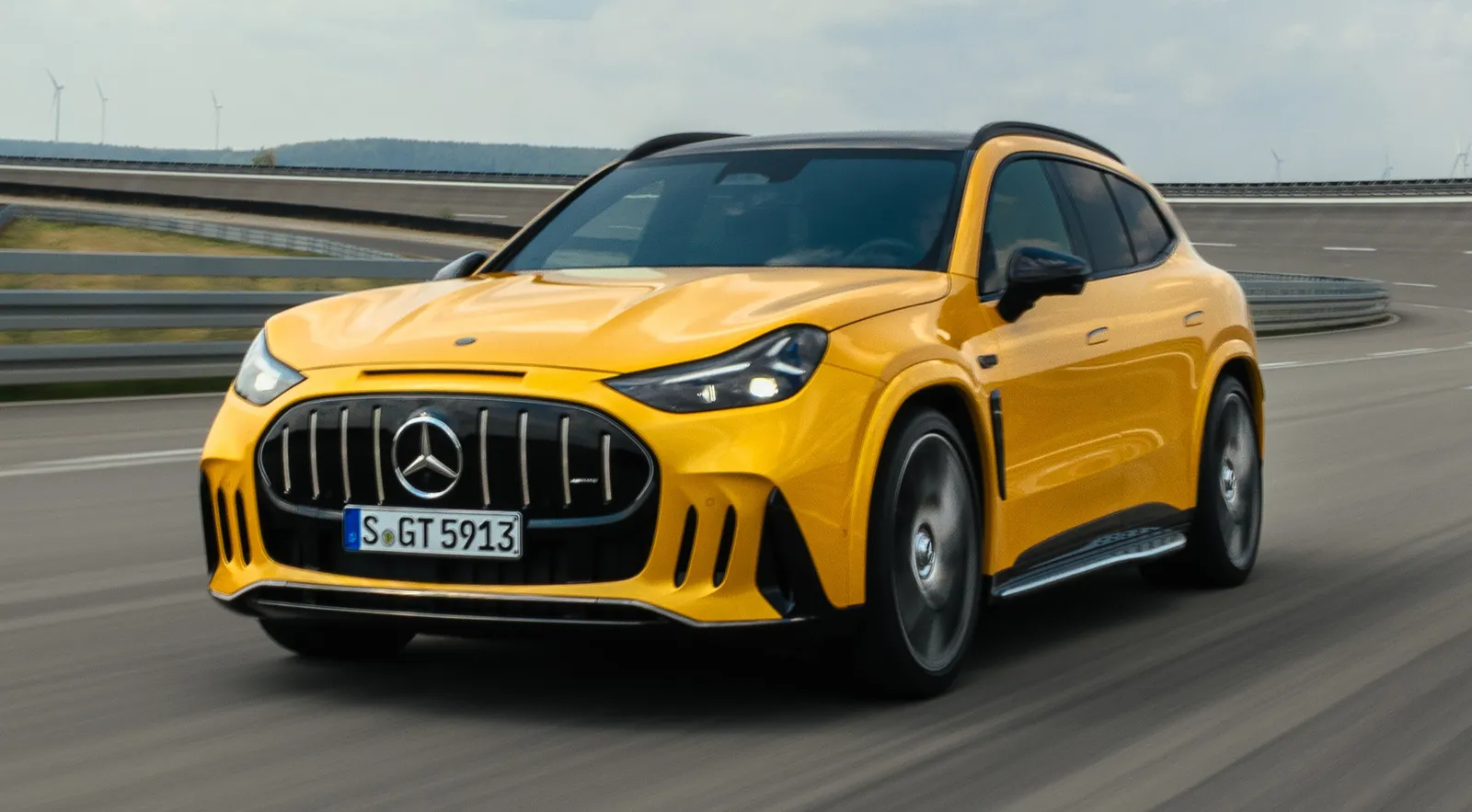
Mercedes has unveiled a new Performance-class SUV: the Mercedes-AMG GT SUV (5.08 meters long, 3.04 meters wheelbase) will be available in GT 53, GT 55, and GT 63 SUV variants. The price of the base model will start at 113,050 euros, equivalent to just under 511,000 Polish zlotys. The two more expensive variants are capable of “faithfully reproducing” the sound of AMG V8 engines, but visually, the car seems like an example of poor design. It features aesthetic chaos and ugliness that doesn’t even try to be intimidating (compare with BMW).
Mercedes-AMG GT SUV, a Design Protest Against China?
Table of Contents
Mercedes-AMG GT SUV, a Design Protest Against China?
AMG GT SUV, a Showcase of Technology
Battery capacity, range, and charging
Acceleration, power, engines, and… engine noise plus seat vibrations
Chinese people joke that they stole all of Europe’s good designers, which is why Mercedes’ latest designs simply look bad. Looking at the AMG GT SUV, we have to admit there might be some truth to this: Chinese designs are well-organized, modern, and so uniformly avant-garde that it’s hard to distinguish them from each other these days. It’s possible, then, that the GT SUV was intended to be different, stand out, and be shocking. In a way, it succeeded, though we can’t shake the impression that its design was based on smaller mid-size cars:
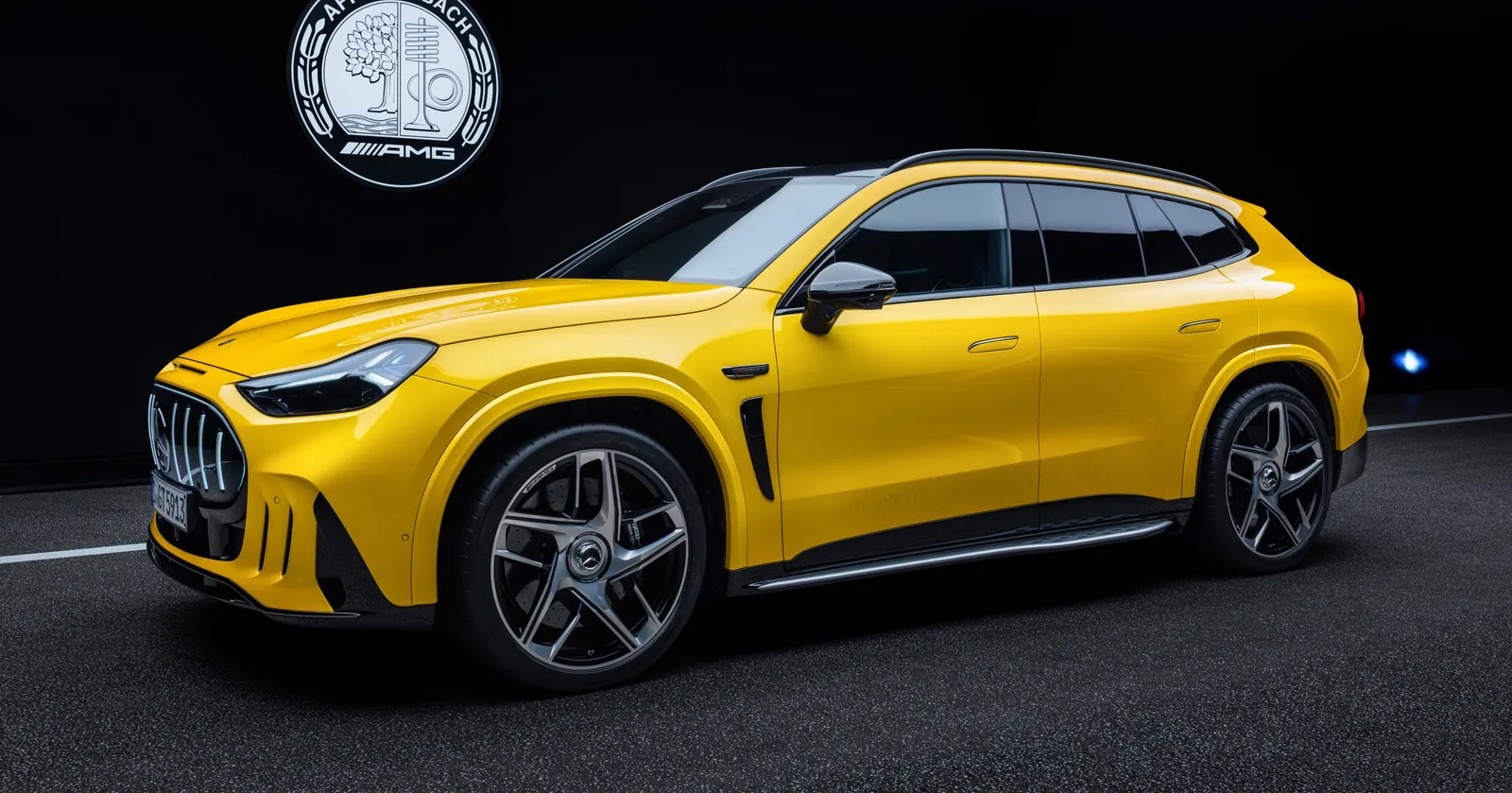
Mercedes-AMG GT SUV
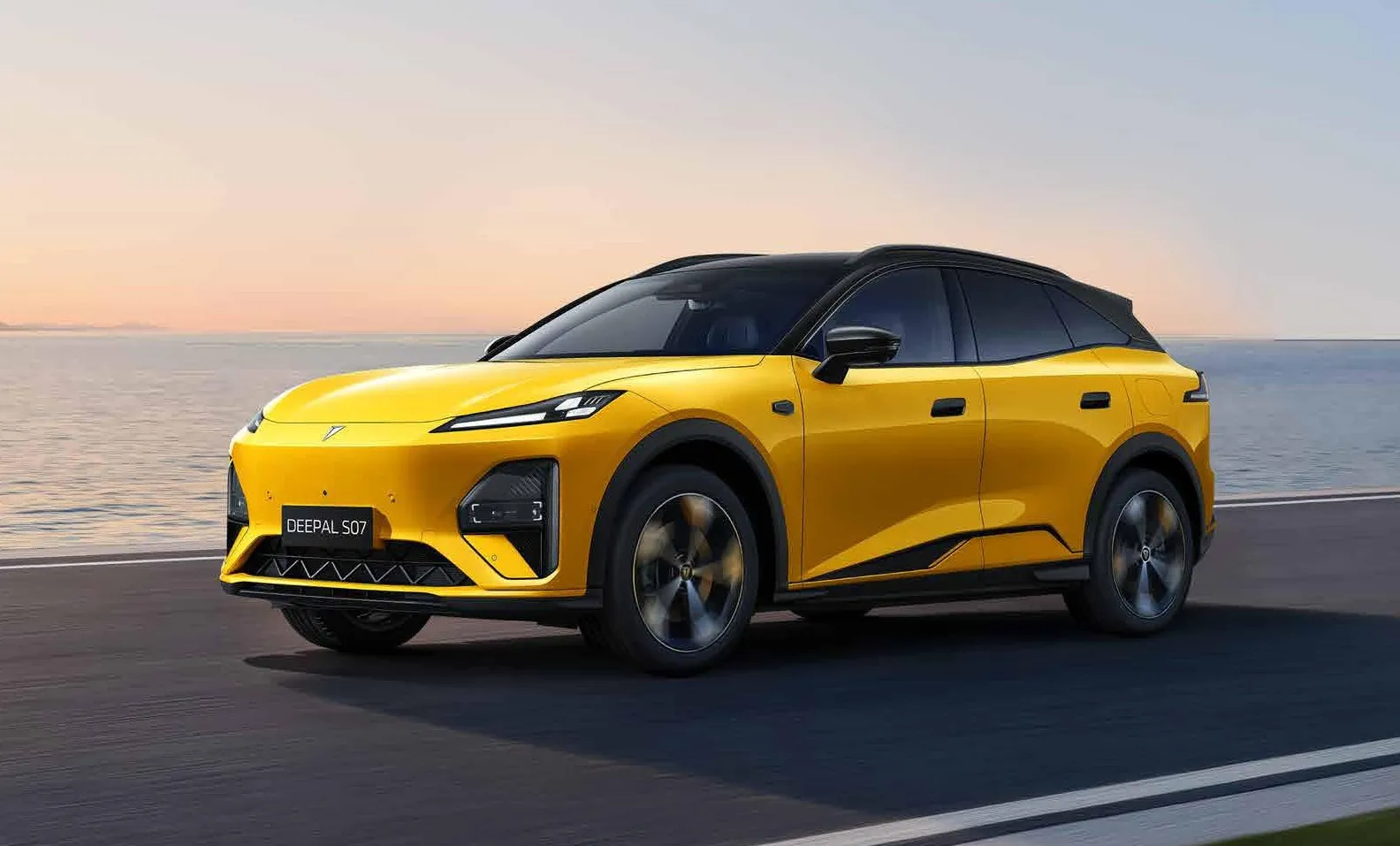
Deepal S07 PHEV; an earlier design in chronological order, now also available with plug-in hybrid power instead of electric.
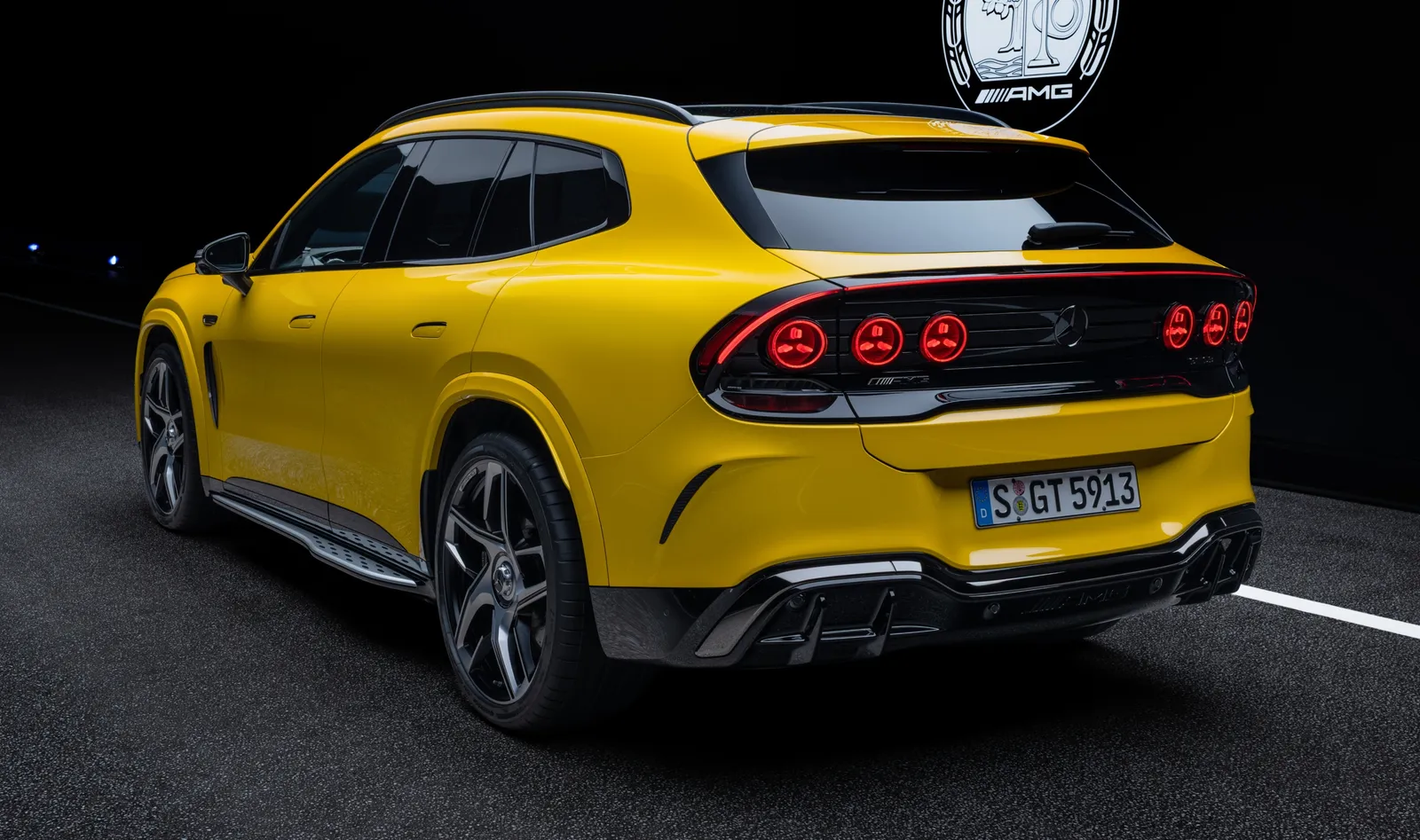
Mercedes-AMG GT SUV
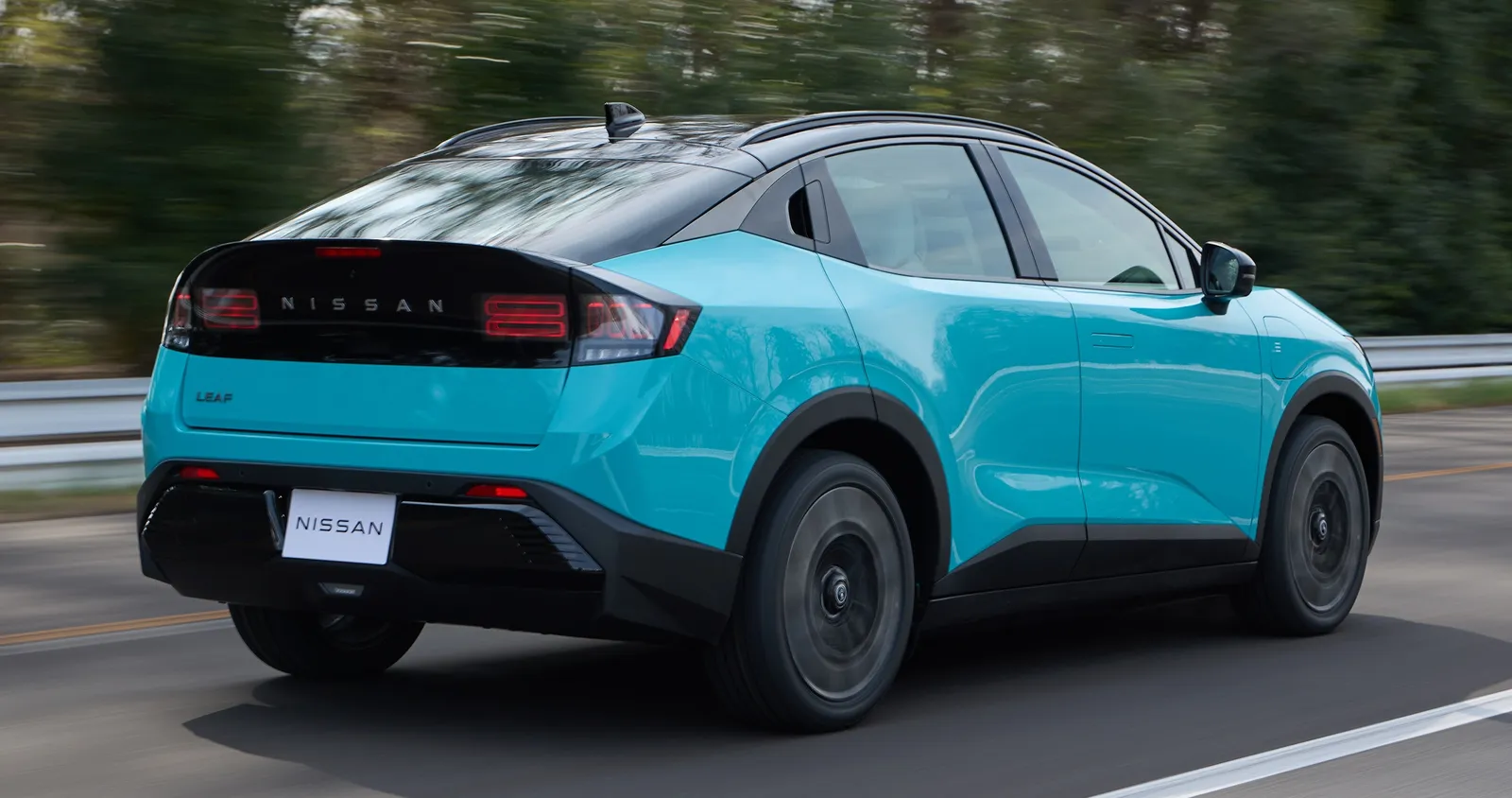
New Nissan Leaf; earlier design
AMG GT SUV, a showcase of cutting-edge technology
While it may not look particularly appealing visually, it impresses in terms of technology. It is built on the AMG.EA platform (AMG Electric Architecture), uses an 800 V architecture, and features directly cooled cylindrical cells. Higher voltages have been used in Mercedes vehicles for some time now, but the cylindrical Li-NCMA 26105 cells (25 mm in diameter, 105 mm in height) have only been seen so far in the AMG GT Coupe. The same goes for direct cooling, with cells submerged in a coolant — we have not yet encountered such a mechanism in a production model, aside from the aforementioned GT 4-Door Coupe.
Battery Capacity, Range, and Charging
The Mercedes-AMG GT 53 SUV’s battery has a capacity of ~114 (106) kWh, while the GT 55 and GT 63 SUV models offer either ~114 (106) kWh or ~136 (128) kWh. The former provides a WLTP range of 597–668 miles, whereas the latter allows for up to 700 WLTP miles. Even the lower values result in a range of around 240–280 kilometers at 140 km/h, with the highest capacity yielding approximately 320 kilometers at 140 km/h [preliminary calculations by Elektrowozu’s editorial team for battery depletion].
But that’s only half the success: the Mercedes-AMG GT SUV takes 11–12 minutes to charge from 10% to 80%, and it can reach 610 or 700 kW (lower/higher package) at a charger, assuming such chargers are available. If not, it will take slightly longer—14 minutes—at a 400 kW charging station (source). As the editorial team, we’re relieved that a European manufacturer has finally caught up with the Xpeng G6/G9, though the company notes that all figures are preliminary and not yet certified.
Acceleration, power, engines, and… humming plus vibrations in the seats
The 0-100 km/h acceleration time for the Mercedes-AMG GT SUV varies by version: 4.2 seconds (GT 53), 3.1 seconds (GT 55), and 2.7 seconds (GT 63), thanks to the use of either two permanent magnet motors or three disc brakes. The GT 53 model is equipped with two engines producing 400 kW/544 hp and 800 Nm of torque, while the GT 55 and GT 63 versions feature three disc brake motors (1+2), delivering 600 kW/816 hp and 1,860 Nm of torque respectively, or 860 kW/1,169 hp and 2,000 Nm of torque respectively.
In all versions, the front engine can be disengaged, but the biggest difference lies at the rear: the weakest variant has a two-speed transmission that automatically selects gears based on needs—first gear for city driving or aggressive acceleration, and second gear for highway use.
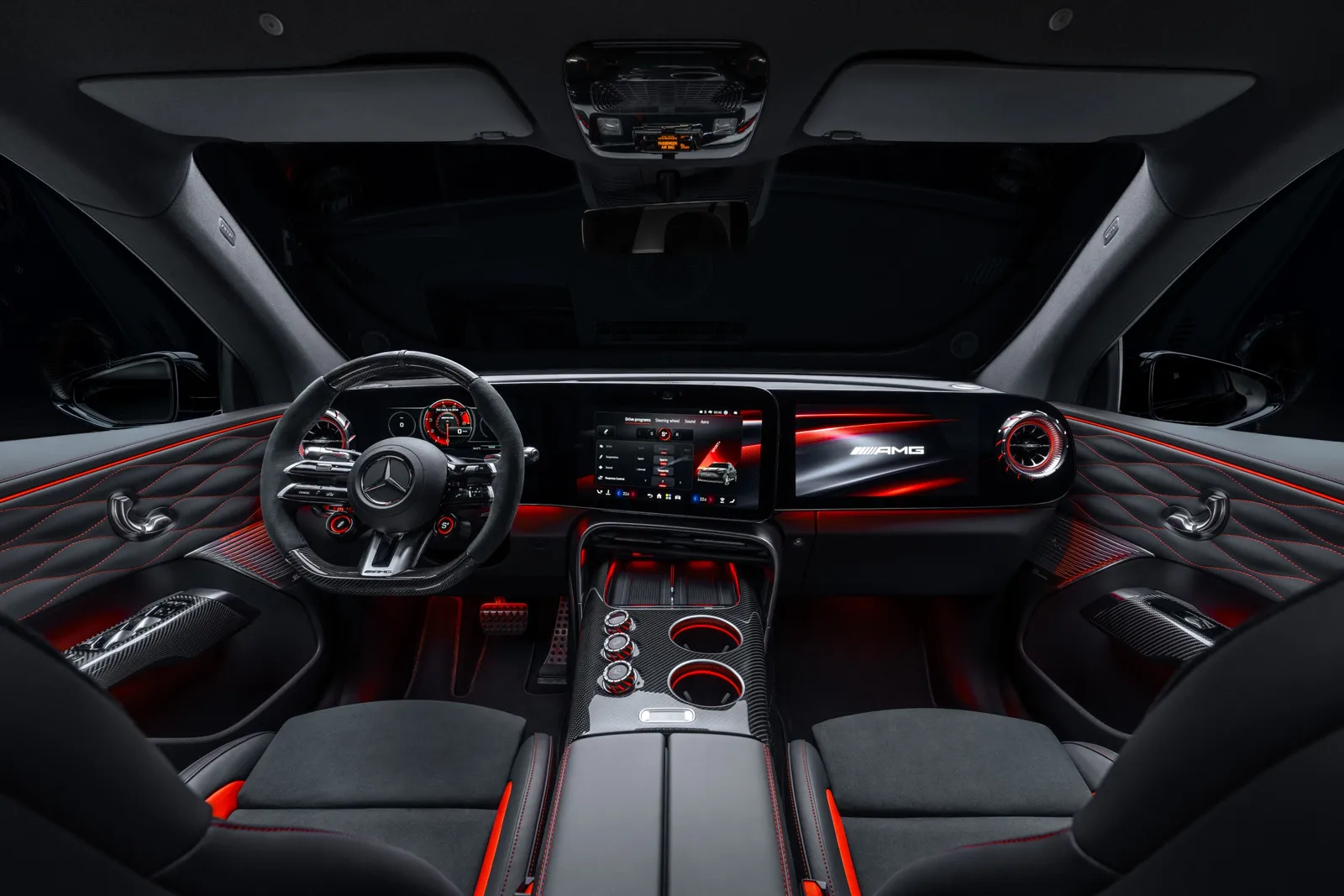
The base version can mimic a six-cylinder gasoline AMG engine, while higher-priced models will simulate a V8 engine, all as part of the AMGForce Sport+ program. The sounds were recorded, among other sources, from the Mercedes-AMG GT R and are not electronically generated, according to the manufacturer. Additionally, drivers can activate gauges inspired by gasoline models to enhance the illusion, as well as simulate gear shifts using paddles on the steering wheel and vibrations in the seats.
The model configurator is set to be available starting Tuesday, October 20.
A note from Elektrowozu’s editorial team: Vulgarity refers to flaunting ugliness, illness, or disability. It was a reaction against artificial and forced aesthetics that failed to convey a true image.
Article rating
Reader Ratings
[Total: 3 votes Average: 3.7]
Don’t miss new content — CLICK and FOLLOW Elektrowoz.pl on Google News. You might also be interested in the following ads: