
Mercedes-AMG GT SUV: the electric SUV from Affalterbach has 1,169 horsepower, 710 kW charging capacity, and V8 sound through speakers
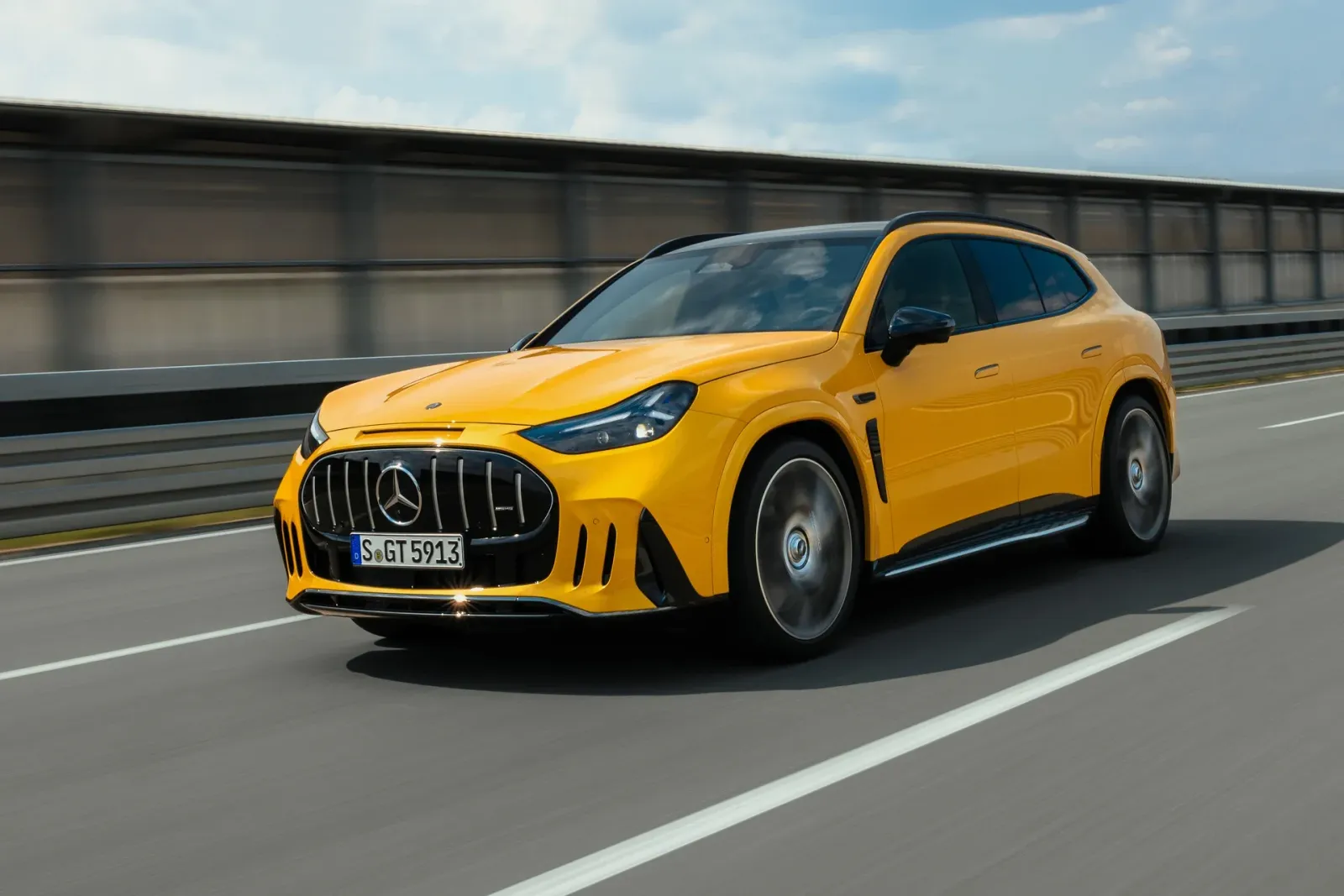
Mercedes-AMG used the 140th anniversary of the automobile to unveil a model designed to shape the future of the Affalterbach brand. The Mercedes-AMG GT SUV made its debut on October 17 in Stuttgart during “The 140 Festival,” a celebration marking Karl Benz’s patent for the internal combustion engine on January 29, 1886. The symbolism is clear: on the birthday of the internal combustion engine, Mercedes presented a fully electric vehicle that still sounds and behaves like a classic AMG with a V8 engine. It is the first large SUV in AMG’s 59-year history to be entirely designed by engineers from Affalterbach, rather than a sporty variant of an existing Mercedes model.
You will learn from this article:
AMG.EA platform, YASA inline engines, and three drive configurations
Three versions: from 544 to 1,169 horsepower, with a 0-100 km/h acceleration time as fast as 2.7 seconds
Battery of 128 kWh, 700 km WLTP range, 10 to 80% charge in 12 minutes
AMGFORCE Sport+ mode: virtual V8, gear shifts, and vibrating seats
Price starting at 113,000 euros and competitors in the electric super-SUV segment
Platform – AMG.EA instead of a modified version
The GT SUV is the second model built on AMG.EA’s proprietary all-electric architecture. The first was the electric AMG GT 4-door Coupé unveiled in May 2026; the SUV shares its powertrains, batteries, and a significant portion of its styling and interior design. The platform operates at 800 V and is designed for axial flux motors. Production takes place at Mercedes-Benz’s plant in Sindelfingen.
They are developed by the British company YASA, acquired by Mercedes-Benz in 2021. Axial engines have the shape of a flat disc and offer significantly higher power density than commonly used radial-flow machines. According to YASA, the unit developed for AMG weighs only about 24 kg. The GT 55 and GT 63 versions have three such engines—one at the front and two at the back—with the front engine being detachable under light loads to reduce energy consumption. The base GT 53 uses two conventional permanent-magnet synchronous engines and a two-speed transmission on the rear axle.
Dimensions – a classic block instead of a coupe
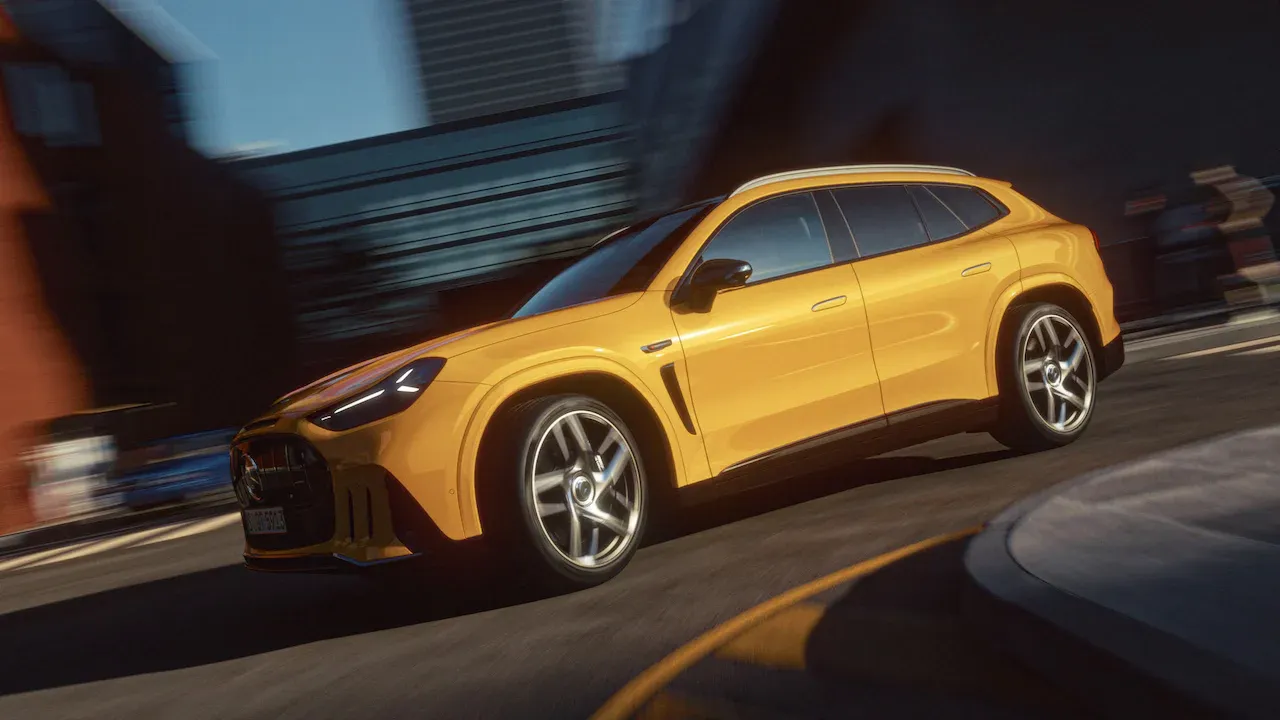
Contrary to the GT designation, the new model is not a SUV coupé. It features a classic, tall body style with a length of 508 cm, width of 200 cm, and height of 165 cm, and an axle spacing of 304 cm. The trunk holds 607 liters, with an additional storage compartment under the front hood that has a capacity of 78 liters.
Both at the front and back, it shows similarities to the four-door GT: similar headlights, an imitation radiator grille, and a large, three-dimensional light bar with rear lights. The active aerodynamics include flaps on the front bumper, and in the 55 and 63 versions, a movable spoiler above the rear window that adjusts its position during dynamic driving or at speeds over 150 km/h.
Interior – three screens and knobs
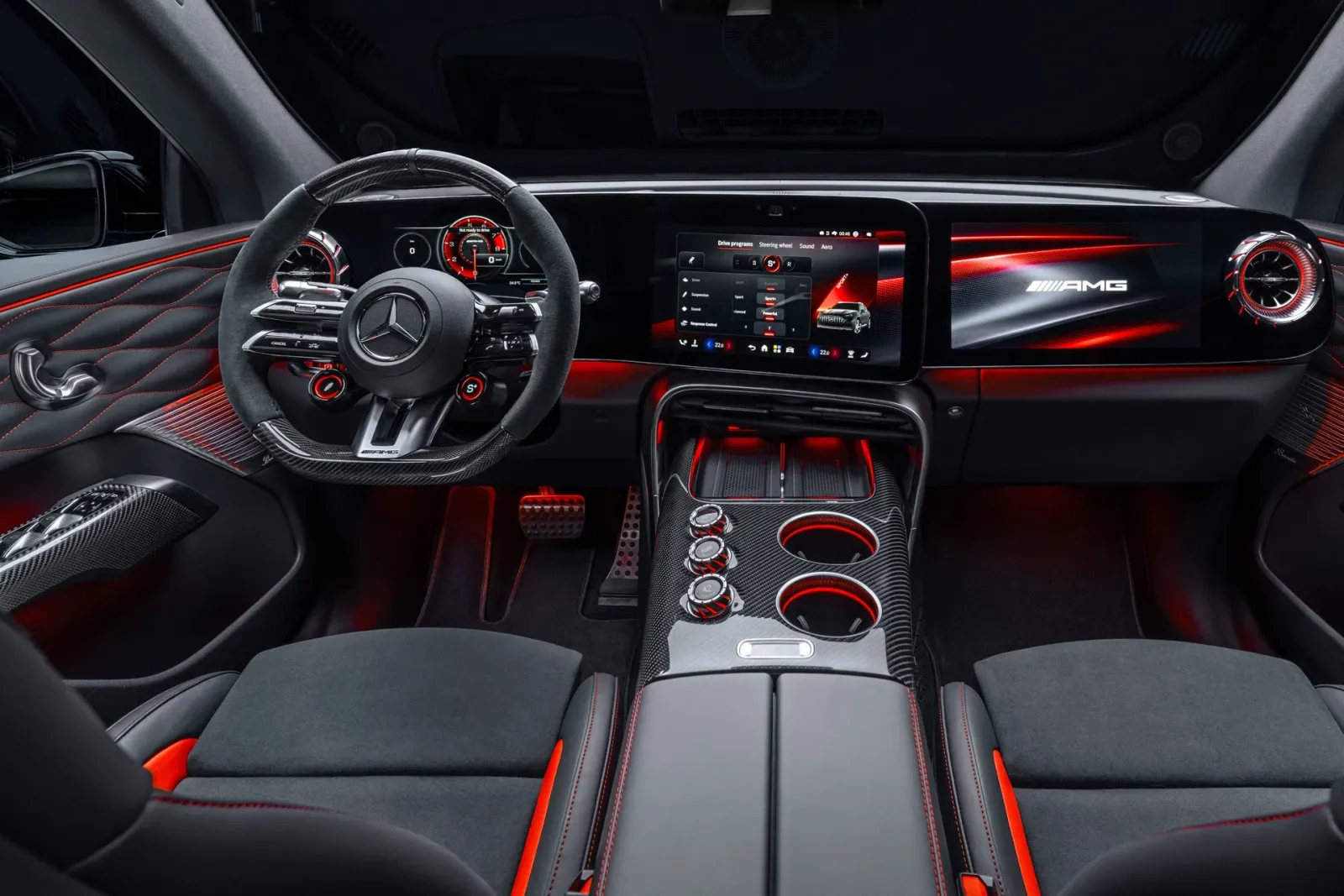
The cabin is almost entirely derived from the GT 4-door model. The driver has 10.2-inch gauges and a 14-inch multimedia screen in front of them, while the passenger can opt for a display with the same diagonal size. The MBUX system utilizes artificial intelligence-based functions. In higher-powered versions, three physical dials are placed on the console for quick adjustment of drivetrain and suspension settings. A glass roof with adjustable transparency is standard, while bucket seats are available as an option.
Powertrain – three versions, up to 2000 Nm
The range includes three variants. The GT 53 SUV has two engines, producing 544 HP and 800 Nm of torque, accelerating from 0 to 100 km/h in 4.2 seconds and reaching a top speed of 250 km/h. The GT 55 SUV, equipped with three engines, generates 816 HP and 1860 Nm of torque (0 to 100 km/h in 3.1 seconds). The top-tier GT 63 SUV boasts 1169 HP and 2000 Nm of torque, allowing it to reach 100 km/h in 2.7 seconds and 200 km/h in 7.2 seconds, despite a weight of around 2.7 tons. The top speed for the 55 and 63 variants can be increased to 270 km/h. The figures listed represent peak power; under continuous operation, both three-engine variants deliver around 530 kW, and it is this figure that Mercedes’ Polish website highlights, announcing the model as a novelty available “soon.”
Battery and charging – 454 km in 10 minutes
A new feature of the GT 4-door model is its battery with a net capacity of 128 kWh, used in the 55 and 63 versions. It is made up of directly cooled cylindrical cells. It provides a WLTP range of 620 to 700 km and can accept electricity at up to 710 kW: energy for 454 km can be restored in 10 minutes, while charging from 10 to 80 percent takes about 12 minutes. The GT 53 has a 106 kWh battery (WLTP range of 597–668 km), charged at up to 600 kW – 10 minutes yield a range of 440 km, and charging from 10 to 80 percent takes around 11 minutes. The manufacturer notes that these are preliminary figures.
It’s important to remember that these are peak values, achievable only at stations with sufficiently high power and under optimal battery temperature conditions. Most public DC chargers available today, even in Poland, offer much lower capacities, so in daily use, charging times will primarily depend on the infrastructure.
Sound – Real V8 Through the Speakers
AMG doesn’t compromise on excitement. In AMGFORCE Sport+ mode, the GT SUV reproduces the sounds of engines hand-assembled in Affalterbach: the V8 versions 55 and 63, as well as the inline six in the GT 53. The manufacturer emphasizes that the recordings come from actual drives with AMG gasoline models, with the system merely selecting the appropriate track based on road conditions. The experience is enhanced by simulated gear shifts from a virtual transmission and vibrations in the seats.
Suspension – Hydraulics Instead of Stabilizers
The pneumatic suspension allows adjustment of not only stiffness but also ride height almost in real time. In the AMG ACTIVE RIDE CONTROL+ system (standard on GT 63, optional on GT 55), conventional stabilizers are replaced by a hydraulic system that limits body roll in corners, as well as pitching and squatting during braking and acceleration. The rear axle is adjustable by up to 6 degrees, and ceramic carbon brakes are optional on GT 55 and standard on GT 63. The GT 53 features steel brakes.
Market – Price and Competition
Orders in Germany will open on October 20, 2026, with the base model costing 113,000 euros, slightly less than the 4-door GT. More powerful variants will be added to the lineup in spring 2027. The price list for Poland has not been announced yet; for comparison, the electric 4-door GT Coupé costs around 509,000 zł in Poland.
The main competitor will be the electric Porsche Cayenne. The Turbo Electric version delivers 1156 horsepower with Launch Control, accelerates to 100 km/h in 2.5 seconds, and has a 113 kWh battery that can be charged at up to 400 kW. On paper, Mercedes thus offers slightly more power and significantly faster charging, while Porsche provides better acceleration. Lucid Gravity is also among the competitors.
Edited by electromobilni.pl