
According to Fraunhofer researchers, megawatt chargers for electric vehicles “are not the decisive factor.”
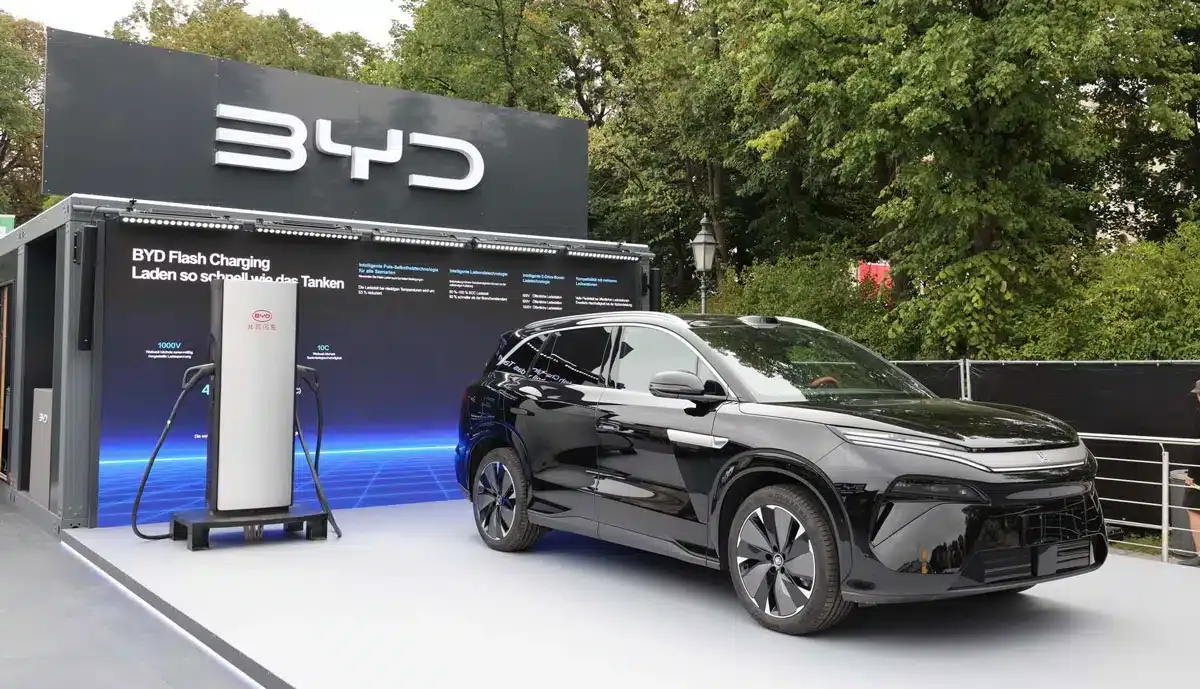
Image: BYD (illustrative)
The exhibition publication “Gateway to Automotive” covered technological advancements in megawatt-level charging. Andreas Hensel from Fraunhofer’s Institute for Solar Energy Systems ISE considers China’s electric vehicle giant BYD’s demonstration of megawatt-level charging capabilities technically feasible, but views it primarily as a marketing tool and signal. Such power levels are not necessarily essential for broader mobility transitions.
According to Hensel, the bottleneck in the passenger car sector is not primarily the maximum charging power. While 800-volt vehicles can achieve around 400 kilowatts in the CCS standard today, many current electric cars cannot sustain such levels. The main challenges lie rather in grid connection and cost-effectiveness. Technically, components such as batteries, power electronics, cables, and cooling systems can be managed with current solutions, but this increases costs on both the vehicle and infrastructure sides.
A key issue is network expansion, as the timeframes for such measures are very long. Network operators must plan over many years: For example, Netze BW assumes that the capacity of distribution networks will need to double within the next ten years. For passenger cars, Hensel considers the existing and planned HPC infrastructure (High Power Charging) to be sufficient, as most vehicles require charging speeds between 100 and 150 kilowatts.
"In my view, megawatt charging stations are not the decisive factor for passenger cars," says the expert. In contrast, heavy transport, especially long-haul trucks, requires significantly higher power levels. While regional trips could be covered by CCS, long-distance travel demands a high-capacity infrastructure along major routes at logistics hubs and rest stops.
Also interesting
About the author
Thomas Langenbucher is an expert in electromobility with professional experience in the automotive and financial industries. Since 2011, he has been covering electric vehicles, sustainable technologies, and mobility solutions for ecomento.de. Learn more.
Reader interactions