
Mate Rimac focuses on batteries, energy storage, and robot taxis
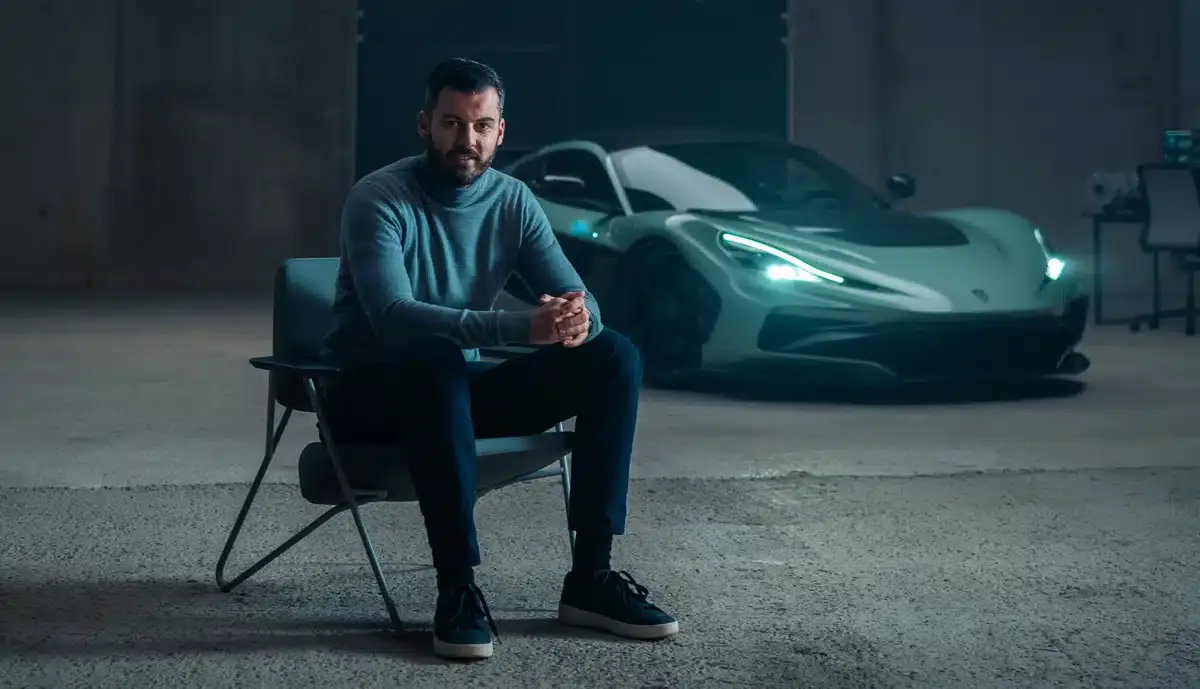
Image: Rimac
Mate Rimac is driving the expansion of his corporate group, focusing increasingly on business areas outside the automotive industry. In addition to developing electric supercars and supplying battery technology to manufacturers such as BMW and Porsche, energy storage systems and autonomous mobility are gaining importance. Meanwhile, in an interview with Automotive News, the Croatian entrepreneur questions the economic viability of purely electric supercars and believes European automakers face significant challenges in competing with China. He attributes the greatest potential for change to autonomous driving and robotaxis.
The 38-year-old entrepreneur founded the electric supercar manufacturer Rimac in 2009 and is now president of the Rimac Group as well as CEO of Bugatti Rimac. The company group comprises four independently operated companies: Bugatti Rimac, Rimac Technology, Rimac Energy, and the robotaxi provider Verne. Approximately 130 million euros were invested in buildings on a 100,000 square meter campus near Zagreb, with another 300 million euros spent on production facilities. The capacity is already fully utilized, prompting the company to consider expansion.
Bugatti Rimac employs around 1,000 workers and generated €640 million in revenue last year, along with an EBITDA of €200 million. According to the founder, Rimac Technology, with 1,200 employees, has orders from automakers worth five billion euros and has increased its annual revenue from less than €100 million to €250 million in just a few years. Rimac expects around €350 million in revenue this year, with that figure set to double in the following year.
Publicly known clients of Rimac Technology include BMW, Porsche, and the Saudi Arabian electric vehicle manufacturer Ceer. With BMW, the i7 was announced as the first vehicle to feature jointly developed technology, with two additional models in preparation. For the Porsche 911 GTS T-Hybrid, Rimac supplies a specially designed lithium-ion battery pack with 1.9 kilowatt-hours and 400 volts, while Ceer receives fully integrated electric drive systems.
Rimac Energy employs 60 people and develops stationary energy storage solutions for data centers and other applications. According to Mate Rimac, the company has signed contracts with energy providers worth over one billion euros. The robotaxi provider Verne, which has around 150 employees, claims to have launched Europe’s first commercial robotaxi service and is working with Uber among others.
Mate Rimac sees significant potential in both autonomous vehicles and energy storage, while noting relatively low profit margins in the traditional auto parts business. He attributes the greatest value creation potential to Bugatti Rimac, where a transaction worth over a billion euros involving private equity funds was recently completed.
Mate Rimac on Growth, Electrification, and Competition
Rimac Technology plans to leverage its expertise in batteries, electric drives, electronics, and software more extensively outside the automotive industry in the future, without expanding its existing product portfolio. Mate Rimac explains this approach by saying his company has already far exceeded its original goals in the auto parts business with orders worth five billion euros.
At the same time, Mate Rimac has changed his opinion on the commercial appeal of purely electric supercars. From a technical standpoint, he would develop the all-electric Nevera with four independently driven wheels again, but economically, he believes this decision is wrong under current market conditions.
Feedback on the Rimac Nevera indicated that customers in the highest market segment did not want already common technology, which is why Bugatti opted for a V16 plug-in hybrid instead of a purely electric drive in the Tourbillon. According to Rimac, Volkswagen initially pushed for an all-electric Bugatti, which could have been more easily implemented using the existing Nevera platform.
With Porsche no longer a shareholder, Mate Rimac sees greater entrepreneurial freedom and significantly shorter decision-making processes, while he considers efficient, entrepreneurial leadership crucial for Bugatti’s economic success. The company developed the Tourbillon without financial support from Volkswagen or Porsche, additional capital injections, or bank loans. Nevertheless, Bugatti Rimac is now profitable and generates its own liquid funds.
Looking at international competition, Mate Rimac sees significant challenges for European automakers against Chinese rivals. He believes the continent is not competitive, especially in terms of affordable vehicles and electric drives, and calls for a focus on its own niche markets. However, he does not expect the biggest changes in the industry to come from electrification but rather from autonomous driving and robotaxis. Mate Rimac envisions a future where people no longer buy and drive vehicles themselves but merely use them.
Did you spot any errors? Please let us know
by email
about them. Thank you!
Also interesting
About the author
Thomas Langenbucher is an expert in electromobility with professional experience in the automotive industry and finance sector. Since 2011, he has been covering electric vehicles, sustainable technologies, and mobility solutions for ecomento.de. Learn more.
Reader interactions