
Over 80% of public chargers in Spain do not accept card payments: Brussels has already set a date by which some will have to start accepting them.
27/10/2026 12:30
Updated to
27/10/2026 12:30
Paying for top-ups with a regular bank card remains an exception in much of Spain’s public infrastructure, despite European regulations requiring this service to be made available. According to data published by La Voz de Galicia on October 24, 2026, 82% of the country’s top-up locations still do not accept this payment method, keeping people dependent on mobile apps and each company’s own systems.
The issue becomes particularly significant during long-distance travel, when it is necessary to use stations operated by different providers. In Spain, there are around 160 companies engaged in this activity, although the apps of three major energy companies allow access to approximately half of the network, according to information published by a Galician newspaper. Thus, the fragmentation of the system continues to hinder access to an infrastructure that must gradually adapt to community needs.
Europe already requires payment without apps at certain stations
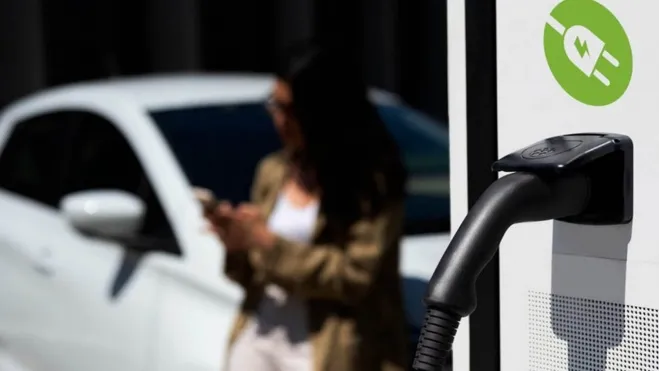
The European Union began imposing new requirements on operators on April 13, 2024, making it mandatory to offer a widely used electronic payment option at newly installed public charging points. Regulation (EU) 2023/1804, known as AFIR, stipulates that charging stations with 50 kW or more must have a bank card reader or a device compatible with contactless payments, while lower-powered installations can also use secure systems via QR codes.
This requirement does not affect all existing infrastructure in the same way, as an additional obligation will take effect on January 1, 2027, for chargers of 50 kW or more located on the trans-European transport network or in secure parking areas, including those that began operating before April 2024. Therefore, the high proportion of stations without card-based payment does not necessarily mean their operators are violating the law, since certain older installations are exempt from this mandatory adaptation.
Spain has over 58,000 public chargers, but still faces significant limitations
Spanish legislation also includes mechanisms to prevent access to chargers from requiring a prior subscription, although it does not set the same technical requirements as community regulations. Royal Decree 184/2022 requires operators to allow occasional top-ups without imposing contractual or technical barriers, but it permits various payment methods, both physical and electronic, so this provision does not necessarily require the installation of card readers.
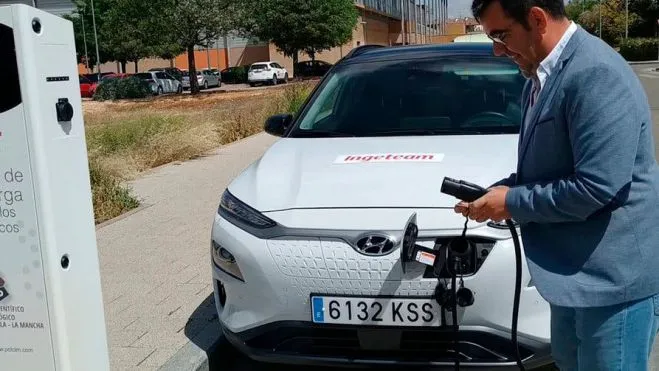
The payment-related difficulties coincide with an expansion of the infrastructure that still shows significant differences among available charging stations. According to ANFAC’s latest Electromobility Barometer, Spain had 58,075 operational public charging points by the end of September, after adding 1,393 during the third quarter, while another 17,965 remained out of service, accounting for 23.6% of all installed infrastructure.
Of the total number of operational chargers, 6,651 offer capacities of at least 150 kW, accounting for approximately 11.4% of the national network. However, ANFAC’s statistics do not indicate how many of these accept conventional bank payments. The next relevant deadline will be January 1, 2027, by which time operators must have updated the high-capacity charging points affected by European regulations, while the remaining installations will continue to be subject to requirements based on their age, capacity, and location.