
Over 1,000 km of real-world range: this lithium-sulfur battery uses chlorine to achieve 477 Wh/kg
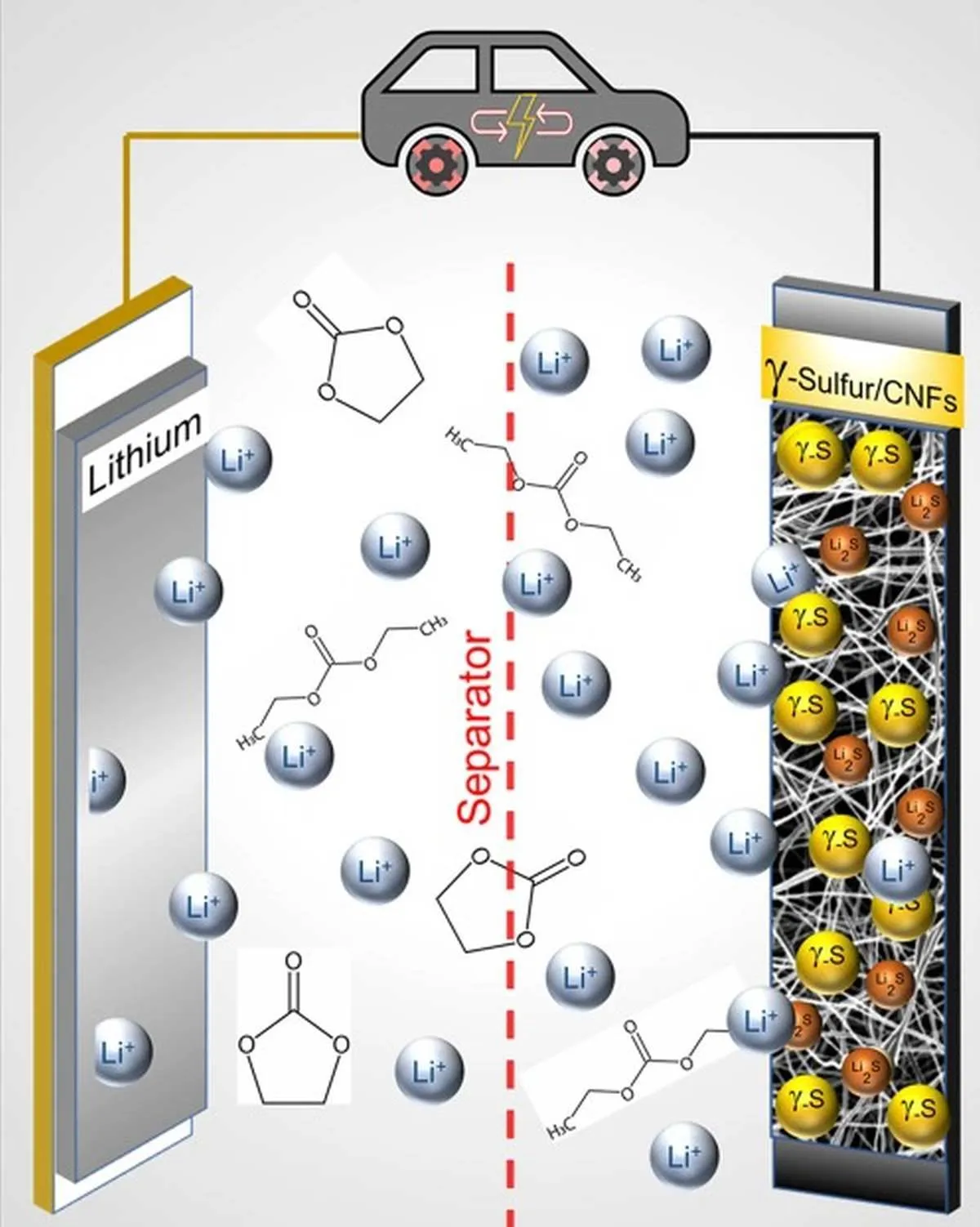
We have been discussing the highly promising battery chemistry of lithium-sulfur cells for over 15 years now. These cells have long been considered one of the most promising alternatives to overcome the limitations of current batteries. Sulfur is abundant, relatively inexpensive, and has an extremely high storage capacity per unit of mass. However, its practical application has faced several challenges, particularly those related to its low operating voltage, degradation, and the movement of sulfur compounds within the battery.
A team of researchers from Vanderbilt University and the University of Maryland, working alongside scientists from other U.S. institutions, has discovered a different way to harness the properties of sulfur. Published in Nature Energy, their work modifies the usual chemical reaction to enable sulfur to participate in an additional process during charging and discharging.
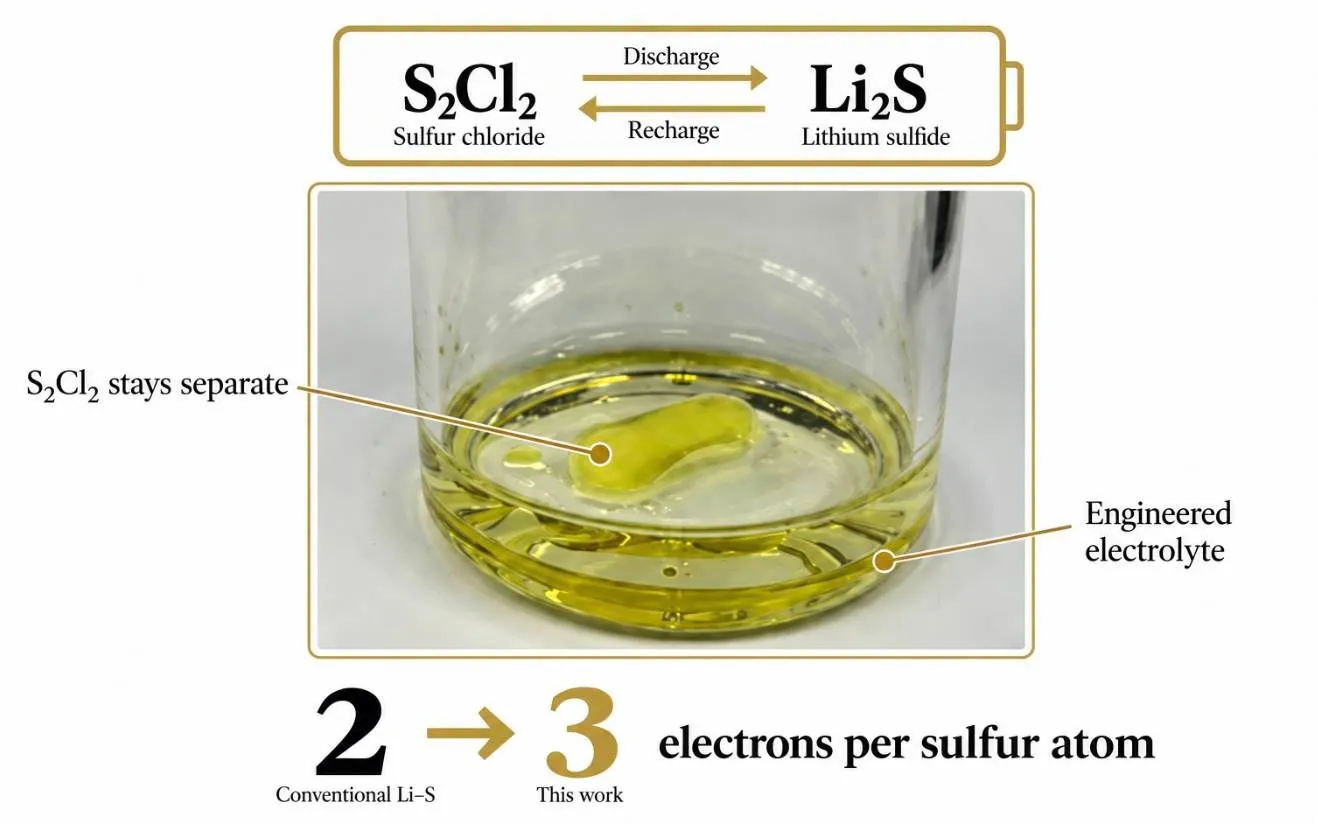
The key lies in something that is simple to explain but difficult to achieve in practice: allowing each sulfur atom to exchange a third electron. In a conventional lithium-sulfur battery, sulfur participates in a reaction involving two electrons. The researchers introduced chlorine to expand this reaction and bring sulfur to an additional chemical state.
The result is particularly remarkable because it not only increases the amount of charge that sulfur can store. The new reaction also operates at a higher voltage, thereby improving both factors that determine a battery’s energy storage capacity: the amount of charge and the voltage at which it delivers power.
The third electron expands sulfur’s possibilities
In the tests conducted by the team, the new chemistry managed to increase the specific capacity of sulfur by 58%, while the average operating voltage rose from approximately 2.05 to 2.54 volts. This combination enabled an electrode-level capacity of over 1,700 Wh/kg, an exceptionally high figure for an experimental battery.
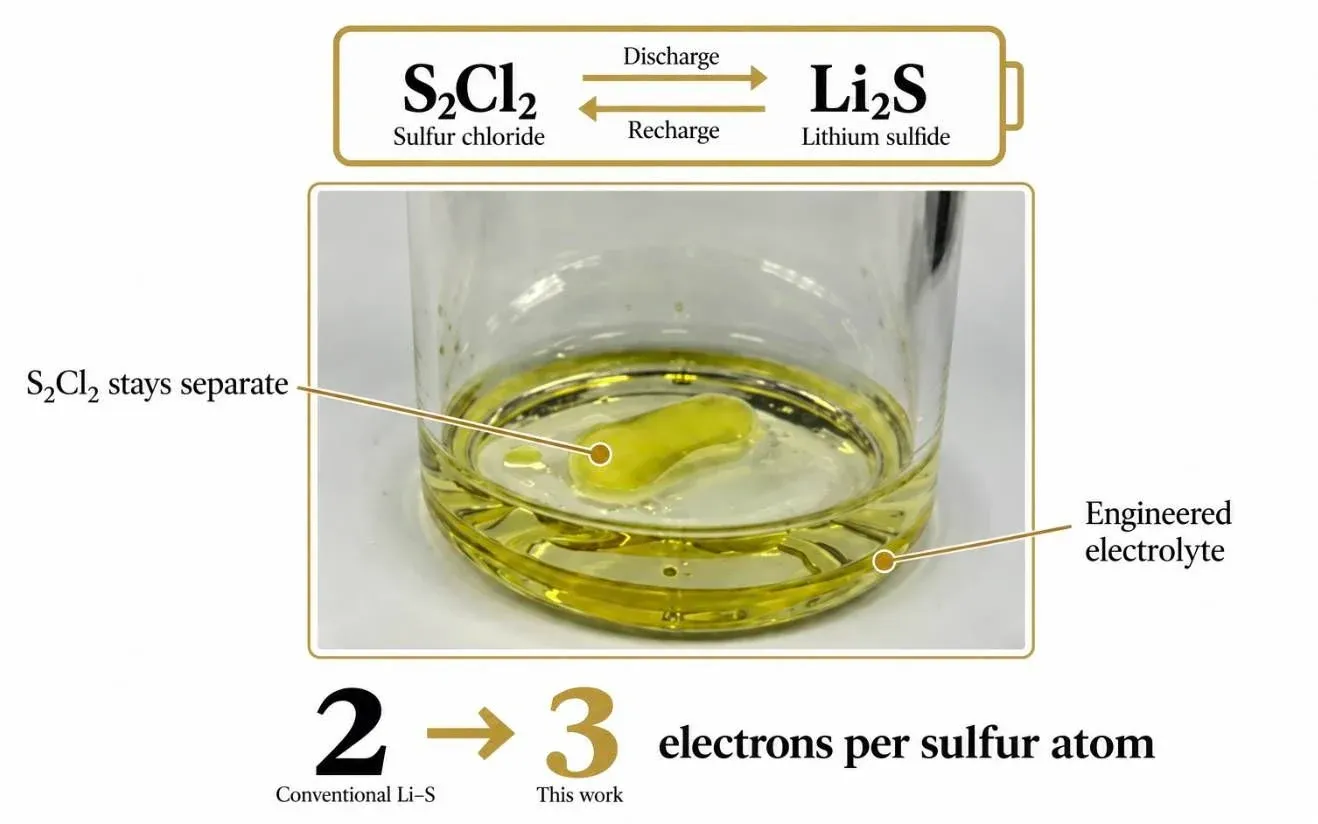
The difference from a conventional lithium-sulfur battery lies in the additional reaction that occurs thanks to chlorine. The researchers were able to reversibly convert lithium sulfide into disulfur dichloride through a process involving three electrons per sulfur atom, rather than the usual two.
This is important because sulfur already holds an advantageous position compared to other materials used in electrodes. Its abundance and high specific capacity have led to years of research into it as an alternative to the materials currently used in lithium batteries, but until now it has been difficult to fully utilize its potential without introducing new problems.
The team had to solve one of these problems before they could use the third electron reversibly. Chlorine needed to react with sulfur during charging, but the resulting compound could not move through the battery and end up reacting with the metallic lithium electrode.
To achieve this, the researchers turned to molecular simulations that allowed them to study the behavior of lithium and chloride ions in different electrolytes. Based on those results, they developed a chloride-rich ionic liquid electrolyte capable of maintaining chloride available for reaction with sulfur.
They also selected a composition in which the product formed by the reaction between sulfur and chlorine does not dissolve easily. This way, it remains inside the positive electrode and can react again during discharge, making the process reversible.
The tests conducted using various spectroscopy techniques confirmed that sulfur indeed repeatedly transitions through this new chemical state during charging and discharging processes. This is therefore not merely a theoretical estimate of what sulfur might do, but a reaction that researchers have been able to observe and replicate in the laboratory.
But there is a significant difference between the impressive figure of 1,700 Wh/kg and what a complete battery could achieve. That value corresponds to the electrode level and does not represent the energy density of a pack ready for installation in an electric car. When researchers take into account other components needed to build a functional battery, the estimate drops considerably.
Specifically, the team calculates that the technology could reach 477 Wh/kg at the battery pack level, which is about 37% higher than the conventional lithium-sulfur system used as a reference in the study. This figure remains an estimate based on experimental design and is not a commercial battery that can be installed in a car at present.
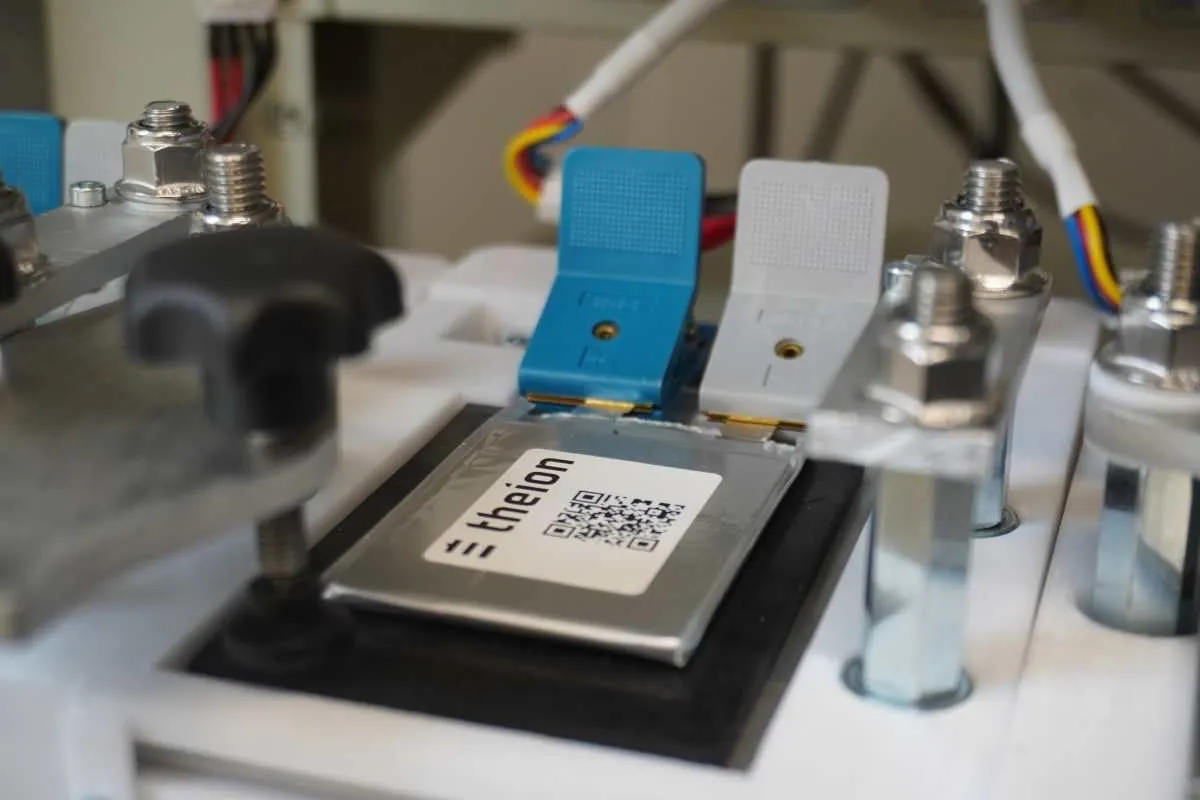
To verify that the new chemistry could work beyond the small cells typically used in the early stages of research, scientists also built a single-layer pouch-type cell. After 100 charge cycles, it retained 78% of its initial capacity.
This figure shows that the reaction can be repeated, but it also highlights how much work remains to be done. The experimental cell uses a metal lithium electrode, still relatively small amounts of sulfur, and an electrolyte quantity higher than what would be desirable in a commercial battery.
That is precisely one of the major challenges in applying this chemistry to electric cars. It’s not enough to achieve a high energy density in the active material. It is necessary to reduce the amount of electrolyte, increase the proportion of active materials, improve durability, control secondary reactions, and ensure that the entire system can be manufactured cost-effectively on a large scale.
Research does show, however, that sulfur still has room to offer more than previously thought. Instead of merely improving conventional lithium-sulfur batteries, researchers have altered the chemical reaction itself to utilize an additional electron while simultaneously raising their operating voltage.
For now, discussing electric cars with batteries capable of exceeding 1,700 Wh/kg would be mixing two completely different levels of research. That figure applies to experimental electrodes. The researchers themselves estimate it at 477 Wh/kg when considering the main components of the system, and numerous obstacles still need to be overcome before a commercial battery is achieved.
Nevertheless, this result is interesting for the automotive industry because a battery that can practically approach several hundred Wh/kg would allow for lighter battery packs to achieve the same range, or significantly increase range without proportionally increasing the vehicle’s weight. This is precisely one of the reasons why lithium-sulfur batteries have been at the focus of research for so many years.
The study published in Nature Energy shows that the path to achieving this doesn’t necessarily have to involve adding more material or improving conventional electrodes. In this case, the solution was to involve sulfur in a three-electron reaction, using chlorine and an electrolyte specifically designed to control the process.
The technology is still in a very early stage, and the results of the pouch cell cycle tests reflect that. But this experiment opens up a new avenue in lithium-sulfur batteries and, most importantly, demonstrates that there are still ways to extract more energy from a material as abundant as sulfur.