
Beyond electric trucks of the future, Daimler Truck predicts less material use, autonomous driving, and new ways to transport goods.
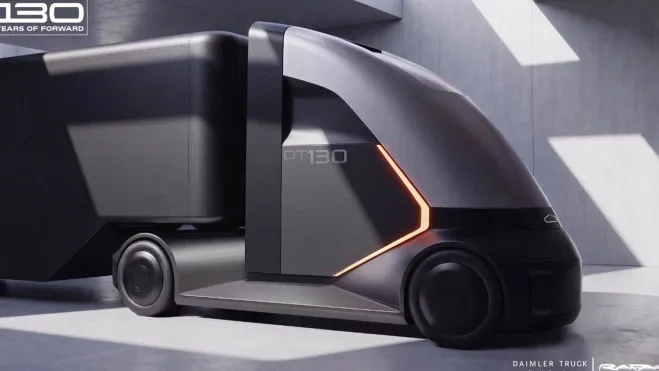
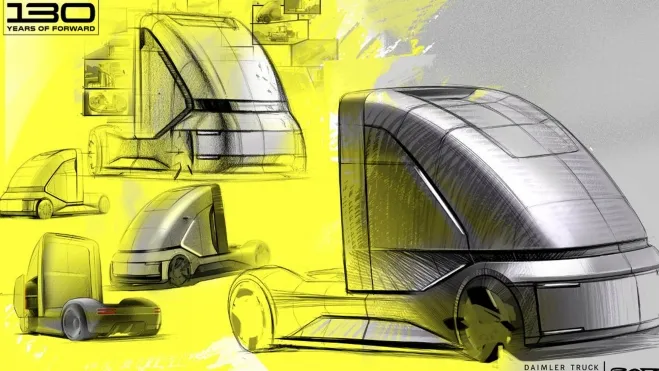
Daimler Truck has presented a collection of conceptual designs that outline how freight transportation might evolve in the coming decades. Named Global Design Inspiration, this initiative brings together proposals from the company’s various design centers and offers solutions ranging from vehicles with fewer components to autonomous transportation systems and new approaches to logistics organization.
This presentation is part of the initiatives tied to the company’s 130-year history. However, there is a key difference from presenting a conventional prototype: these designs do not announce future production models nor are they part of confirmed development programs. Their purpose is to explore ideas and open new paths for mobility.
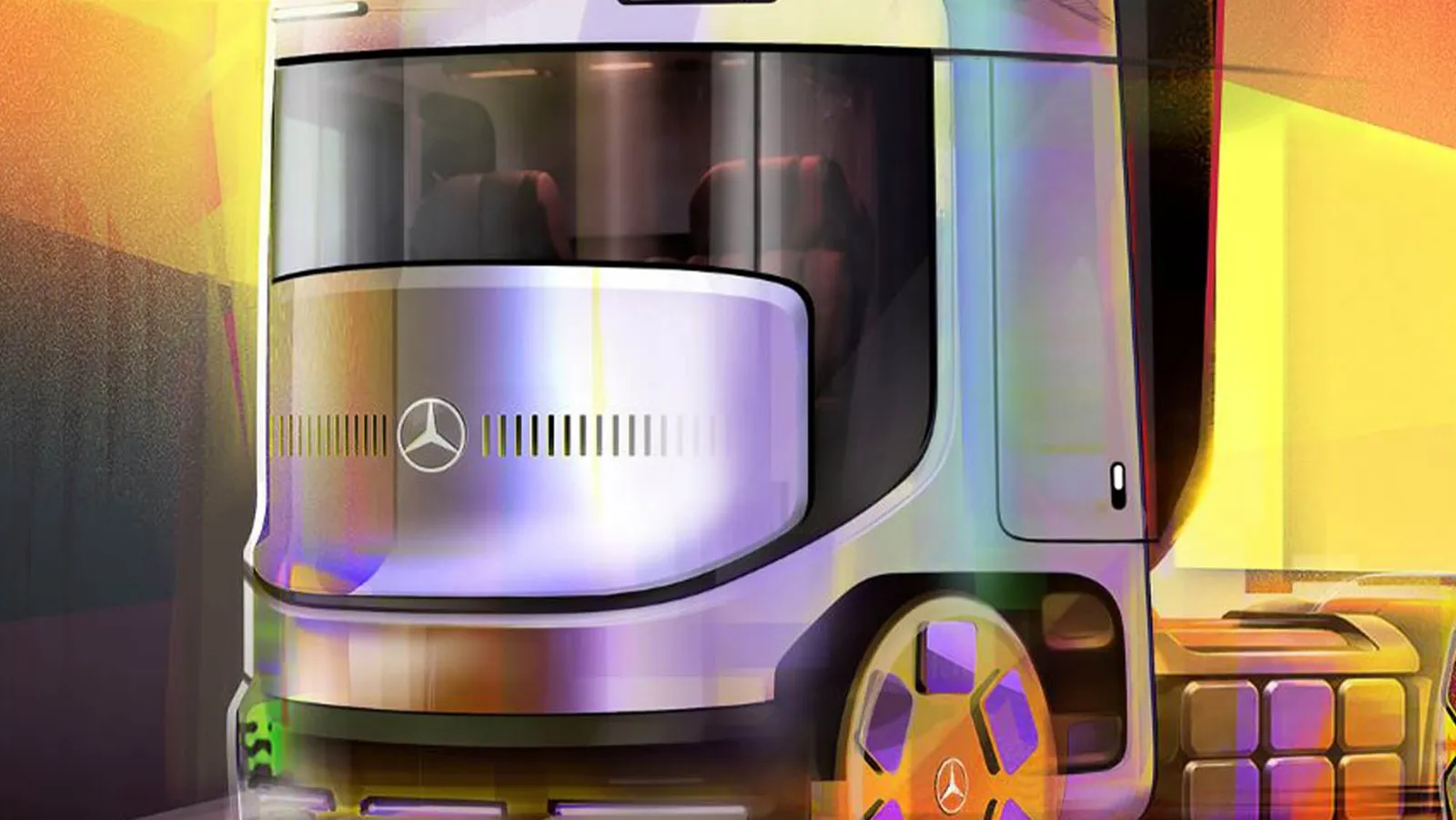
Mercedes-Benz Trucks focuses on achieving more with less
To achieve this, the team explores ways to reduce the number of components, incorporate multifunctional elements, and increase vehicle modularity. In practice, this approach would allow for trucks whose architecture can adapt to different needs without relying on numerous specialized parts.
The proposal also emphasizes the efficient use of materials. Reducing components and simplifying certain construction solutions could help limit resource consumption during manufacturing and facilitate the reuse of parts.
In the case of electric trucks, such approaches are particularly important. Electrification requires considering weight, payload capacity, range, and energy efficiency simultaneously. However, Daimler Truck has not announced any figures regarding material savings, weight reduction, or improved range resulting from this study.
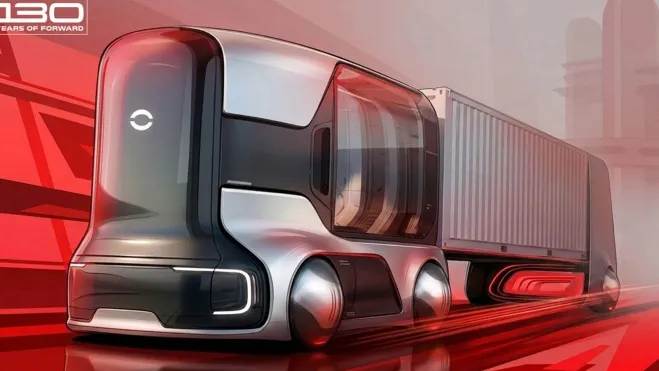
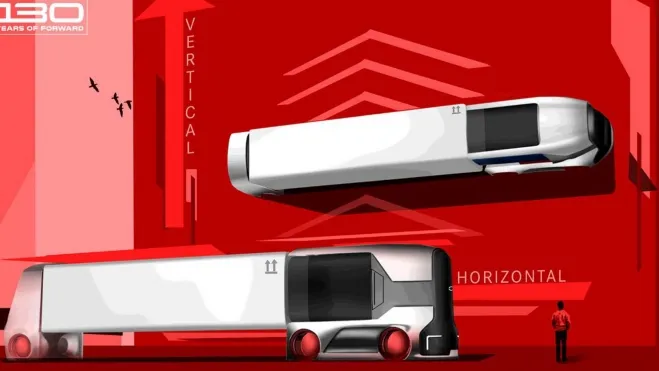
Freightliner explores autonomous transportation and robotics
Another proposal comes from Freightliner, a brand within the group with a strong presence in the North American market. Its study focuses on autonomous transportation and the interaction between vehicles and robotic systems.
The concept envisions a scenario where automated systems can also take on maintenance and service tasks. The goal is to explore how these technologies could increase vehicle availability and improve the efficiency of logistics operations.
The idea goes beyond simply automating driving. It also addresses how auxiliary tasks that keep fleets operational can be organized, ranging from certain service operations to processes related to vehicle functionality.
For now, this is a vision for the future, not an announcement of an autonomous truck with a confirmed release date.
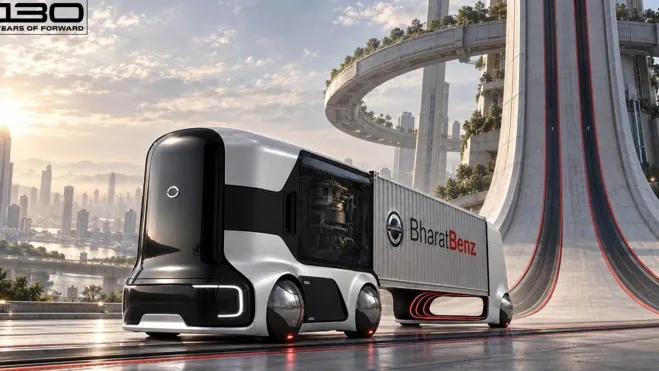
BharatBenz envisions logistics in 2070
BharatBenz, a Daimler Truck brand operating in India, takes this vision forward to the year 2070. The project, named VertiHaul, explores how freight transportation could function in a world where cities and industrial facilities become increasingly vertical.
The study proposes new ways to move goods through multidimensional infrastructure, moving away from the traditional logistics model based primarily on horizontal road networks and distribution centers.
This approach encourages us to consider how urban transformation might alter the movement of goods and the relationship between industrial spaces, warehouses, and delivery points.
Like the other designs presented, it does not represent an approved infrastructure nor a project scheduled for implementation at a specific date.
A airship to rethink future travel
The collection also includes a proposal from Setra, Daimler Truck’s brand specializing in buses. The Miyanoura concept, developed as a master’s thesis project, draws inspiration from airships and zeppelins to envision an alternative way of traveling.
In this case, the goal is not to improve freight transportation but to explore a form of mobility that places greater emphasis on comfort, tranquility, and the experience of traveling itself.
Its inclusion shows that the initiative is not limited to designing electric trucks: it brings together various perspectives on the future of transportation and mobility.
Current electric trucks, closer to reality
While these studies explore long-term scenarios, Daimler Truck already sells battery-powered electric vehicles. One of its main models is the Mercedes-Benz eActros 600, designed for long-distance heavy freight transport.
This truck is equipped with three battery packs, boasting a combined installed capacity of 621 kWh and an advertised range of up to 500 kilometers without intermediate charging, according to the testing conditions specified by the manufacturer. Its mass production began at the end of 2024.
The difference between these two developments is crucial: the eActros 600 represents a concrete industrial application of electrification, whereas the designs from Global Design Inspiration aim to explore potential future pathways.
Daimler Truck has not specified which ideas from these studies will make it into their commercial vehicles or when that might happen. Thus, its main value lies in highlighting the challenges the manufacturer deems important: reducing resource consumption, automating processes, and rethinking transportation efficiency.