
The MAN shows that diesel has just lost its advantage. 35% of eHDV registrations by the end of the decade
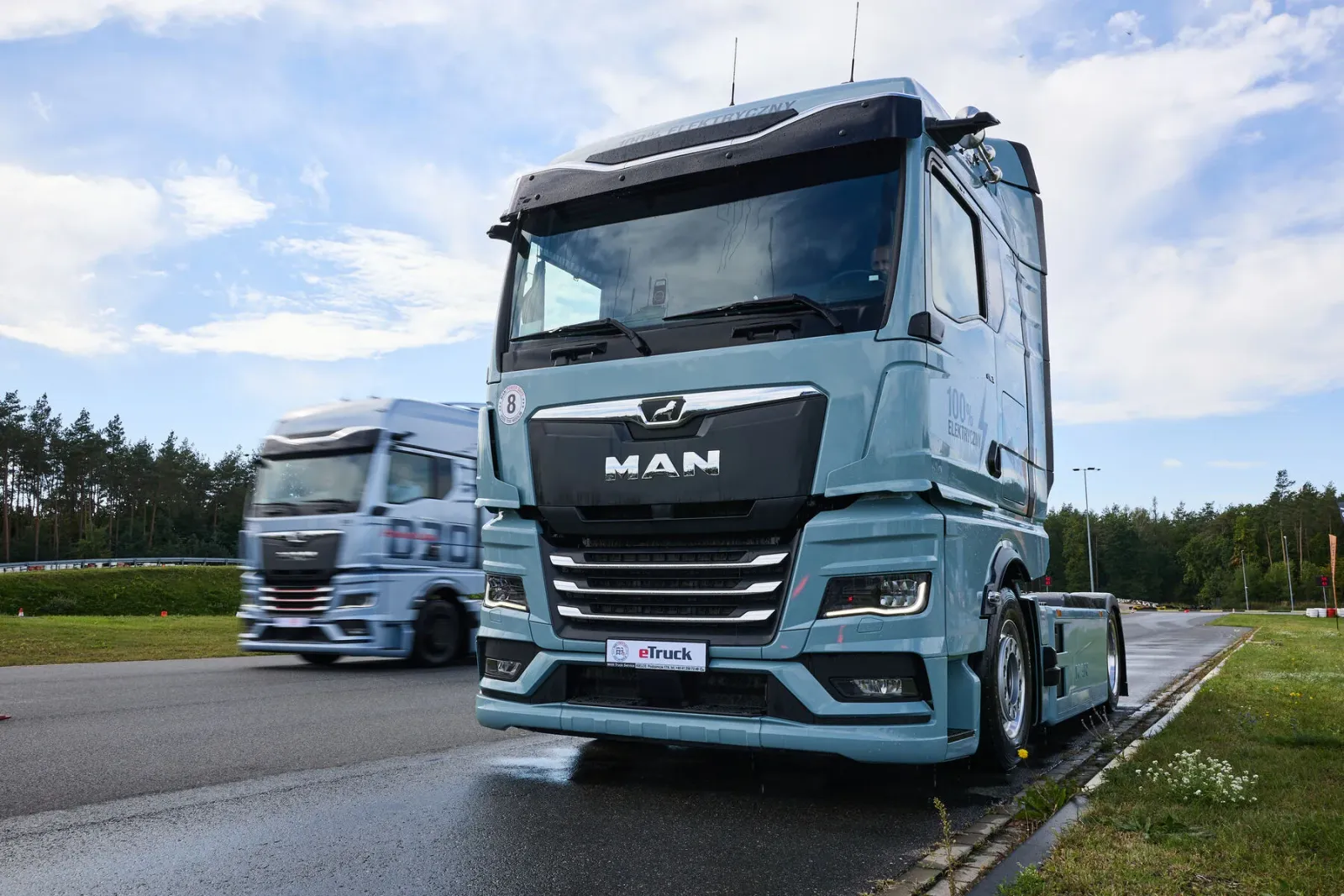
According to the latest report by MAN Truck & Bus SE, prepared in collaboration with McKinsey Center for Future Mobility, electric trucks (eHDV) are not a fantasy but a real tool for building competitive advantage. The manufacturer claims that the total cost of ownership (TCO) of electric trucks has equalled that of diesel trucks, and the share of BEVs in new truck registrations in the EU could reach 15 to 35 percent by the end of the decade. Electric trucks significantly reduce emissions of harmful substances, and competitive advantage is achieved through charging infrastructure — emphasize the report’s authors.
In short:
Electric trucks (eHDV) are a real tool for building competitive advantage — according to the latest report by MAN and McKinsey
The total cost of ownership (TCO) of electric trucks has equalled that of diesel trucks
The share of BEVs in new truck registrations in the EU could reach 15 to 35 percent by the end of the decade.
The competitive advantage lies not in the number of trucks but in developing infrastructure — energy storage facilities, charging stations, and smart charging systems — according to the report’s authors.
MAN: Companies are already transforming.
In European heavy transport, a period is beginning that will redefine the market for generations. MAN Truck & Bus SE, in collaboration with the McKinsey Center for Future Mobility, published a report titled “Beyond Diesel” that presents a bold yet data-backed argument stating that electric trucks have reached cost parity with diesel, and the economic advantage of BEVs will grow each year. As the document states: “Electric trucks are ready for daily use. Companies that begin this transformation now can turn it into a cost, environmental, and business advantage,” write the analysts.
TCO: The difference of one cent and the huge impact of policy
Automotive World highlights a key section of the report: in the base model featuring five trucks with an annual mileage of 100,000 km, the TCO for diesel is 108 eurocents/km, while it’s 109 eurocents/km for BEVs. The difference is therefore minimal, but it’s just a starting point.

Another key conclusion is that road pricing policies determine the advantage of BEVs. The report emphasizes that “It is estimated that removing the difference in fees between diesel vehicles and electric vehicles will reduce the competitiveness of total ownership costs for electric vehicles by 7.5 percentage points.” In other words, if governments eliminate preferences for electric cars, the cost advantage disappears immediately.
Case studies: The BEV advantage today
The MAN company highlights three firms that have gone through various stages of electrification. These are Betonwerk Bad Lausick and Schlager Transport Logistik. The first is an operator that already has 11 to 50 percent of its fleet made up of BEVs, achieving a 9 percent TCO advantage over diesel engines. Once it fully adopts the “BEV System Operator” model, this advantage is expected to rise to 13 percent. The company utilizes solar power (1.8 MW), energy storage systems, and 400 kW chargers, which enable it to reduce energy costs to a level unattainable for its competitors.
Schlager Transport Logistik (from Austria) – here, over half of the fleet operates on battery power, allowing the operator to achieve a 7 percent TCO advantage already today. Schlager recharges 95 percent of its energy at the base using a PV system with a capacity of 765 kWp and a battery storage unit of 1.6 MWh. MAN emphasizes that “the energy cost savings alone exceed 2 million euros over the leasing period” – meaning the savings from energy costs alone surpass 2 million euros in five years, according to the report.
Emissions: 71 percent reduction in CO₂ today, 81 percent by 2030.
The report also leaves no doubt that electric trucks are not only cheaper to operate but also drastically reduce emissions. MAN calculates that BEVs reduce greenhouse gas emissions by 71 percent over their lifetime compared to diesel trucks, and with the decarbonization of Europe’s energy sector, this figure will rise to 81 percent by 2030.
Infrastructure as the key to business success
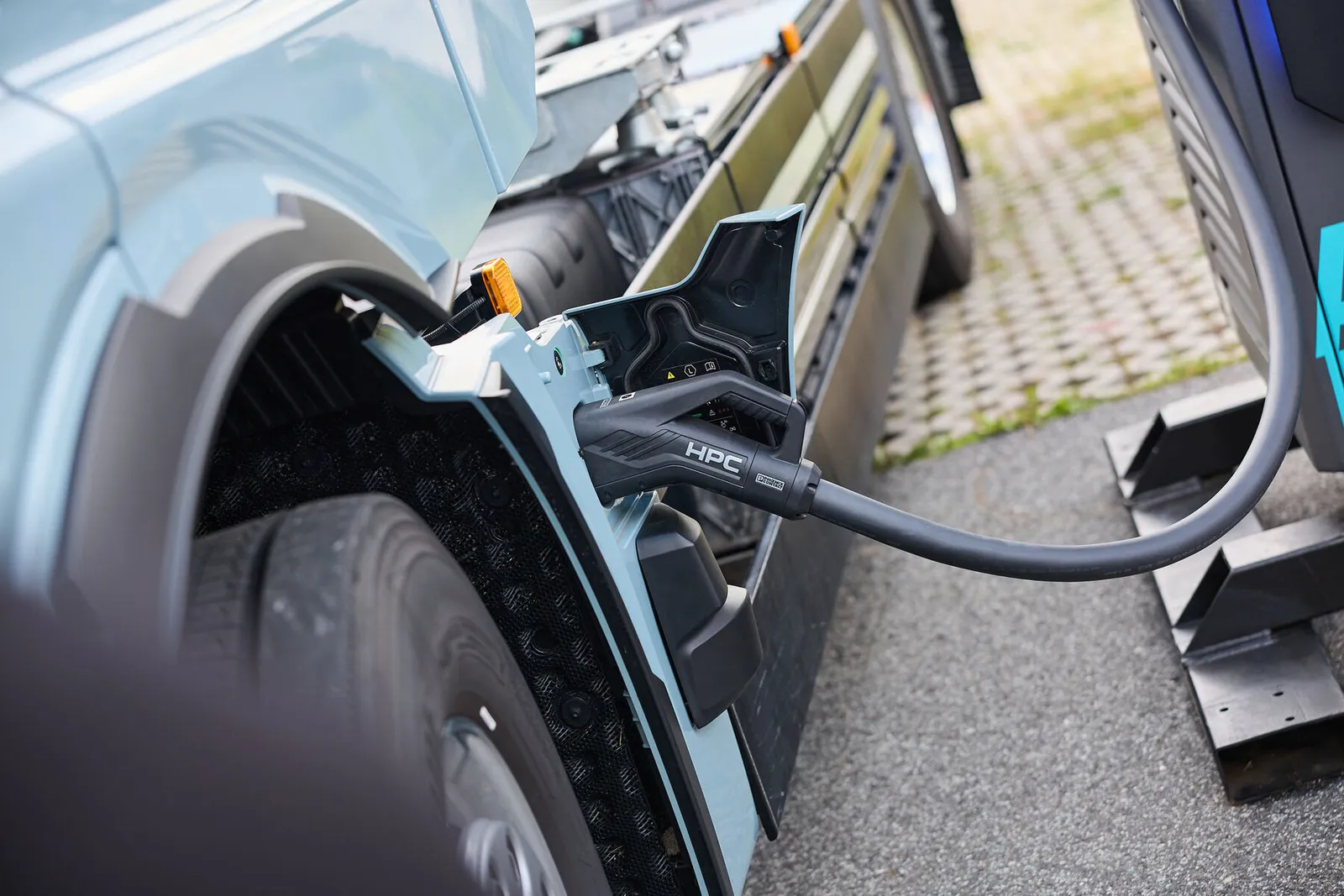
The report’s strongest emphasis is not on vehicles but on infrastructure. MAN states outright: “Depots, or bases, are becoming strategic assets.” It is there that the real revolution is taking place, as 90 percent of charging occurs on the operator’s premises, and advanced energy management can reduce the cost per kWh from 40 cents to around 16 cents. This means that competitive advantage is gained not by those who buy the most electric vehicles, but by those who invest in solar power, energy storage, and smart charging.
Why does this matter?
The report highlights strategic insights. First, zero-emission tenders create a premium for early adoption of zero-emission solutions. Companies without BEVs may soon not only lose out financially in such tenders but could also be entirely disregarded. Second is the so-called depot economy, which determines TCO, as it is the infrastructure—not the vehicle—that creates a competitive advantage.
Of course, it’s undeniable that MAN promotes its own sales narrative alongside the report, but the data on TCO, emissions, and case studies are consistent and detailed.
Conclusions
The MAN report is not neutral, as it should be viewed as a strategic document from a manufacturer aiming to accelerate the electrification of the market while increasing sales of its vehicles. Nevertheless, even with this caveat, it is hard to ignore the fact that TCO for BEVs is already on par with diesel, and in many real-world scenarios, electric vehicles are simply cheaper.
Oskar Włostowski