
Lucid and Bolt are preparing 25,000 driverless cars. They are meant to transport passengers across Europe.
In short:
Bolt wants to introduce at least 25,000 autonomous vehicles to European cities
Lucid as the target
These will not be the existing Air or Gravity models
The robotaxis will be built on a new, cheaper platform from the American brand and are intended to achieve level 4 autonomy
Lucid in a strategic partnership
Lucid is primarily associated with very fast and relatively expensive electric cars. Now, the American brand wants to apply its technology in a completely different context – in vehicles where the owner might not even sit inside.
Lucid and Bolt have announced a strategic partnership for autonomous transportation in Europe. The plan calls for deploying at least 25,000 vehicles capable of operating at SAE Level 4 on roads. This means that in specific areas under defined conditions, the vehicle can carry out the entire driving process without a driver.
This is not yet a preview of the 25,000 ready-made cars that will appear on streets in a few months. The companies have not provided a specific rollout schedule or a list of the first cities. Reuters confirms, however, that Bolt intends to own these cars and manage the fleet independently. The company’s long-term goal is even larger — by 2035, 100,000 autonomous vehicles are set to operate on the Bolt platform.
It won’t be an autonomous Lucid Air
The technical base itself is interesting. Robotaxis will not be developed based on the Air sedan or the large Gravity SUV.
Lucid will use the currently being developed Midsize platform. It is intended to serve as the foundation for a new generation of smaller and cheaper vehicles from the brand, while for Bolt it will be adapted from the start to integrate autonomous driving systems.
The car is set to use NVIDIA Hyperion. This is an architecture designed for autonomous vehicles, including computing units and a suite of sensors needed to monitor the surroundings.
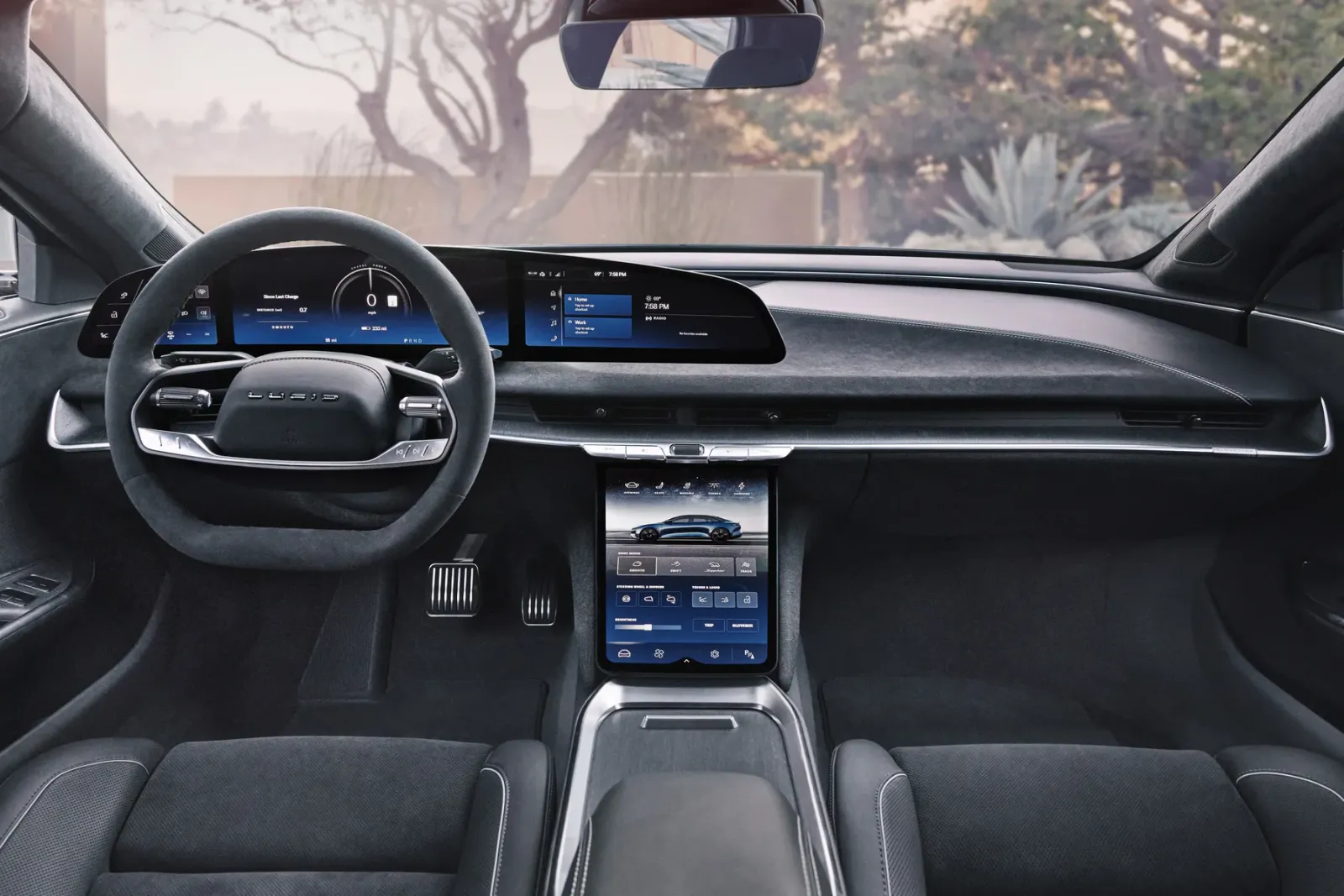
Bolt will not merely be an app for ordering rides. Its Autonomous Driving Solutions unit will help define the requirements for the car, software, safety features, and passenger services. The company is also planning to develop infrastructure for fleet management and working with European cities and regulators.
On the manufacturer’s side, the project will be handled by Lucid Technologies’ new unit, which focuses on developing artificial intelligence, ADAS systems, autonomy, and other vehicle software.
Lucid Has Another Major Robotaxi Contract
The European deal with Bolt is not Lucid’s first foray into autonomous taxis.
In the United States, the manufacturer is already working with Uber and Nuro. That project aims to deploy at least 35,000 Lucid autonomous vehicles. This means that along with the European project, the manufacturer has agreements covering at least 60,000 vehicles intended for autonomous passenger transport.
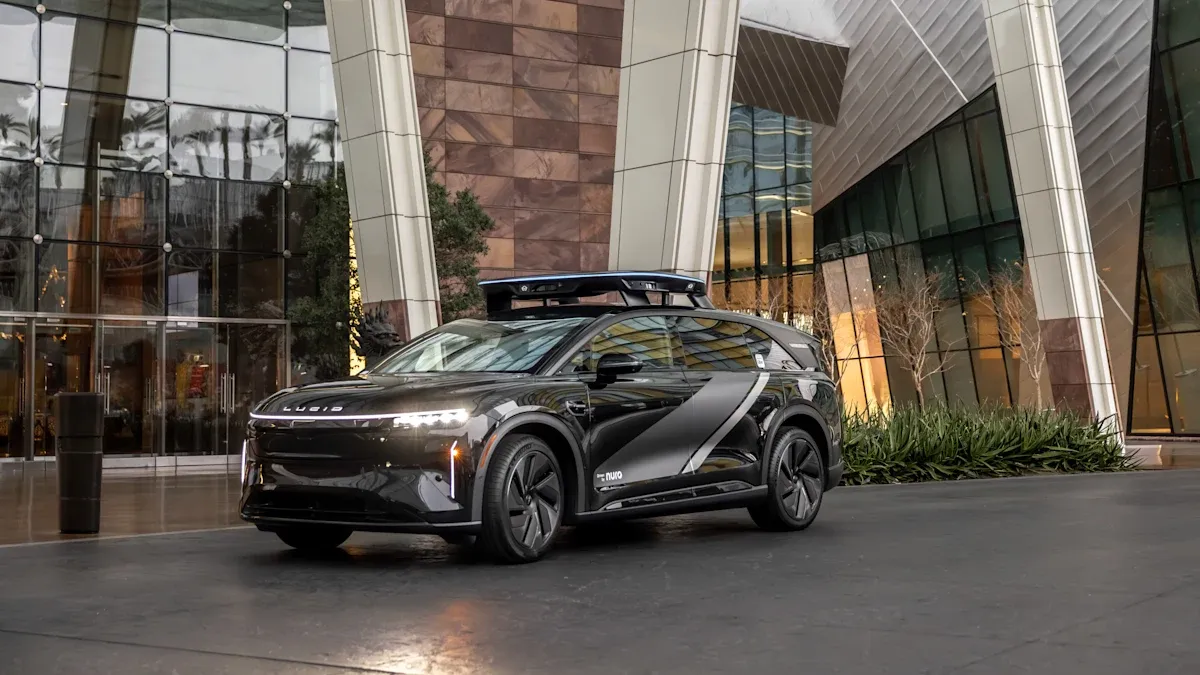
This could be a particularly important market for Lucid. The company has built its brand over the years around electric drive technology – high efficiency, very long range, and a charging system that allows for extremely fast charging. Now it wants to sell the underlying technology platform as well as software-related expertise.
What exactly does Lucid sell today?
The current lineup is very small. It basically consists of two cars: the sedan Air and the large SUV Gravity.
The Air is the brand’s best-known model. In the 2026 European lineup, it is available in Pure, Touring, Grand Touring, and the high-end Sapphire versions.
In Germany, prices start at 85,900 euros (around 374,000 zł) for the Air Pure. The car has 442 HP and an WLTP range of 751 to 831 km depending on the configuration. The Air Touring has 628 HP and costs from 99,900 euros (around 435,000 zł), while the Grand Touring features 831 HP, a range of up to 960 km WLTP, and costs from 130,900 euros (around 569,000 zł).
At the top is the Air Sapphire. It has 1,251 HP, accelerates from 0 to 100 km/h in 2.0 seconds, and costs 250,000 euros (around 1.09 million zł).
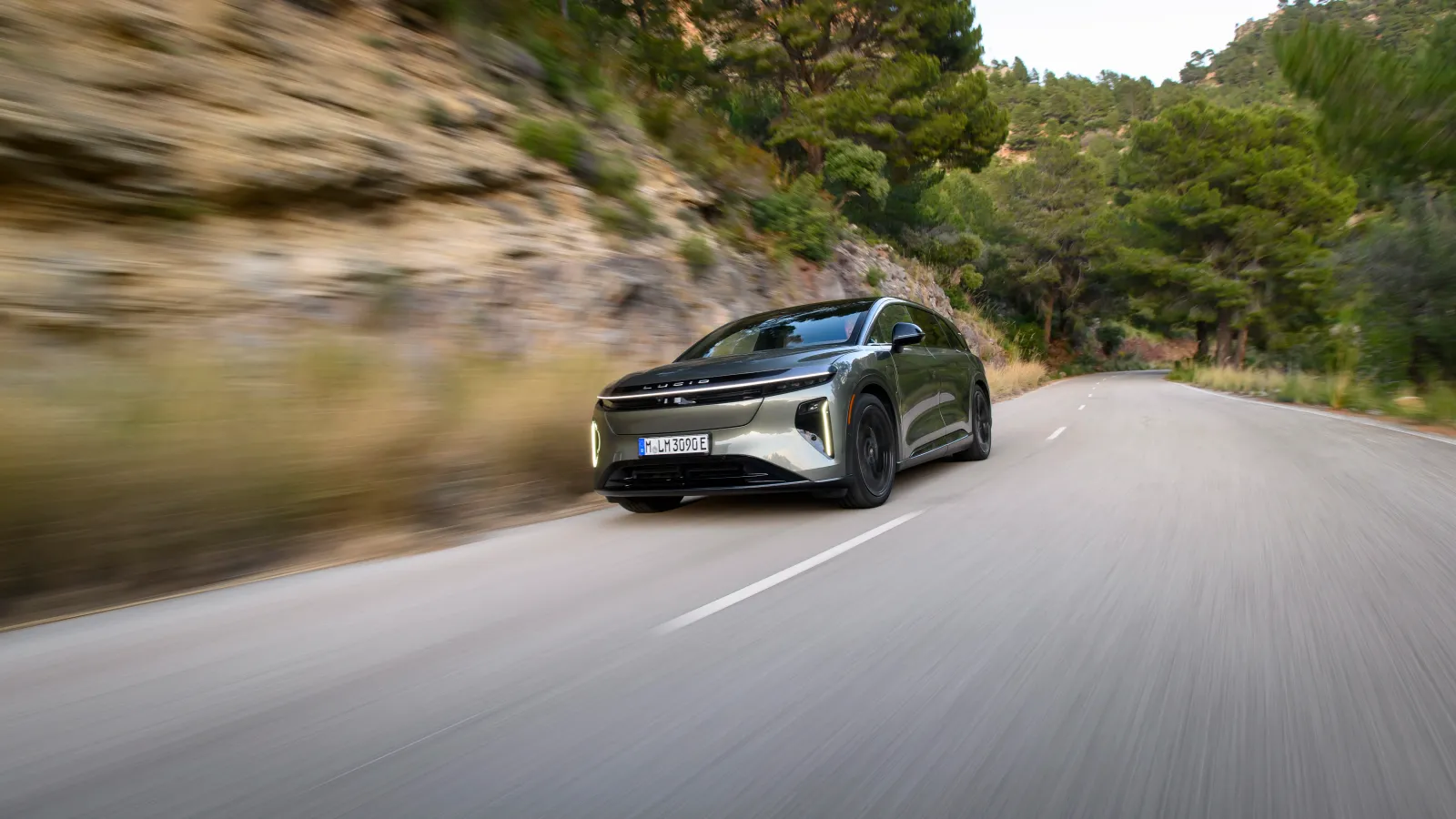
The second model is the Lucid Gravity, a five-meter-plus SUV available with up to seven seats.
The base Gravity Touring model has 568 horsepower and costs around 94,900 euros in Germany (approximately 413,000 zł). The Grand Touring version starts at 119,900 euros (about 522,000 zł). The most powerful European variants offer 839 horsepower, a 123 kWh battery, and a range of up to around 740 km WLTP depending on the configuration. The vehicle can accept up to 400 kW during DC charging.
Can the Lucid be bought in Poland?
Yes, but there is an important caveat. Lucid still does not operate official sales in Poland under the same terms as in Germany, the Netherlands, Norway, or Switzerland. We don’t have a Polish configuration tool or an official dealer showroom. However, the cars are available through independent importers, and there are also used car options available.
Purchase is therefore possible, but it takes place outside of Lucida’s official Polish network. This matters especially regarding service and warranty issues, so it is not yet a situation comparable to buying a Tesla, BMW, or Mercedes directly from the manufacturer in Poland.
Europe is becoming crowded with robotaxis
Bolt and Lucid are entering a market where much more is happening by 2026 than just two or three years ago.
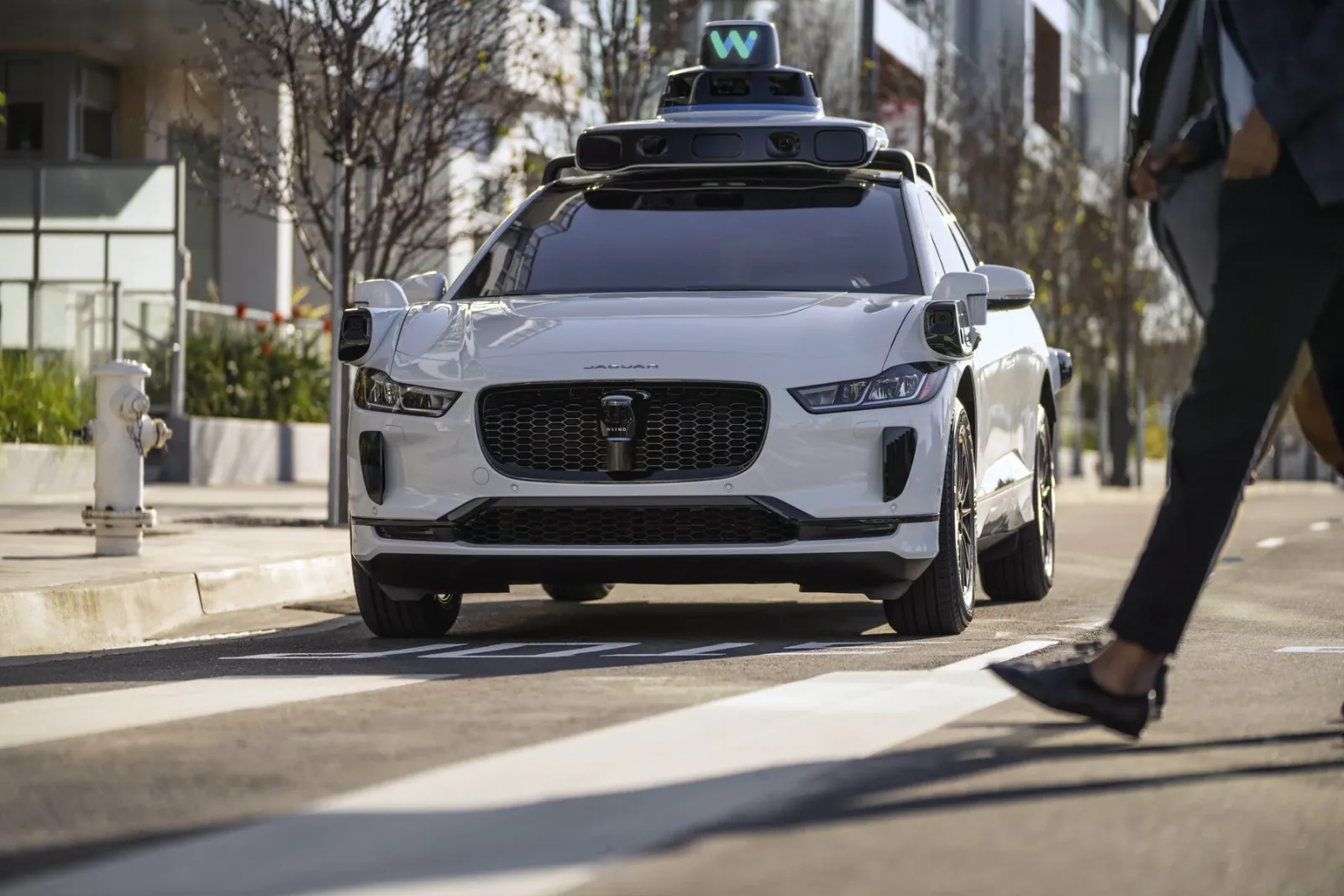
The most advanced player remains Waymo, owned by Alphabet. The company is already operating commercial driverless services in the United States and preparing to enter London. Waymo claims it wants to offer driverless rides there by 2026 as well. Currently, mapping and validating the system are underway in the streets of the British capital.
A major European player is the British company Wayve. The firm is developing an artificial intelligence-based system designed to learn how to drive without the need for detailed programming for each city. In September, Wayve and Uber launched supervised autonomous vehicle tests in London. Wayve also collaborates with Nissan, Mercedes, and Stellantis, and in 2026 it secured $1.2 billion in funding from sources including Microsoft, NVIDIA, and Uber.
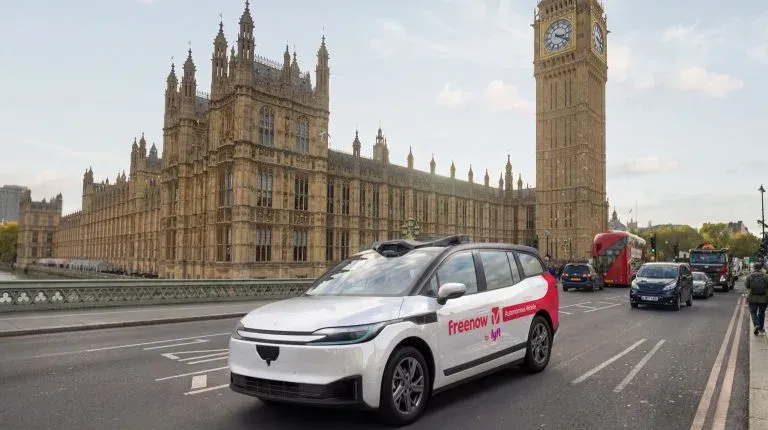
Chinese companies are also entering Europe. Baidu and Lyft have announced plans to deploy Apollo Go RT6 vehicles in Germany and the UK. The project is set to begin in 2026, subject to regulatory approval, with the goal of having a fleet of thousands of vehicles.
WeRide is collaborating with Uber. The companies are developing commercial robotaxis in Zurich, where service is set to launch in 2026 once the necessary approvals are obtained. This is another European project following the previously announced one in Madrid.
Volkswagen also has an autonomous ID. Buzz.
Volkswagen is also working on a very specific project together with MOIA and Mobileye.
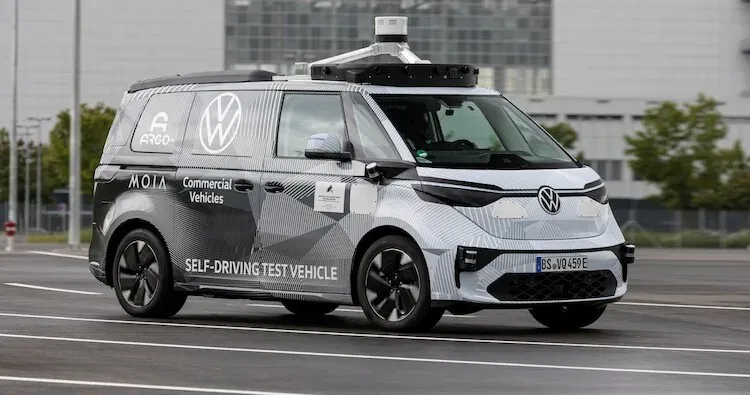
The foundation is the ID. Buzz AD – a specially designed, autonomous version of Volkswagen’s electric van. The vehicle uses Mobileye’s system and is equipped with 13 cameras, nine lidars, and five radars. The setup is intended to meet Level 4 autonomy standards.
In July 2026, MOIA began another phase of passenger testing in Hamburg, while the ID. Buzz AD entered pre-production earlier. Volkswagen aims to create not only the vehicle but also a complete system covering fleet management and transportation services.
There is also the Croatian company Verne, part of the Rimac ecosystem. The company announced in April 2026 the launch of Europe’s first robotaxi service and also aims to develop autonomous transportation as a complete service rather than selling only the technology.
The toughest part is still ahead for them
Against the backdrop of competitors, Bolt and Lucid’s advantage lies primarily in scale. 25,000 vehicles is not a test fleet of just a few dozen units, but a number that can genuinely transform the transportation market in several European cities.
However, for now this is a goal rather than an existing fleet. We do not know the first cities, the date of commercial launch, or the costs of the project. Reuters also notes that European regulations and safety requirements are one of the biggest challenges for such projects.
The race is already in full swing. Just a few years ago, autonomous taxis in Europe were mainly demonstrations of technology. By 2026, the question is increasingly not “whether,” but rather who will be the first to move from dozens of test vehicles to tens of thousands of cars regularly carrying passengers.
Piotr Sobczyk