
Lucid and Bolt plot electric Robotaxi service for Europe
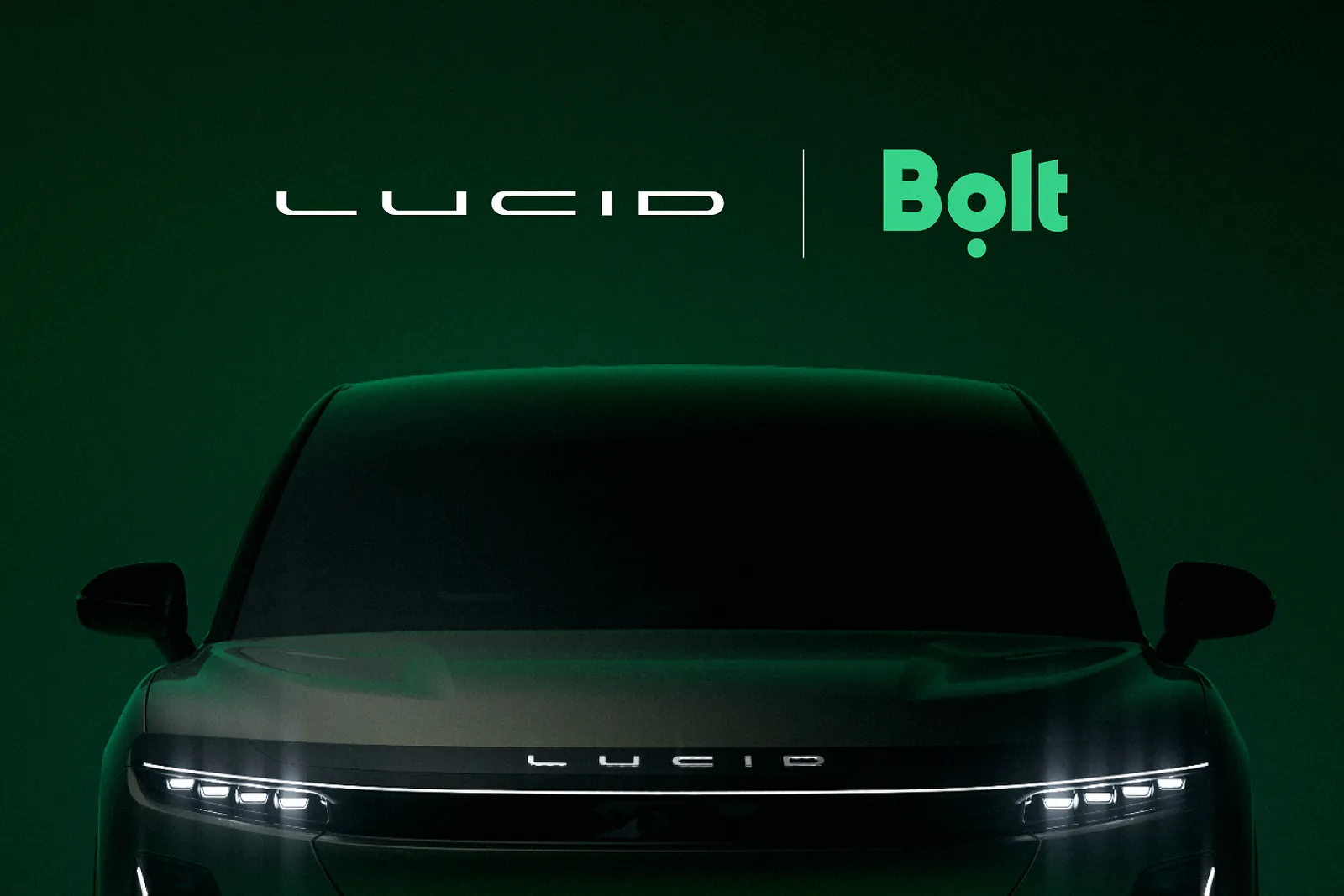
Lucid and Bolt aim to jointly establish autonomous mobility services in Europe. To this end, Bolt plans to deploy at least 25,000 autonomous electric vehicles based on Lucid's upcoming midsize platform across multiple European cities and countries.
Autonomous vehicle by Lucid and Bolt for planned deployment in Europe.
Image: Lucid Motors
The two companies have formed a strategic partnership, beginning with vehicle development. Specifically, they aim to create a vehicle designed for automated driving at SAE Level 4, based on Lucid’s next-generation platform. At Level 4, the system can fully assume driving tasks within a defined operational area.
Nvidia Hyperion is envisaged as the software foundation. The reference architecture combines the computing systems required for autonomous driving with a standardised sensor platform. Lucid and Bolt also intend to involve additional technology partners. However, it has not yet been confirmed which companies will be involved or when the first vehicles will enter service in Europe.
At least 25,000 Lucid vehicles are said to be part of a larger initiative by Bolt. By 2035, the mobility provider aims to operate a total of 100,000 autonomous vehicles on its platform. Bolt intends to own and operate the vehicles from its cooperation with Lucid itself.
On Bolt’s side, the project is being led by the Bolt Autonomous Driving Solutions unit. The company will co-develop requirements for vehicles, software, safety, and passenger experience, and subsequently build the necessary fleet infrastructure and operating systems. Bolt will also be responsible for collaborating with the respective cities.
In doing so, the mobility provider can draw on its existing presence. According to its own statements, Bolt operates in more than 850 cities and over 50 countries, offering ride-hailing, e-scooters, e-bikes, and car-sharing. Data and experience from this mobility business will feed into the development and later operation of the autonomous fleet.
Bolt to operate autonomous Lucid fleet itself
Lucid, for its part, is consolidating its work for the cooperation in the newly established Lucid Technologies unit. There, the US manufacturer is pooling its expertise in artificial intelligence, driver assistance, autonomous driving, and other digital vehicle technologies. The unit will further develop its own solutions and drive their commercialisation. For Lucid, the Bolt partnership is not its first foray into the autonomous mobility services business: the manufacturer is already working with Uber and specialist Nuro on a robotaxi offering. With Bolt, the technology is now also to be used for large-scale deployment in Europe.
The announcement comes at a time of extensive restructuring at Lucid. Under new CEO Silvio Napoli, the manufacturer is cutting around 18 per cent of its US workforce and has streamlined its leadership structure. In May, Lucid also suspended its production forecast for 2026 after supplier issues, among other factors, disrupted deliveries of the Gravity electric SUV. In July, the manufacturer dismissed reports of a possible Chapter 11 bankruptcy filing or a delisting from the stock exchange as “completely false” and pointed to its liquidity position.
The vehicles intended for Bolt are to be based on Lucid’s upcoming midsize platform. The partners have not yet disclosed specific technical details or a timeline for series production. However, it is clear that Lucid will continue to build purely electric vehicles on this platform. In the spring, the manufacturer announced plans to develop an entirely new electric drivetrain (‘Atlas’) for the midsize platform.
It remains unclear which European cities and countries will first see the deployment of the autonomous fleet. In July, the UNECE established a regulatory framework for such vehicles with a new regulation for Automated Driving Systems. This defines requirements for safety management, system validation, and ongoing operational monitoring, among other things.
However, this does not automatically permit driverless vehicles on public roads. Instead, the UNECE regulation provides a common foundation on which individual countries can grant corresponding approvals. Lucid and Bolt have therefore announced that they will work with European regulatory authorities, policymakers, and cities to prepare for commercial operations.