
Electric motors ‘resist’ flying, but biofuels are a big trap that also doesn’t help decarbonize the industry
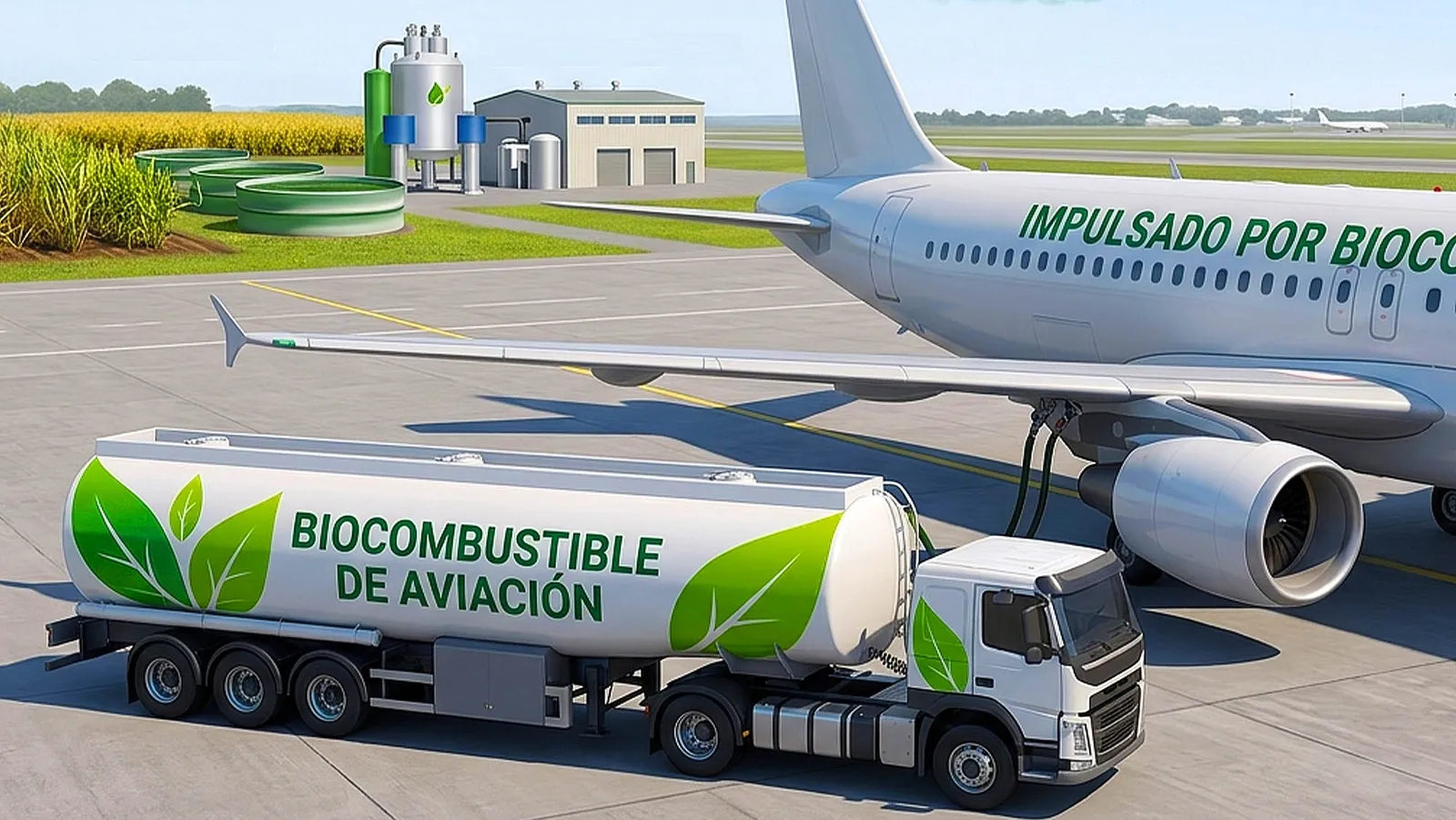
Air transportation remains one of the most difficult sectors to decarbonize, and for now, there is no technology as straightforward as electrifying cars. Biofuels fill this gap, as they can help ease part of the energy transition, but they are not seen as a definitive solution.
Geopolitical pressures and the escalation of war in Iran have once again brought attention to dependence on fossil fuels, an issue that affects supply, energy sovereignty, and the stability of sensitive sectors such as air transport.
Can aviation be electrified?
In Spain, the scale of the problem is reflected in the consumption of kerosene. According to CORES (Corporación de Reservas Estratégicas de Productos Petrolíferos), 7.74 million tons were consumed in 2025, the highest annual figure for the second consecutive year.
Of that volume, 2.2 megatons were imported, and nearly half, 46.3%, came from conflict zones. For all petroleum products combined, consumption exceeded 60 million tons, with the United States being the largest oil importer at 15.2% of the total, while the Middle East accounted for 10.7%.
Biofuels appear as an intermediate step in the transition, but not as the ultimate goal. They are fuels made from organic materials, and in practice, their main source is usually used cooking oil, although animal fats, forestry residues, food waste, industrial byproducts, or wastewater sludge are also used.
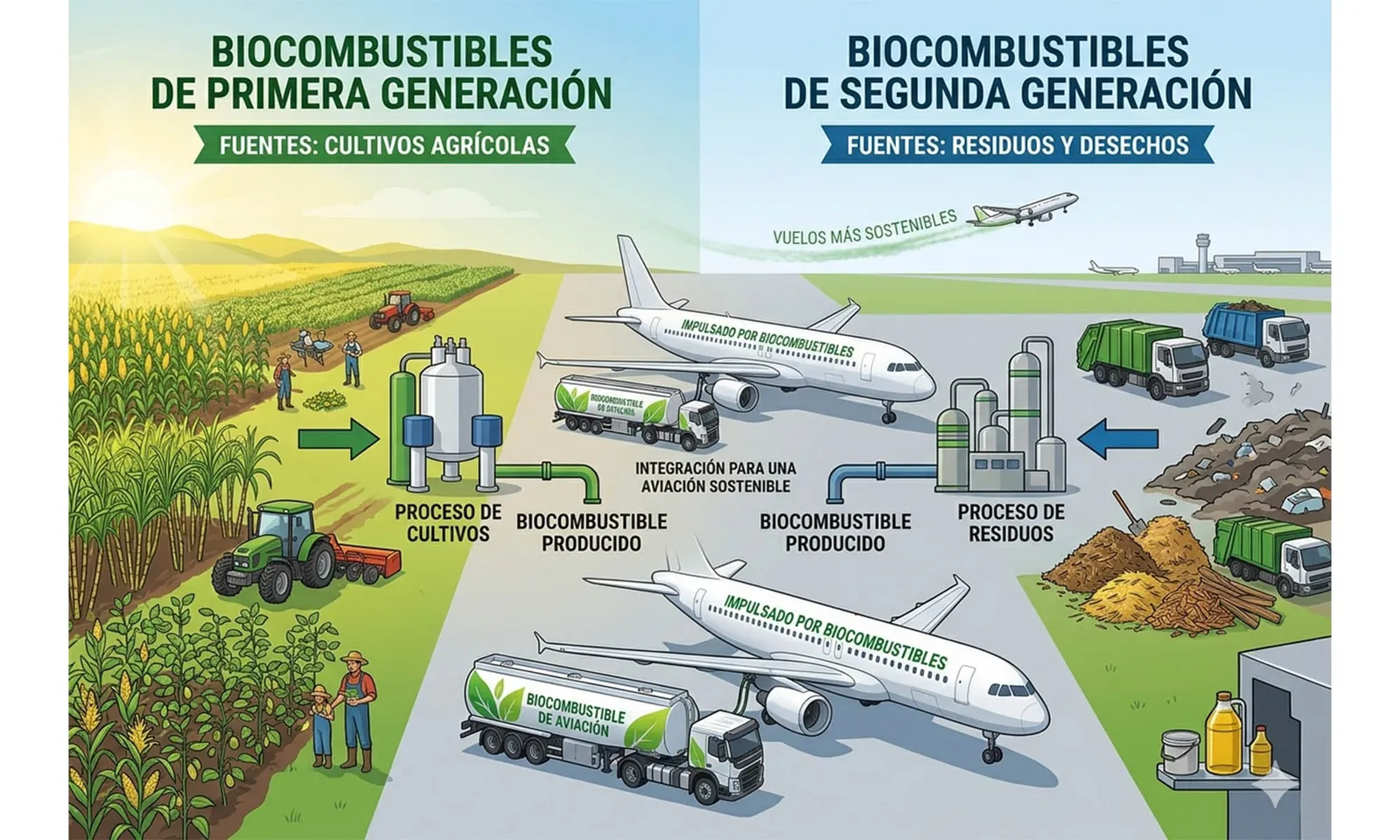
Within this group, first-generation biofuels are derived from crops, while second-generation ones come from waste. The issue is that in 2024, 34.84% of biofuels sold in Spain were produced from crops, up from 34.39% the previous year. European regulations on renewables further emphasized in 2023 the need to curb biodiversity loss associated with indirect changes in land use.
That distribution of raw materials is one of the major limitations in this sector. The International Energy Agency warned in 2022 that the biodiesel, renewable diesel, and biojet industries could face a supply bottleneck between 2022 and 2027 if trends didn’t change, with demand for vegetable oils, residues, and fats rising by 56% to 79 million tons during that period.
The pressure on raw materials from residues and waste is equally significant because they help meet climate and supply goals in the United States and Europe.
In Spain, external dependence remains very high as well. In 2024, only 15% of the raw materials used for biofuels came from within the country, up from 9% in 2023, leaving this market vulnerable to disruptions, price increases, and potential fraud.
ECODES warns that this situation also shifts environmental and social impacts outside the European Union. The organization argues that biofuels can be useful as a supplement in sectors that are difficult to electrify, but it criticizes their use primarily in road transport, given that aviation and, to a lesser extent, maritime transport present greater obstacles to abandoning fossil fuels.
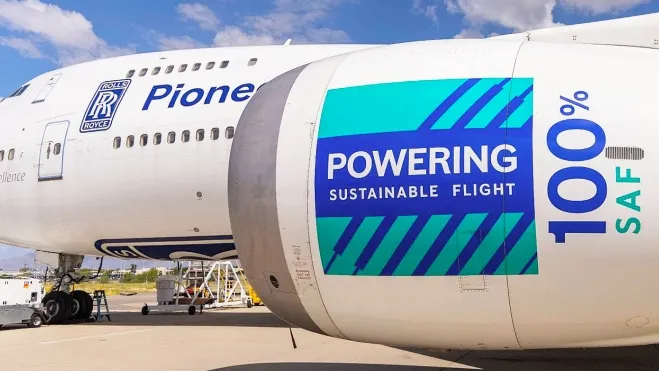
The alternative with the most growing significance in that debate is synthetic fuel or e-SAF, produced from renewable electricity, captured CO2, and water. But its main challenge today is cost.
ECODES estimates that producing aviation biofuel from waste cost an average of 2,085 euros per tonne in 2024, compared to 734 euros per tonne for fossil kerosene. For synthetic fuel, the cost was seven to eleven times higher than that of kerosene, averaging 6,163 euros per tonne.
Therefore, the prevailing advice in the industry is caution. Biofuels can serve as a temporary solution, as long as they are used under acceptable environmental and social conditions, but they should not be marketed as a final solution to aviation’s problems.
The key lies in reserving them for uses where electrification is much more difficult, avoiding investments that will later be stranded, and planning decarbonization realistically, without relying on a magic solution that does not yet exist.