
Electric cars already prevent the consumption of 1.7 million barrels of oil per day
We might not think much about refueling when we do it, but an increasingly larger portion of global transportation no longer needs to stop at a gas station. Millions of drivers have switched from fuel to electricity, and although the individual impact may seem small, when all those miles are added together, the effect becomes hard to ignore.
The transition toward electric mobility is not only changing what types of cars are sold or how new generations of vehicles are designed. It is also altering the amount of oil required for road transportation. And it is doing so on a scale that would have been hard to imagine just a few years ago.
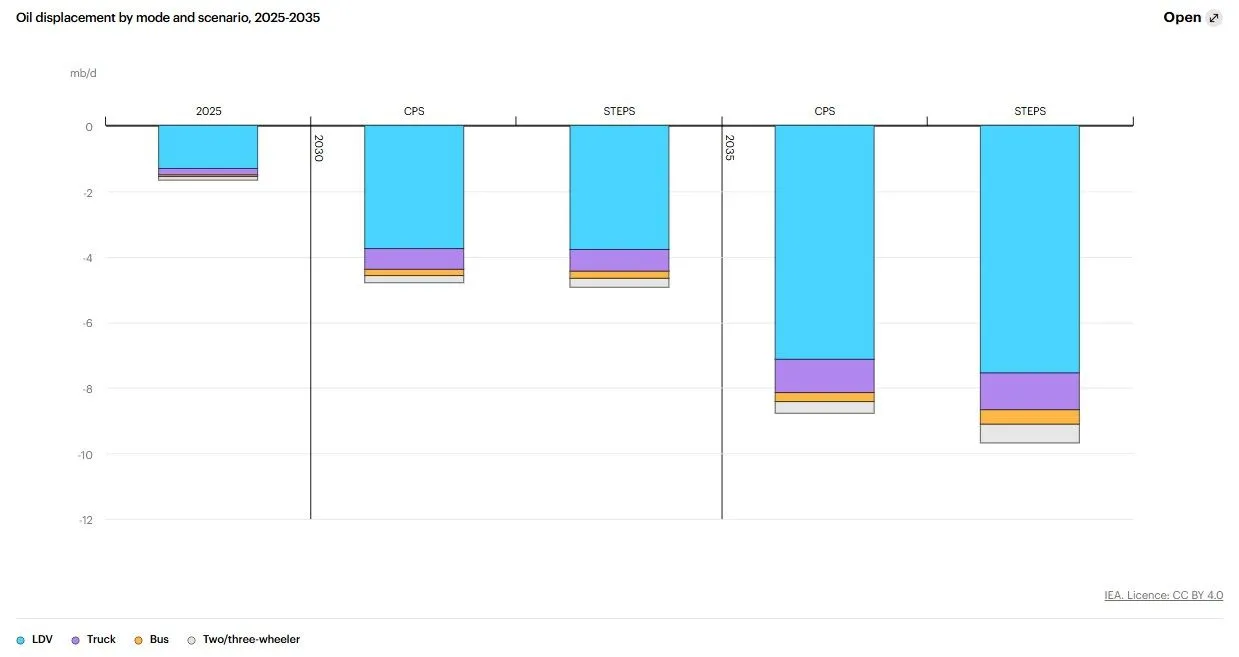
The International Energy Agency estimates that the world’s fleet of electric vehicles prevented the consumption of about 1.7 million barrels of oil per day in 2025. This figure takes into account the fuel that conventional vehicles would have used to cover the same distances as the electric vehicles.
On an annual basis, this amounts to approximately 620 million barrels of oil that were not needed to power those vehicles. This figure is particularly striking because it comes from actual events in 2025 rather than a long-term forecast.
The agency’s calculation includes various types of electric vehicles, from cars to commercial vehicles, buses, and trucks. Passenger cars and light vehicles account for around 80% of oil consumption, while electric trucks also play a significant role, especially due to the rapid expansion of this technology in China.
Each electric car makes a difference
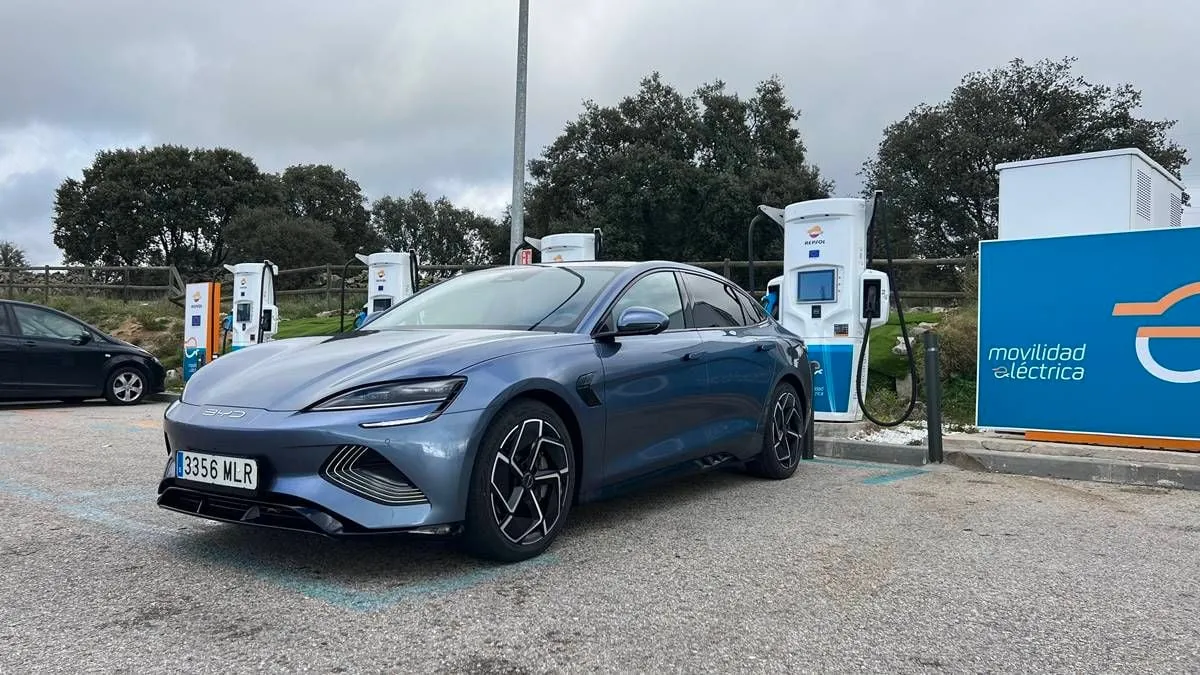
The mechanism is quite simple. A car with a combustion engine needs gasoline or diesel every time it travels a certain distance. An electric car needs electricity. Therefore, when a driver switches from one to the other, part of that oil demand disappears.
It isn’t necessary for all cars in the world to be electric for the impact to become significant. Just millions of vehicles traveling millions of kilometers each year are enough to make fuel savings a global concern.
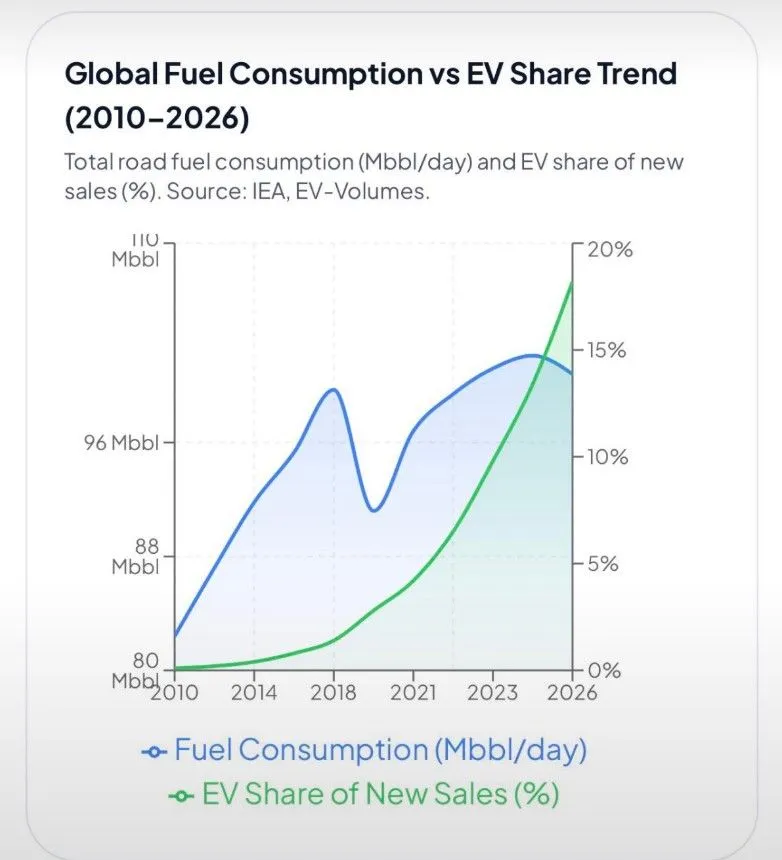
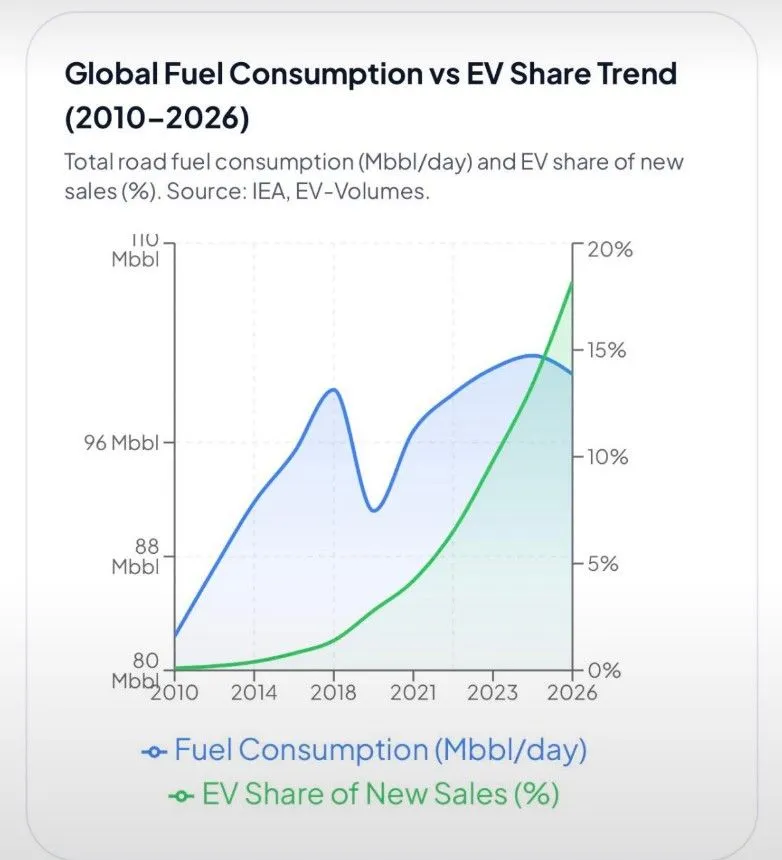
In fact, growth is happening at a rapid pace. In 2025, over 20 million electric cars were sold worldwide, 20% more than the previous year, meaning roughly one in four new cars sold was already electric.
China bears significant responsibility for this change. The country has the world’s largest fleet of electric vehicles, and according to the International Energy Agency, these vehicles prevented approximately 1 million barrels of oil from being consumed there each day in 2025. That amounts to about 15% of what China’s road transportation would have demanded in oil if all vehicles had continued to use internal combustion engines.
But the impact isn’t limited to China. Europe is also contributing significantly, and growing sales in other markets are making the reduction in oil consumption a issue that goes beyond just a few countries.
The International Energy Agency itself estimates that, with current policies, oil displaced by electric vehicles could reach around 5 million barrels per day by 2030. In other words, it would nearly triple the figure recorded in 2025 within just five years.
This also has a consequence that goes beyond the debate over emissions. The less oil road transportation needs, the less it is exposed to fluctuations in crude oil prices and potential supply issues. Electrification introduces other requirements, mainly for power generation and electrical grids, but it completely changes the type of energy that powers millions of vehicles.
And here lies one of the most interesting consequences. Drivers who use electric cars not only stop buying gasoline or diesel for their own vehicles. By reducing global oil demand, they also help ease the pressure on a market that all drivers using internal combustion engines still depend on.
That doesn’t mean that an individual can claim credit for the global oil savings, obviously. The figure from the International Energy Agency is the result of adding up the impact of millions of vehicles and estimating how much fuel their internal combustion engine equivalents would have consumed over the same distances. The methodology itself acknowledges that it is an estimate based on this assumption of substitution.
But it helps to put into perspective just how much the electric vehicle fleet has already grown. For years, electric cars were seen as a technology that would have a significant impact in the future. Now that impact is beginning to show up in current energy statistics as well.
We are still in a relatively early stage of the transition. The International Energy Agency predicts that global sales of electric cars will continue to rise, and the amount of oil displaced will keep increasing in the coming years. Under its current policy scenario, this figure would be around 5 million barrels per day by 2030, while other scenarios with higher levels of electrification push that figure even higher.
So next time someone says an electric car is just a car that doesn’t need gasoline, the reality is much broader. Behind every electric car are fewer liters of fuel to produce, transport, and burn over its lifetime, and when those vehicles number in the tens of millions, the impact eventually reaches the global oil market itself.
The driver of an electric car might not notice it when passing by a gas station. But the 1.7 million barrels per day that road transport no longer needs is a pretty clear sign that something is changing.
Source | AIE