
Used electric cars from China are gaining buyers in Europe: up to 40% cheaper
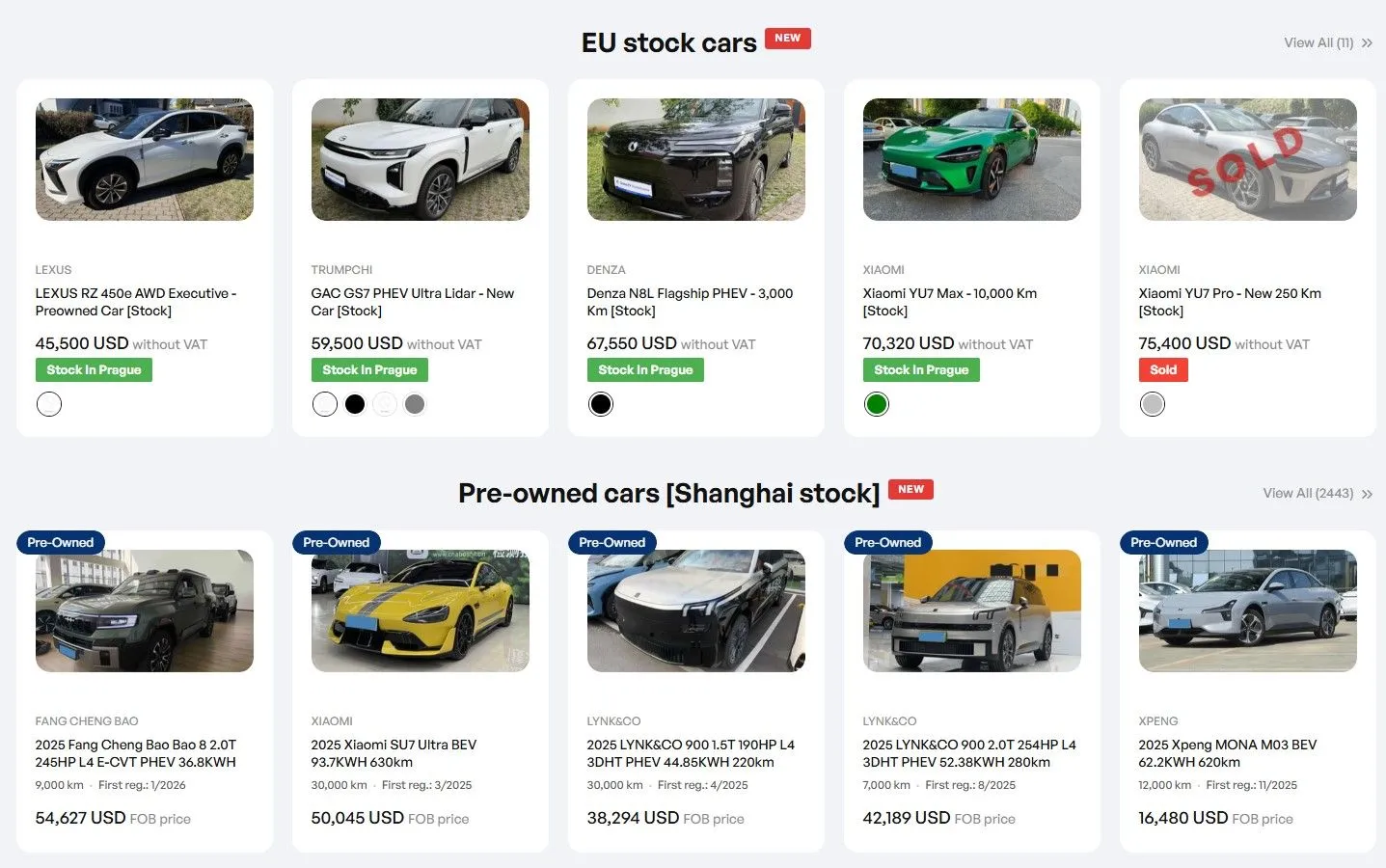
The price war in China is opening a new opportunity for European buyers. While trade barriers make it difficult to import new cars, used electric vehicles are gaining prominence among those looking to source directly from this Asian giant. It offers access to models that are rare on our roads, though the listed price only tells part of the story.
According to data from China EV Marketplace (CEVM), its sales of used cars to customers in the European Union rose by 280% from January to September 2026, reaching 7,900 units. During the same period, its sales of new cars dropped by 44%. These figures come from this specific marketplace and not all European imports, but they highlight a significant shift among its buyers.
The main appeal lies in the price. Jakub Geršl, operations director at CEVM, says his team in Shanghai typically finds cars with around 6,000 kilometers on them at prices 40% lower than their original price in China. Competition among manufacturers and continuous discounts on new models also put pressure on the used car market, where a car that is almost brand new can lose value quickly.
This discount requires clarification for Spanish buyers: the comparison is made with the Chinese catalog price when the car was new. It does not mean it will be 40% cheaper than an equivalent model purchased in Spain, nor that this savings will remain after transportation, taxes, and the necessary registration procedures. It also does not necessarily equate to a similar reduction compared to the current price of the same new car in China.
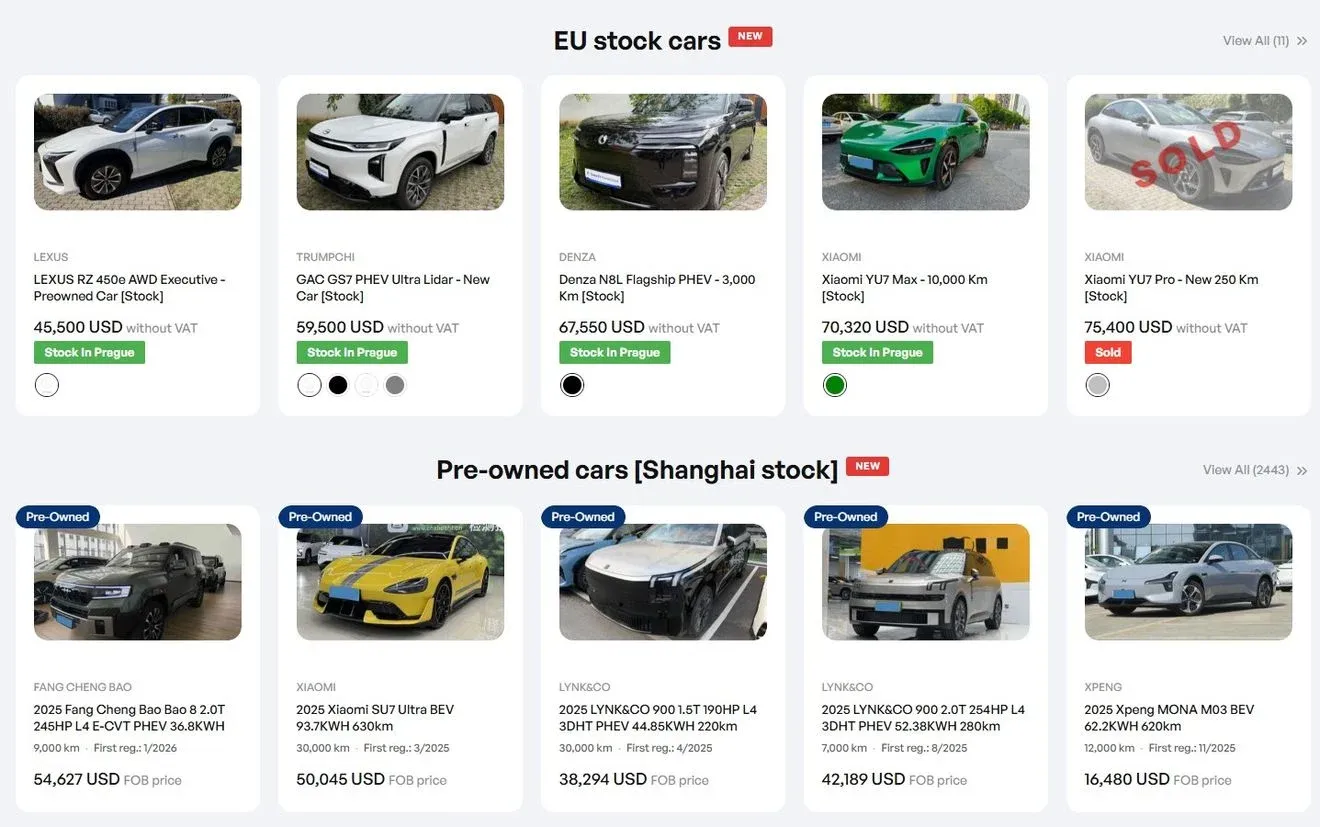
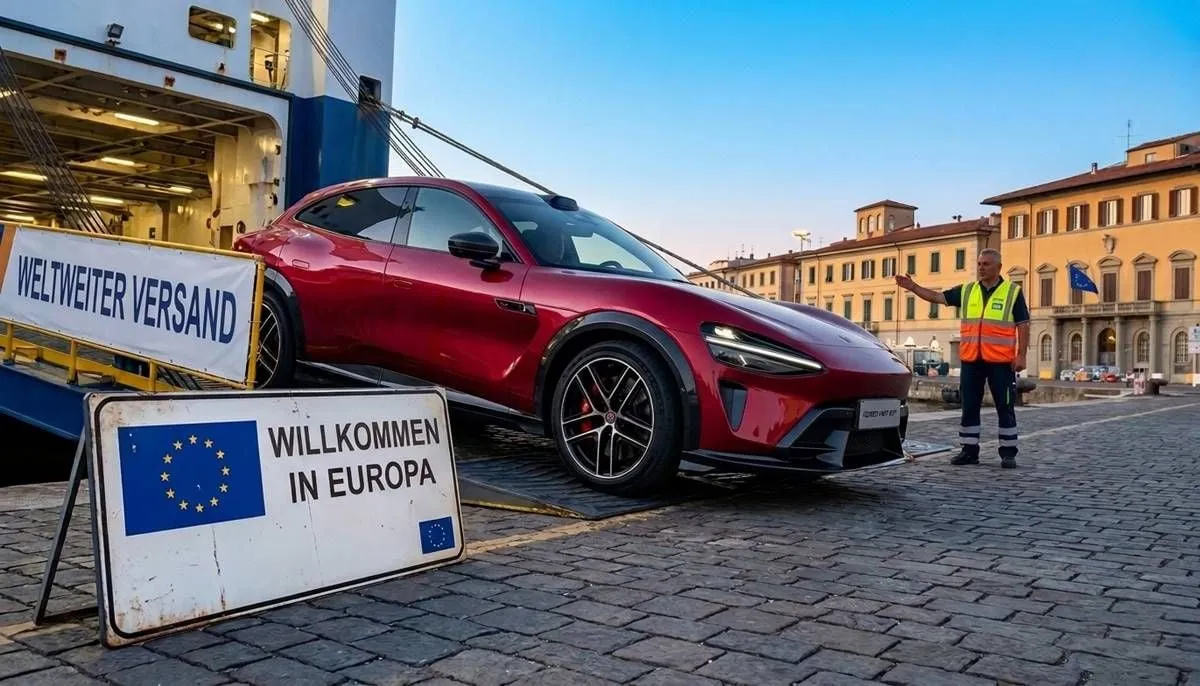
Trade barriers help explain this trend. The countervailing duties approved by the European Union in 2024 apply to new electric cars manufactured in China, with different rates depending on the manufacturer. The maximum additional rate set was 35.3%, which, added to the regular tariff of 10%, resulted in the well-known 45.3% total. Thus, this final figure is not an identical surcharge applied to all Chinese electric cars.
Used cars are excluded from this specific measure, making them more attractive compared to importing new units. This does not mean they are exempt from taxes or customs checks. The distinction is important: avoiding countervailing duties on new cars does not eliminate other costs associated with importation, nor does it guarantee that any vehicle labeled as used will automatically receive such treatment.
This situation is compounded by the announced agreement to limit imports of hybrids from China to 350,000 units per year, with implementation set to begin in December. CEVM believes this restriction will also put pressure on its business in new plug-in hybrids, prompting it to focus its European operations on used vehicles. The company thus positions used cars as its main growth avenue amid tightening trade conditions.
China’s depreciation creates opportunities, but careful calculations are needed
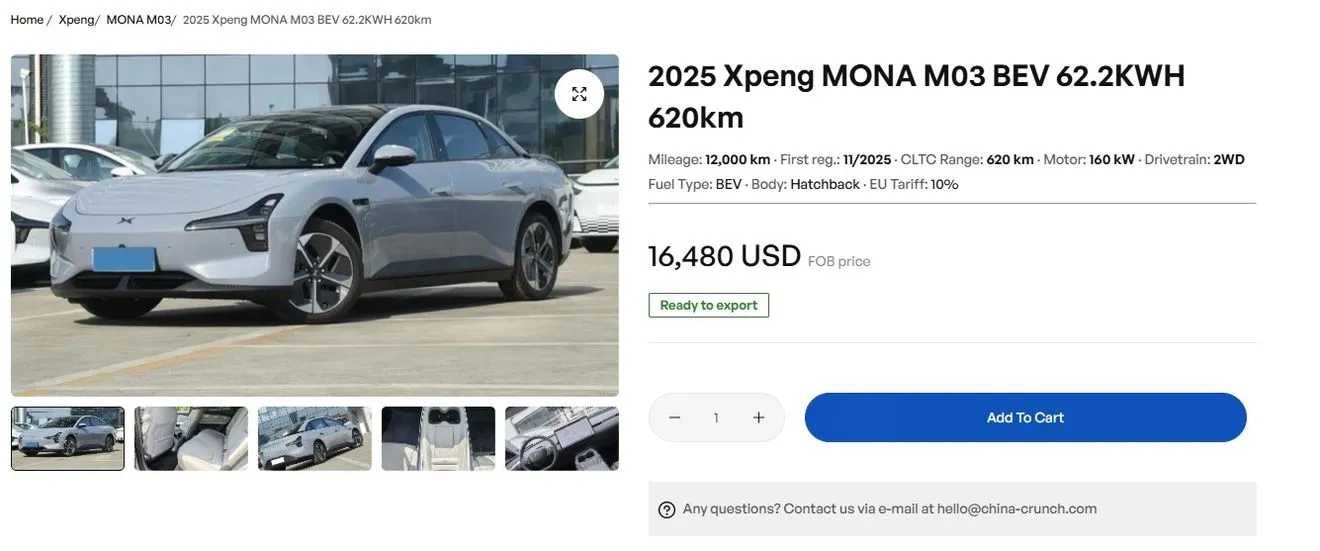
The platform claims to have over 2,600 used electric cars in its catalog, which is updated daily, including models from Xiaomi, BYD, iCar, Denza, Lynk & Co, and Avatr, among other brands. Its business model takes advantage of a characteristic of the Chinese market: the constant influx of new models, along with manufacturers’ discounts, can quickly make the value of a car purchased just a few months earlier seem outdated.
The September 2026 report from CADA and Jingzhengu, cited by CarNewsChina, helps put that depreciation into perspective. Their ranking of electric vehicles that retain the most value after three years is led by Tesla, though even the top entries show significant value loss. It’s important to separate this data from the low-mileage vehicles mentioned by CEVM: these refer to different time periods and benchmarks, not the same group of cars.
Ranking
Model
Value retained after 3 years
Value lost
1
Tesla Model 3
61.4%
38.6%
2
Tesla Model X
59.5%
40.5%
3
Tesla Model Y
53.9%
46.1%
4
BYD Seagull
50.5%
49.5%
5
Zeekr 009
49.9%
50.1%
6
Baojun Yep
49.0%
51.0%
7
Porsche Taycan
48,5%
51,5%
8
Nio ET5
47,8%
52,2%
9
Roewe iMAX8 EV
47,5%
52,5%
10
Denza D9 EV
47,1%
52,9%
11
Avatr 12
47,0%
53,0%
12
Nio ES6
46,7%
53,3%
13
Leapmotor C11 BEV
46,5%
53,5%
14
Xpeng G6
46,4%
53,6%
15
Wuling Bingo
46,1%
53,9%
The classification applies to the Chinese market and does not allow those values to be directly transferred to Spain. It also does not mean that all units of each model are sold at that depreciation rate—condition, version, mileage, and equipment affect each transaction. What it does show is that even among the best-performing electric vehicles, several retain less than half of their original value after three years.
To bring this offer to European customers, CEVM has also announced a delivery center in Prague, with an initial batch of 20 electric cars. Its goal is to allow customers to pick up available units without having to wait the approximately three months that direct import from China would require, according to the company. Physical availability makes purchasing easier, but it does not replace checking the necessary documentation to register each car in its destination country.
In Spain, the DGT reminds that importing a car from outside the European Union requires going through customs, proving its homologation, and obtaining the Spanish technical document through ITV before completing registration. Therefore, before booking a vehicle, it is advisable to request a detailed quote with all included costs and confirm that the specific model can be registered. It is also important to have in writing who is responsible for the warranty and after-sales support.
The used car market in China can offer interesting opportunities, especially for those looking for a model that is not yet available here. But a useful comparison is with a car that has been delivered, documented, and ready to be driven in Spain. Only then can one determine how much of the initial price difference remains and whether it is worth it compared to a unit available in the European market.