
Electric cars prevent the consumption of 200 million barrels of oil during the Hormuz crisis
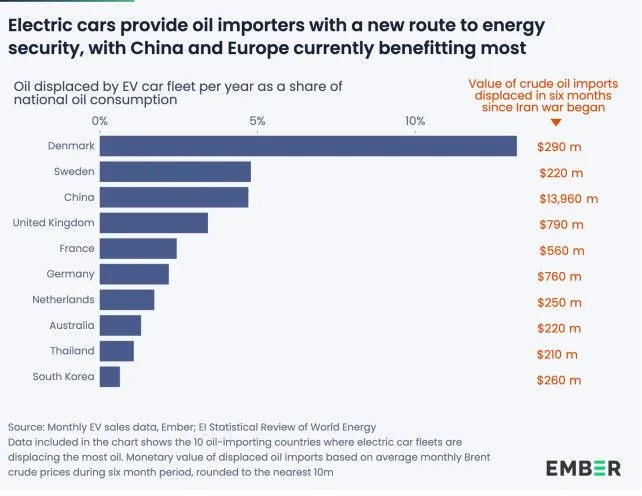
According to an analysis by the energy research center Ember, between March and August 2026, electric vehicles and plug-in hybrids in importing countries accounted for an estimated 200 million barrels of oil demand. This period covers the first six months of the Hormuz energy crisis, triggered by the war between the United States and Israel against Iran.
There is an important nuance regarding the original headline: the combined calculation includes plug-in hybrids as well. However, battery-electric vehicles account for 82.5% of the oil demand avoided. The remaining portion comes from plug-in hybrids, which still use fuel and whose electric efficiency depends on how often they are charged and how they are driven.
We also don’t see an equivalent net savings for drivers. Ember calculates the value of crude oil that is avoided being consumed; it does not deduct from this figure the cost of electricity or the expense of purchasing cars. What it measures is a reduced need for oil, a figure that is particularly significant for economies that must import it.
The electric car is also a matter of energy security
China accounts for the largest share of estimated savings, while Germany and France stand out within the European Union. Denmark offers another interesting example: on an annual basis, the oil replaced by its fleet of electric cars already equals 13% of the country’s total crude oil consumption. This comparison shows how a shift toward electric vehicles can ultimately affect a nation’s overall energy balance.
This is one of the advantages of electrification that often gets overlooked. Discussions focus on range, charging infrastructure, or emissions, but replacing fuel with electricity also changes a country’s vulnerability to international crises. A country can expand its own power generation; increasing oil production is much more difficult if it lacks oil reserves.
That doesn’t make electricity immune to price spikes or eliminate all industrial dependencies. But it does allow for diversifying supply and utilizing local resources. For Spain, the message is clear: combining electric transportation with renewable energy generation offers a way to reduce the need for continuous fuel imports.
In the meantime, the global market continues to evolve. Sales of battery electric cars rose by 11% year-on-year from January to August 2026, while plug-in hybrids fell by 12% and internal combustion engines dropped by 6%. The global share of electric cars increased from 16% to 18%, according to estimates from Ember.
The growth is even more pronounced when China and the United States are excluded: in the remaining markets, electric vehicle sales increased by approximately 45%. This indicates a more widespread expansion, with new countries gaining prominence in both purchasing and manufacturing.
The United States offers a contrast. After the withdrawal of federal incentives in 2025, electric vehicles accounted for 6% of light vehicle sales during the first eight months of 2026. Of the 56 countries analyzed by Ember, 49 had a higher share, and 15 surpassed it for the first time this year, including India, Brazil, Italy, Malaysia, and New Zealand.
Education goes beyond who tops a ranking. Decisions made before a crisis determine the extent of its damage afterward. An electric fleet takes years to grow, but each new addition reduces the need to buy gasoline or diesel during operation. Waiting for oil prices to soar again before taking action means reacting too late.
In euros, the value of crude oil avoided during those six months amounts to around 17.9 billion euros, of which approximately 12.5 billion comes from China and 2.8 billion from the EU. These are approximate conversions using the ECB’s reference rate as of October 23. Beyond the figure, the logic is simple: a barrel you don’t need to buy also won’t increase the cost of your next trip.