
Electric cars with over 150,000 kilometers show a clear advantage over gasoline cars: 47 million inspections confirm this
03/10/2026 14:00
Updated to
03/10/2026 14:00
The durability of electric cars remains one of the major uncertainties in the used car market, especially when it comes to vehicles with high mileage. While battery degradation usually draws most of the concern, there are other mechanical factors that also determine a vehicle’s condition after several years of use and can provide a different perspective on its lifespan.
A study conducted in the UK has revealed how electric vehicles perform compared to gasoline models after accumulating hundreds of thousands of kilometers. Conducted by consulting firm New AutoMotive for the British Vehicle Rental and Leasing Association (BVRLA), the research analyzed 47.4 million vehicle inspections and found significant differences between the two technologies, especially in vehicles that had traveled over 145,000 kilometers.
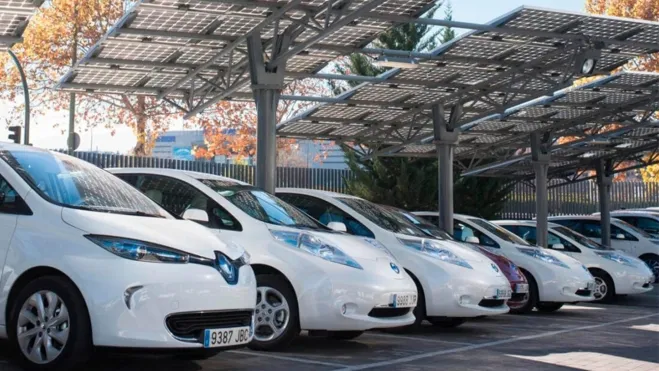
Electric vehicles show fewer unfavorable inspections as their mileage increases
The results come from MOT records, the mandatory vehicle inspection conducted regularly in the UK to check vehicles’ safety conditions. The researchers compared electric and gasoline cars of the same age, taking into account the distance each had traveled, and found that the differences in the percentage of unfavorable inspections increased as mileage rose.
Among vehicles that had traveled between 145,000 and 193,000 kilometers, 16.5% of electric vehicles failed the inspection, compared to 22.1% of gasoline models. This means the failure rate was approximately 25% lower for electric vehicles, a difference that widened when looking at units that had traveled over 193,000 kilometers, where the percentages reached 16% and 23.5%, respectively. Below these mileage levels, the differences between the two technologies were considerably smaller.
The data also challenges the importance traditionally assigned to mileage when evaluating used vehicles. Toby Poston, CEO of BVRLA, explains that exceeding 97,000 or 113,000 kilometers can significantly affect buyers’ perceptions, although the research findings indicate that an electric car with proper maintenance can maintain good condition even after traveling very long distances. This is a conclusion shared by Ben Nelmes, head of New AutoMotive, who believes mileage should not be interpreted on its own as an indicator of a vehicle’s deterioration.
Tires and brakes pose more problems in certain electric cars
The lower proportion of unfavorable inspections does not mean that electric vehicles perform better in all evaluated areas. The study found that defect rates in tires were almost twice as high as those in gasoline cars, while older electric vehicles with low mileage had a higher frequency of problems with friction brakes. In this case, researchers attribute it to corrosion resulting from less use, as regenerative braking reduces reliance on the conventional braking system.
However, there is a significant limitation in interpreting the results of this study, as MOT inspections do not allow assessment of the battery condition in electric vehicles. These tests check elements such as steering, tires, suspension, brakes, or lighting, but they do not evaluate battery capacity loss or performance during charging. Therefore, passing a technical inspection does not guarantee that the battery remains in optimal condition, especially in vehicles that have undergone many charge and discharge cycles.
For this reason, the research team recommends that when purchasing a used electric vehicle, one should check its maintenance history, tire condition, and specifically assess the battery’s health. Just as gasoline or diesel vehicles require close attention to the engine and transmission, electric vehicles demand an understanding of the battery’s remaining capacity and its performance. The study’s findings suggest that a high mileage does not necessarily mean the vehicle is worn out, though they do not replace a thorough evaluation of its mechanical condition and electrical components.
