
Chinese electric cars are not to blame for the possible disappearance of SEAT: there has been an internal ‘fight’ going on for several years.
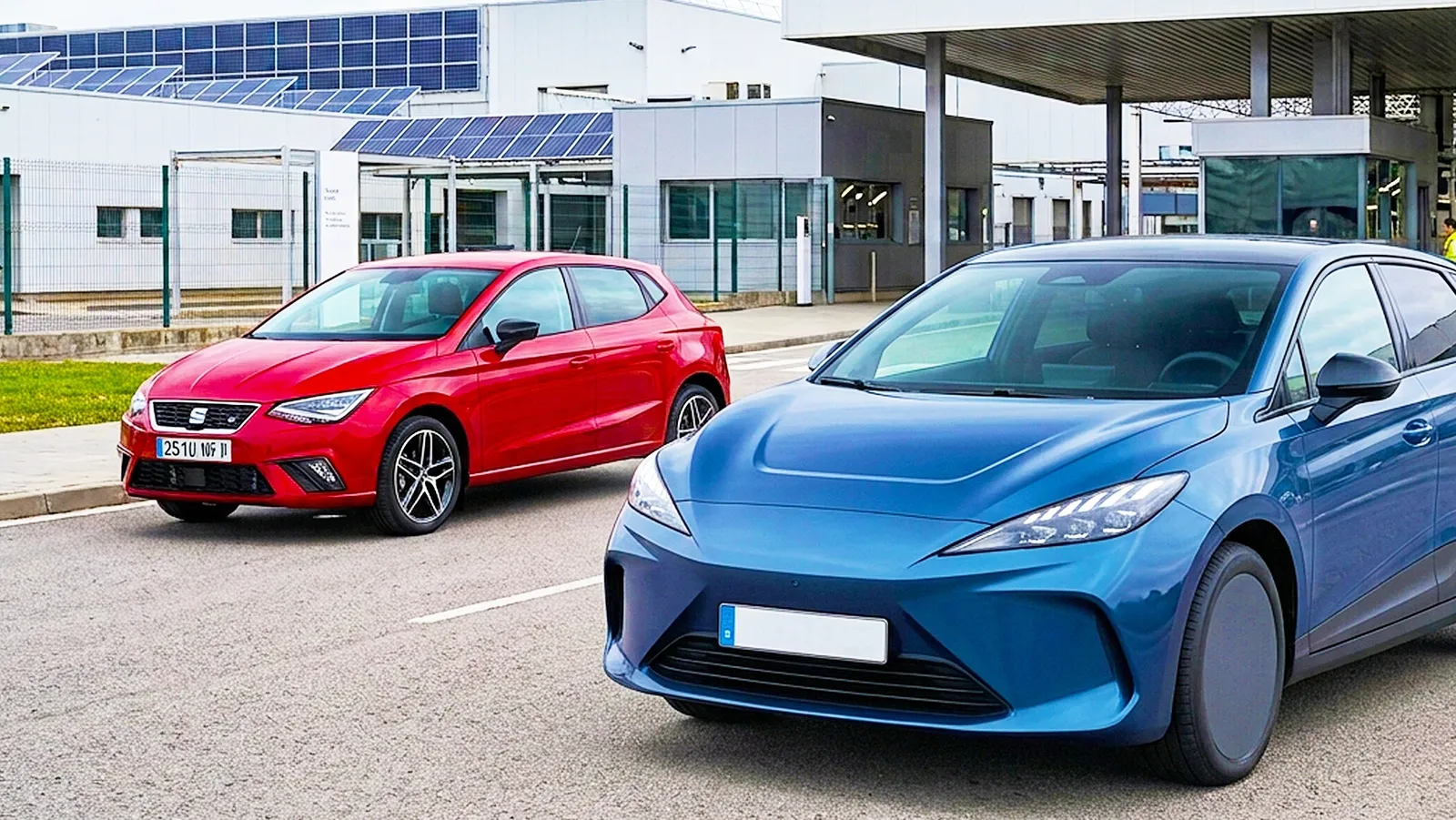
The evolution of SEAT, CUPRA, and Škoda creates one of those stories that seem simple at first glance: one brand grows strongly, another loses market share, and a third becomes one of the key players in the European market. But behind the numbers lies a much more complex reality.
The three brands are part of the same group and share increasingly more resources, technologies, and industrial structures. At the same time, they compete for customers who may be in similar market segments. The result is a paradox: Volkswagen needs its brands to stand out among consumers while increasing synergies between them beneath that commercial surface.
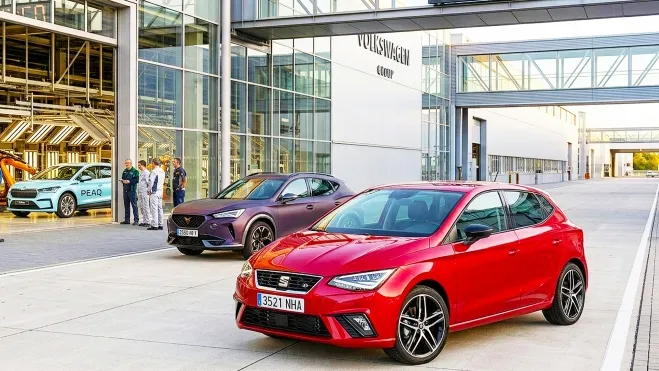
CUPRA has already changed the balance within SEAT S.A.
The 2025 results represent the best starting point for SEAT S.A., the company that includes both SEAT and CUPRA. It delivered 586,300 vehicles worldwide, a 5.1% increase from 2024 and its highest record ever.
However, the internal distribution changed drastically. CUPRA achieved 328,800 units, a 32.5% increase, while SEAT delivered 257,400 units, a 17% decrease. In other words, CUPRA surpassed SEAT in annual volume for the first time.
The difference of 71,400 vehicles is significant, but it would be incorrect to automatically assume this represents a shift of customers from SEAT to CUPRA. The delivery data do not indicate where each buyer came from. They do allow for another conclusion: CUPRA has become SEAT S.A.’s leading brand in terms of delivery volume.
The change is also evident in the cumulative sales trajectory. In 2025, CUPRA celebrated selling its first million vehicles since it became an independent brand in 2018. The Formentor was its best-selling model, with 104,400 units sold, while the Terramar reached 66,000 deliveries in its first full year.
And the growth didn’t stop there. In the first half of 2026, CUPRA set another record, with 170,100 vehicles sold, according to Volkswagen.
The key isn’t just to sell more, but to sell differently
CUPRA’s success has an obvious commercial dimension, but there is also a positioning aspect. The brand was founded in 2018 and has built its own identity around concepts such as design, sportiness, and a more emotional image. Its range has expanded gradually and now includes electric models. Without any prior history beyond being the sportiest version of SEAT cars, its market positioning, per Volkswagen Group’s decision, lies between Audi and Volkswagen.
In 2025, battery-electric vehicles accounted for 24.2% of CUPRA’s sales, with 43,700 units of the Born and 36,000 units of the Tavascan sold.
SEAT, meanwhile, is pursuing a different path. It sold fewer vehicles in 2025 but introduced the new Ibiza and Arona, defining this renewal as a new phase for the brand aligned with its positioning of affordable mobility.
This allows us to speak of segmentation within the same group, but not of substitution. The fact that CUPRA is growing while SEAT is declining does not prove that Volkswagen has decided to eliminate SEAT, nor that all customers who leave SEAT will end up at CUPRA.
In fact, SEAT’s activities show that the brand still has a defined role within the group’s strategy. The company continues to market models such as the Ibiza, Arona, and León, and it has recently refreshed the first two.
Škoda introduces a third variable
SEAT has yet to find its proper place in the market. In the year 2000, Volkswagen completed the acquisition of Škoda, becoming owner of 100% of Škoda Auto.
In terms of price and positioning, it occupies a strategic market similar to that of SEAT, which loses out to the massive growth of the Czech-based brand.
Škoda delivered 1,043,900 vehicles in 2025, 12.7% more than the previous year. In Europe (UE27+4), it sold 836,200 units, a 9.9% increase, becoming the third-best-selling car brand in that market for the first time.
The Czech brand is also seeing strong growth in electrification. In 2025, it delivered 174,900 battery electric vehicles, a 119.8% increase, and 43,800 plug-in hybrids, a 108.6% increase. In Europe, vehicles with some form of plug-in propulsion accounted for 25.7% of its total deliveries. These figures show that Škoda is gaining momentum. But they do not indicate that this growth comes at SEAT’s expense.
Volkswagen considered turning SEAT into the group’s “Alfa Romeo,” but although it was founded in 1950 and played a key role in Spain’s automotive industry, its trajectory for decades focused more on producing mass-market cars and making vehicles accessible to the public rather than building a sporty or luxury image.
There is also a commercial reason that does not favor the Spanish brand in capturing international markets. SEAT, in English, means “seat,” a name that is difficult to market in an industry where branding is so crucial.
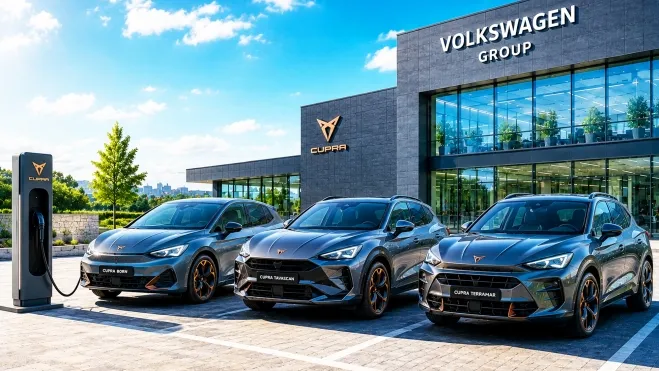
The paradox: competing at the top while cooperating at the bottom
Volkswagen is strengthening the so-called Brand Group Core, which includes the group’s volume brands and aims to enhance cross-brand cooperation. The goal is to leverage economies of scale without requiring the brands to offer exactly the same products.
The new family of small electric vehicles is a particularly clear example. Volkswagen, CUPRA, and Škoda have developed four models based on the MEB+ electric platform: Volkswagen ID. Polo, CUPRA Raval, and Škoda Epiq.
Volkswagen Group itself emphasizes that the models share a platform, technologies, and certain solutions, but each brand maintains its own identity and positioning.
The industrial strategy is equally revealing. In 2026, production of the Škoda Epiq began at Volkswagen Navarra’s plant, while the CUPRA Raval and Volkswagen ID. Polo are manufactured in Martorell. The group explicitly explains these decisions in terms of synergies and flexible use of production capacity.
In other words: the same group can produce technologically related vehicles in shared facilities and, at the same time, try to make consumers perceive them as separate products. Marketing thus becomes an industrial tool rather than merely a matter of advertising.
If two cars use related technologies, share components, or even the same platform, brand differentiation becomes even more important. The manufacturer needs to justify to the customer why they should choose one over the other.
That is where the identities of SEAT, CUPRA, and Škoda gain strategic value.
CUPRA has shown it can grow rapidly with its own distinct identity. Škoda has established a strong volume presence in Europe. And SEAT maintains a more affordable positioning while updating parts of its lineup.
There is no public evidence suggesting Volkswagen has engineered a rivalry between its three brands. However, there are signs it is aiming for something more sophisticated: having multiple brands share increasingly more technologies and infrastructure without giving up on competing separately in the market.
The Real Challenge for SEAT
Perhaps the most important question is not why CUPRA has surpassed SEAT and Škoda has taken the lead in the mass-market segment, but what this shift means for their future.
CUPRA will need to maintain the appeal that has driven its growth without diluting its distinctiveness as it expands its production volume and shares more technology with other brands. Škoda faces another challenge: continuing to grow without losing the niche it has built while closing the technological gap with its sister brands.
SEAT, on the other hand, needed to prove that its value proposition remains attractive enough within a group where increasingly strong alternatives exist.
The data alone do not allow us to conclude that there is one winning brand and two losing ones. What it shows instead is something different: the internal landscape of Volkswagen Group is changing.
CUPRA is already the largest of SEAT S.A.’s two brands in terms of deliveries; Škoda has reached a historic position in Europe; SEAT is renewing its products; and Volkswagen is deepening industrial and technological cooperation among them all.
The competition, therefore, does not necessarily involve one brand disappearing so that another can grow. It is about ensuring that consumers find different reasons to buy each of them, even when there is an increasingly shared industrial structure behind their logos.