
Electric trucks already save 85,000 euros per year compared to diesel engines, and they recoup their higher cost in just 24 months.
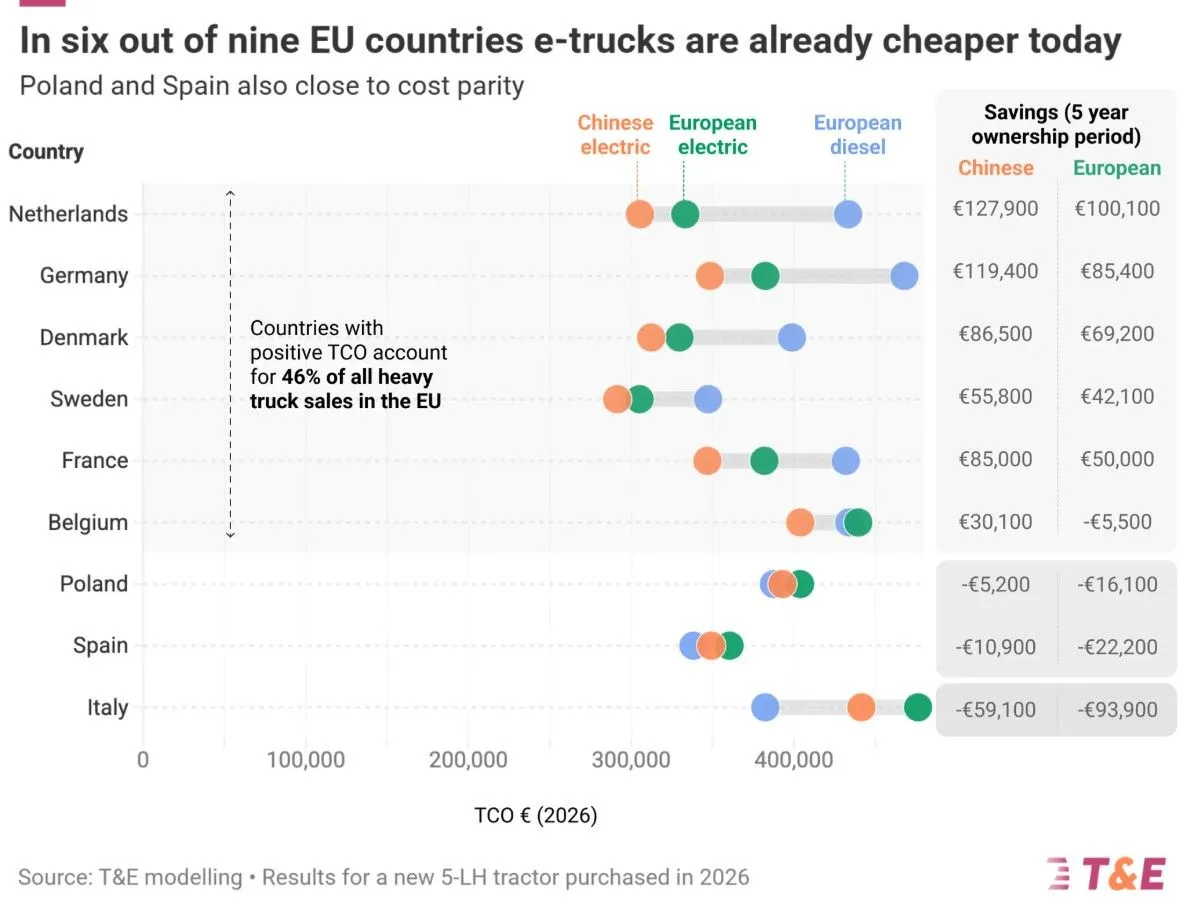
A new analysis by Transport & Environment (T&E) compares the total cost of ownership for electric and diesel trucks in nine of the major European Union markets. The six countries where electric trucks currently have a lower total cost of use are the Netherlands, Germany, Denmark, Sweden, France, and Belgium—markets that together account for around 46% of new heavy truck registrations in the European Union.
Germany stands out particularly within this group. According to the study, an electric truck purchased in 2026 can result in an accumulated savings of 85,000 euros over five years compared to an equivalent diesel model. Additionally, the higher initial cost of buying the electric vehicle is recovered approximately after two years of use.
The situation could be even more favorable for transportation companies if diesel prices remain high. T&E estimates that, at current fuel prices, potential savings in Germany could reach 106,000 euros within five years. This is a particularly significant difference in an industry where fuel accounts for a substantial portion of operating costs and where transportation companies typically have very narrow profit margins.
The shift is not explained solely by electricity prices. Electric trucks also have lower energy and maintenance costs, while rising oil prices directly affect diesel fleets. T&E had already calculated during the 2026 energy crisis that the monthly increase in fuel costs for a German diesel truck could far exceed the corresponding increase for an electric truck.
The business outlook is beginning to reflect this economic improvement. By 2025, electric trucks accounted for around 7% of new registrations in Germany, with growth exceeding 60% compared to the previous year according to T&E. Across the European Union, penetration remains significantly lower, although the market is growing rapidly. The latest ACEA data show that electrically rechargeable trucks made up 4.8% of European registrations in the first half of 2026, up from 3.6% during the same period in 2025.
Within this growth, Daimler Truck is gaining a particularly prominent position. T&E notes that its share in the electric truck market approaches 40%, roughly double its share in the diesel truck market. According to the organization’s analysis, including Daimler Truck and MAN, German manufacturers currently account for more than half of all European-brand electric truck registrations.
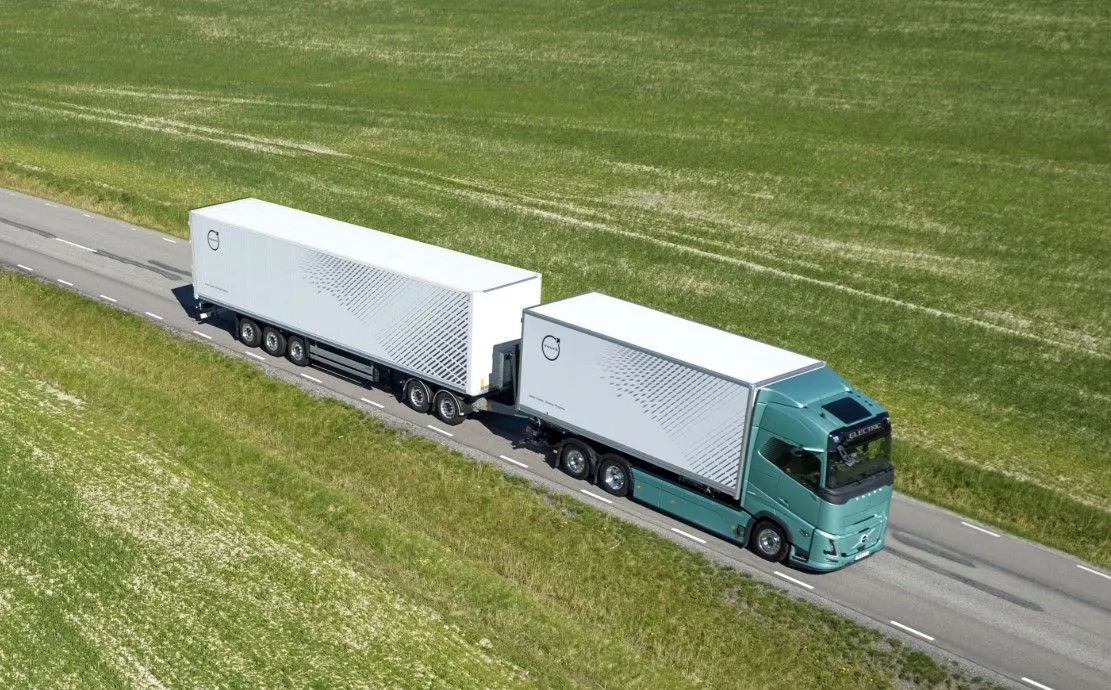
But as European manufacturers accelerate their transition, pressure is also coming from outside the continent. T&E warns that Chinese and American manufacturers are beginning to offer electric trucks that can compete with European products in terms of price and performance. In Germany’s case, choosing one of these Chinese-made models could further reduce the total cost of ownership.
According to T&E’s estimates, an electric truck manufactured in China can cost around 210,000 euros, compared to about 265,000 euros for a comparable European model. The initial difference is around 55,000 euros, and considering operating costs over five years, the additional savings for a German company could reach up to 34,000 euros.
This scenario puts European manufacturers in a situation different from just a few years ago. It is no longer merely about convincing transportation companies to pay more to electrify their fleets. On certain routes and in specific markets, electric trucks are now starting to offer lower total costs compared to their diesel counterparts, while new competitors can add pressure with lower purchase prices.
T&E believes this situation should serve as a wake-up call for European manufacturers. The organization argues that they need to accelerate and expand the production of electric trucks to maintain their market position, especially with the arrival of manufacturers from China and the United States. Its analysis published in September estimates that these new competitors could aim to capture more than a quarter of Europe’s electric truck market by 2030 if they meet their business goals.
The organization also urges the German government to maintain stable regulatory conditions and not relax Europe’s emission reduction targets for trucks. Their argument is that an increased supply of electric models would allow for higher production, greater economies of scale, and further price reductions.
Beyond the regulatory debate, there is a significant shift in companies’ calculations. Electric trucks are no longer competing solely on environmental grounds: in some of Europe’s key markets, they are also competing on cost. And Germany is one of the places where this transformation is advancing fastest.