
Logivolt raises $300 million for residential charging infrastructure
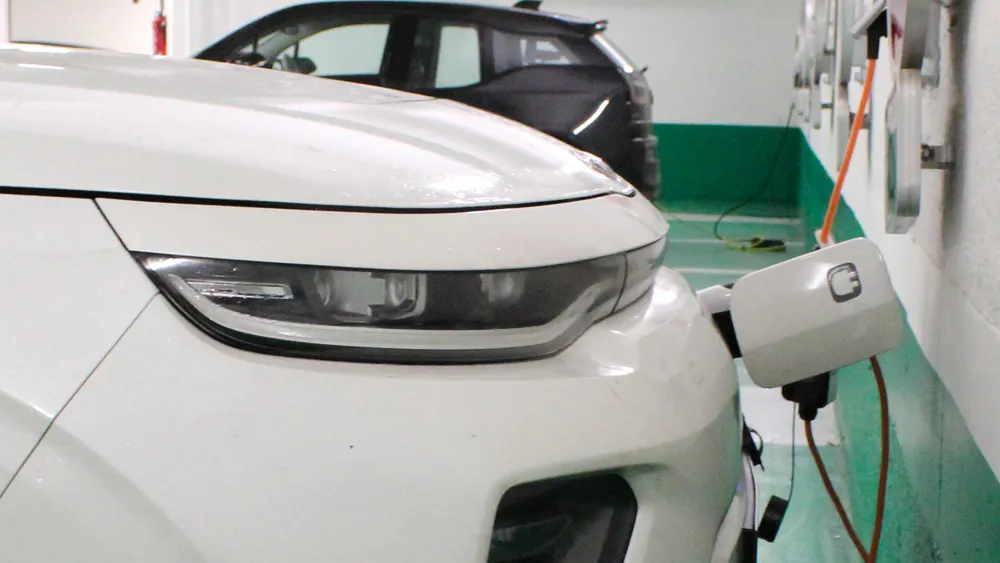
A subsidiary of Banque des Territoires (part of the Caisse des Dépôts group), Logivolt funds collective charging infrastructure that will equip 26,000 residential buildings and 1.7 million parking spaces by 2030. The goal is to make electric mobility accessible to as many people as possible.
190 million euros raised in 2021 and 2024...
Founded in 2021, Logivolt positions itself as “the leading third-party investor dedicated to deploying electric vehicle charging in collective housing.” The company aims to overcome barriers to home charging by financing the full cost of collective charging infrastructure in residential areas, “without any additional burden on property owners or landlords.”
To enable residents to “access a simple, scalable, and sustainable turnkey solution,” Logivolt has assembled a network of operators “reputable for their technical reliability.” To meet strict requirements ensuring quality and consistency in deployment across France, there are currently eight such operators: Amperus, EVE Car Plug, EZDrive, Izi by EDF, Park’n Plug, SGA Mobility, Waat, and Zeplug.
For the syndicate, management committee, or residents, the operator serves as the single point of contact responsible for the entire process of installing infrastructure and charging stations. This includes starting with a pre-quotation visit, continuing through after-sales support, and handling the application for subsidies, particularly the Advenir grant.
Thanks to a promising scenario, the subsidiary of Banque des Territoires has already secured over 8,500 general assemblies. This represents “a potential for 620,000 connected parking spaces.” A total of 190 million euros has already been invested through funding obtained in 2021 and 2024.
An additional 300 million euro green loan in the form of structured debt has recently been added to this funding. It is provided by the banks within the BPCE Group, namely Banque Populaire Rives de Paris, Banque Populaire Val de France, Banque Populaire Grand Ouest, and Caisse d’Epargne Ile-de-France, with the latter coordinating the operation.
Going forward, nearly 500 million euros will be allocated in total to fund collective charging infrastructure by 2030, which will equip 26,000 residential buildings and 1.7 million parking spaces. This goal, outlined in the government’s electrification plan, explains Logivolt’s ambition to pre-equip “100% of parking spaces in condominiums and social housing.”
Olivier Sichel, General Director of Caisse des Dépôts, said: “With this funding round, Logivolt reaches a new milestone and gains the means to invest more in advancing electric mobility among private consumers. This is the result of the hard work by its teams and the strength of its business model. We will continue to support this trajectory, which fully aligns with Caisse des Dépôts’ ambition to make ecological transformation a reality across all regions.”
A model driving progress on the ground
The model proposed by Logivolt is simple: In a condominium, all parking spaces will be pre-equipped. The community does not have to spend anything, and each resident only pays their share at the same rate as others, and only from the moment they connect. In the case of social housing, the landlord also pays nothing, with tenants paying a small rent when they connect to the communal system.
The momentum of Banque des Territoires’ subsidiary is accelerating, as the share of zero-emission vehicles has risen over the past few months to account for more than one-third of new car sales in France across all fuel types. Another notable development is the upgrade to the Advenir program in April 2026, with the ceiling for collective charging infrastructure raised to 12,500 euros and an additional subsidy of 8,000 euros for outdoor parking lots.
For Pierre Eymard, this context validates his company’s actions: “The market has given us reason. This €300 million financing round confirms that one of the key drivers for transitioning to carbon-free mobility lies in the parking lots of our buildings.” The CEO of Logivolt says he is “convinced that in 10 years, charging one’s car at home at night will have become a given, almost an instinctive habit, just like charging one’s phone before going to bed.”