
"What we can assemble, we can also disassemble": Bosch plans to recycle over one million electric vehicle batteries by 2030.
The rise of electric vehicles poses a range of challenges at the industrial level. One issue that is not yet evident but will be crucial in the medium to long term is battery recycling. As the number of electric vehicles increases, the industry must also prepare to manage their components when they reach the end of their useful life. It’s not just about recovering materials such as lithium, nickel, or cobalt; there is a preliminary step that often receives little attention but is equally vital: converting a large battery into a set of materials that can be processed safely, quickly, and efficiently.
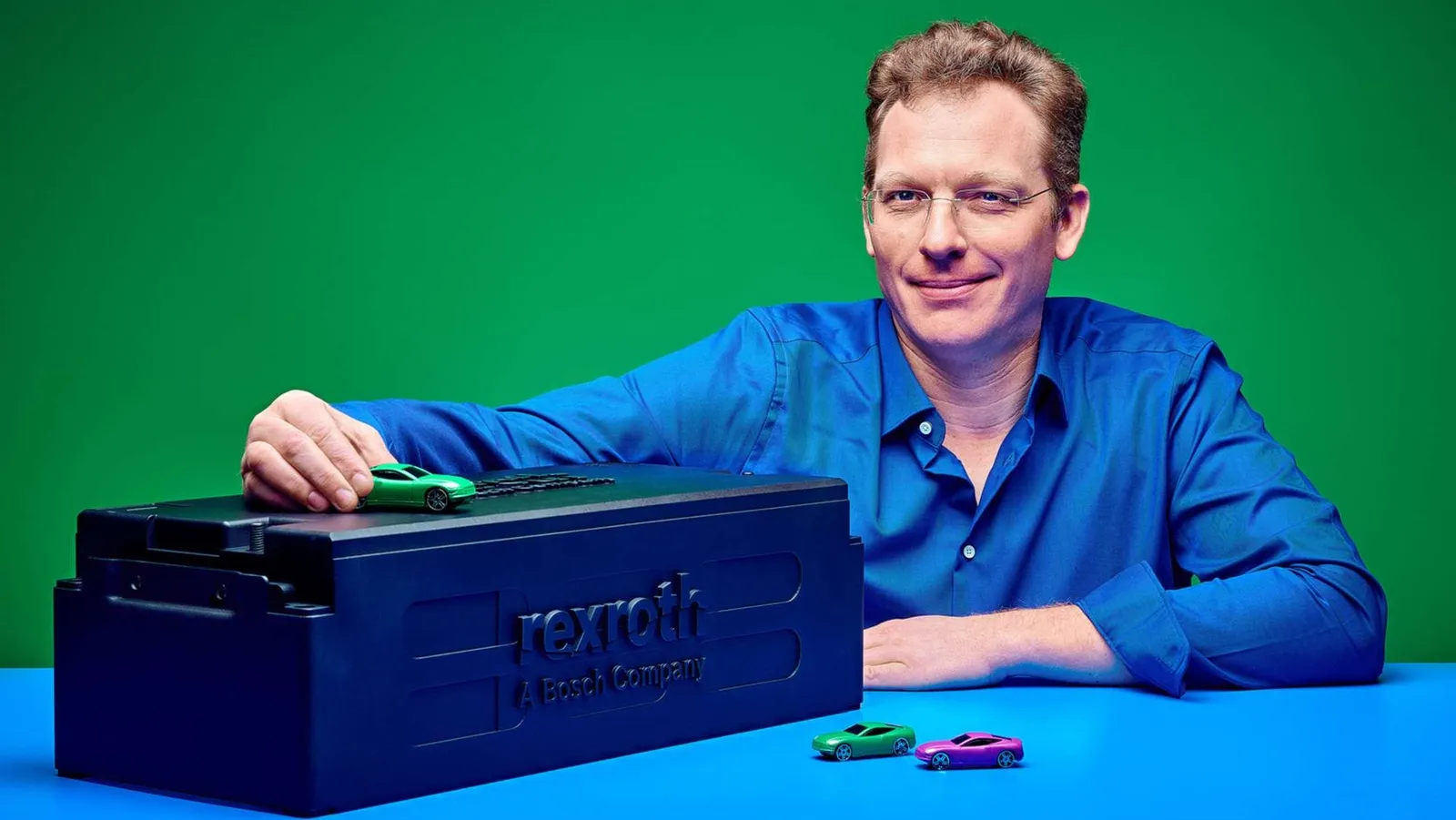
Bosch Rexroth, the industrial technology division of the German Bosch group, is working in this area to develop automated solutions that facilitate the recycling of electric vehicle batteries. Sebastian Krieger, responsible for engineering and commercial support projects related to factory automation at the company, is clear about what they have achieved: “What we can assemble, we can also disassemble.”

15 years of battery manufacturing also apply to disassembling them
The company has applied its more than fifteen years of battery manufacturing experience to recycling, aiming to turn the disassembly of these components into a faster and more controlled industrial process: “The challenge was to transfer our manufacturing expertise to recycling solutions.”
According to Bosch’s projections, there will be over a million electric vehicle batteries available for recycling in Europe by 2030. Globally, automakers expect to produce 54 million battery-powered electric vehicles per year by that time, up from 10.5 million in 2022. This growth will increase the demand for raw materials and, over time, the volume of batteries that need to be managed once their useful life ends.
Lithium-ion batteries typically last between eight and fifteen years, and when they can no longer be considered viable, disposing of them poses significant environmental and safety challenges. However, recycling does not begin with the extraction of metals; first, the battery must be prepared to enter subsequent industrial processes.
An automated and safer process
This preliminary stage, known as pretreatment, includes the initial analysis of the battery module, its opening, electrical discharge, disassembly, and separation of materials by type. The system also includes tracking and traceability tools to facilitate environmental monitoring of the process. Once these operations are completed, “we prepare the batteries for both crushing and pyrometallurgical and hydrometallurgical processes that allow the extraction of valuable raw materials from the batteries and make them available for reuse,” he explains.
In the entire process, discharging is one of the main obstacles: “Before batteries can be crushed and processed, their cells need to be chemically deactivated. Traditionally, the only way to do this has been through time: batteries are discharged and left to rest for up to 24 hours until they become completely inert.” The company has instead developed an automated and patented deep-discharge procedure that allows for the chemical deactivation of modules in just five to fifteen minutes, depending on their characteristics.
The advantage achieved is not just a matter of speed; it also relates to safety. Batteries can suffer short circuits, cause fires, or expose workers to chemicals, so handling them also involves physical risks. In this context, automating the discharge process helps reduce these dangers and improve the efficiency of processing.
Under optimal conditions, recycling can enable the recovery and reuse of up to 95% of the chemicals in a battery, including lithium, nickel, cobalt, and copper. For Bosch, this capability not only helps reduce dependence on raw materials subject to geopolitical tensions and supply issues but also limits the environmental impact associated with their extraction, refining, and disposal.
"My main concern has always been sustainability and how we can use technology to help create closed-loop systems. The extraction and refining of raw materials, as well as the production of cells, can have serious environmental consequences, just like the disposal of used batteries. By recycling them, we minimize this impact and take a significant step toward establishing a circular economy for future mobility," concludes Krieger.