
They had been searching for years for a solution to improve solar panels, and it was simply a matter of changing one atom in this material
17/09/2026 12:00
Updated to
17/09/2026 12:00
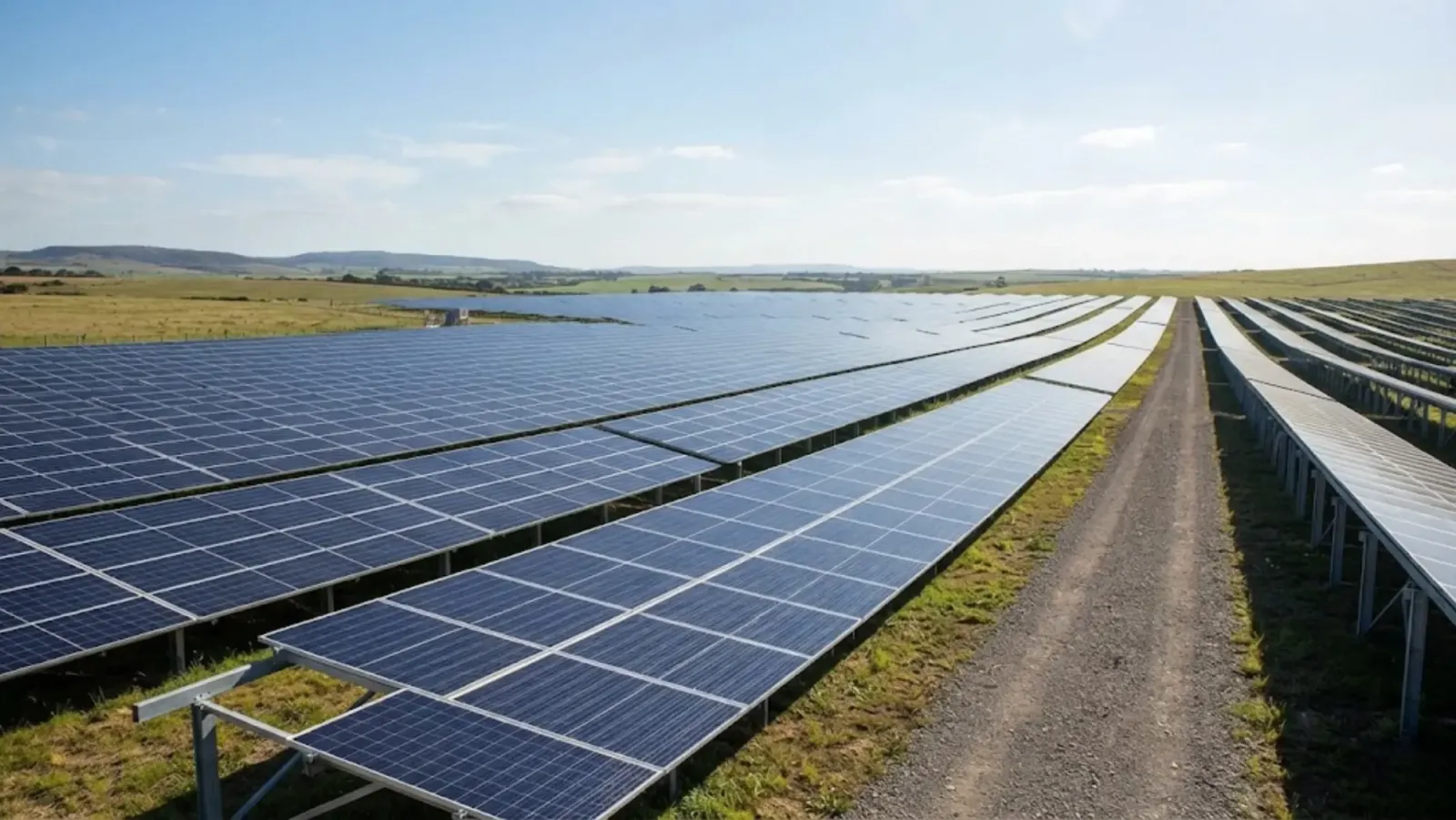
For years, photovoltaic technology has sought alternatives to traditional silicon to improve efficiency in capturing solar energy. In this pursuit, perovskite has emerged as the promising material of the 21st century, though it comes with a serious drawback: its reliance on lead or, alternatively, extreme instability when exposed to air and moisture.
A team of scientists from the University of Wisconsin-Madison has managed to solve this problem without relying on complex machinery or new synthetic compounds. The solution involved replacing a single atom within the molecular structure of lead perovskite. This small change promises to accelerate the development of cleaner, more efficient, and longer-lasting solar installations.
The challenge of eliminating lead in perovskite cells
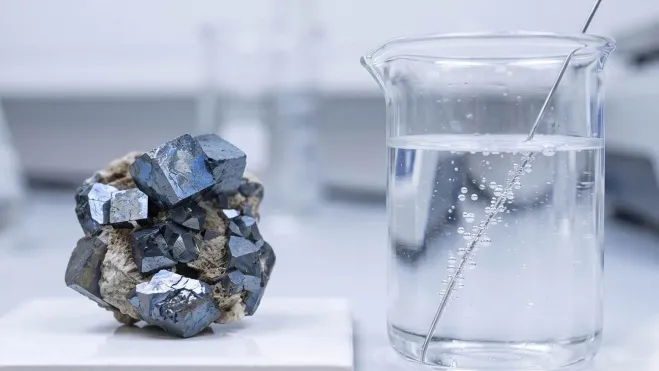
Perovskite is a hybrid material that combines organic and inorganic components into a crystal structure highly effective at capturing sunlight and converting it into electricity. However, higher-performance versions use lead, a toxic heavy metal that raises significant concerns about environmental impact and sustainability at the end of the panels' lifespan.
To avoid the use of lead, the industry turned its attention to tin perovskites. Although tin is an eco-friendly and chemically similar alternative, its rapid oxidation when exposed to everyday environmental conditions posed a significant problem. Once the material came into contact with oxygen or moisture in the air, its structure degraded within hours, losing almost entirely its ability to generate electricity.
Replacing a single atom to protect the structure
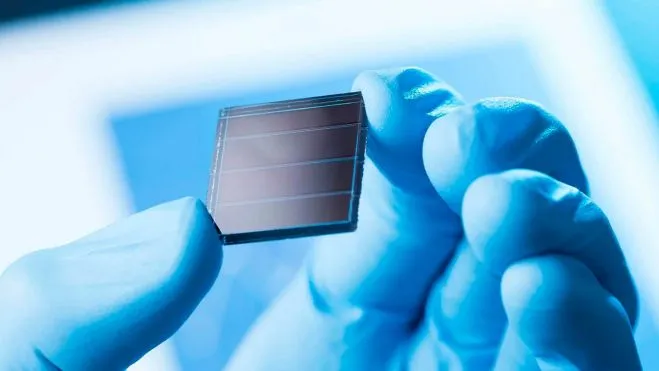
Instead of following the usual approach of applying external protective layers or complex seals around the cells, the research team addressed the problem by focusing on the microarchitecture of the compound itself. The solution did not require synthesizing a new material, but rather replacing one fluorine atom with a chlorine atom in the organic molecule that forms the perovskite’s crystal lattice.
This modification altered the way the crystals assembled together. By introducing chlorine, they adopted a much more compact and orderly arrangement, eliminating the microscopic gaps through which air and moisture could previously penetrate. As a result, the material’s structure itself functioned as a natural barrier against external agents without compromising electron transport.
Notable efficiency and stability
The atomic-level changes yield significant results for the development of third-generation solar energy. The cells developed achieved a conversion efficiency of 16.2%, a notable figure for lead-free tin-based devices.
Beyond the instant power rating, the key factor is the durability of these cells. During laboratory tests in dry air, the devices maintained over 95% of their initial performance after 1,600 hours of exposure, which is equivalent to about 67 days. Under continuous operational stress conditions, with simulated sunlight and a temperature rise to 55 °C, the material retained nearly 80% of its capacity after 1,000 hours of uninterrupted operation.
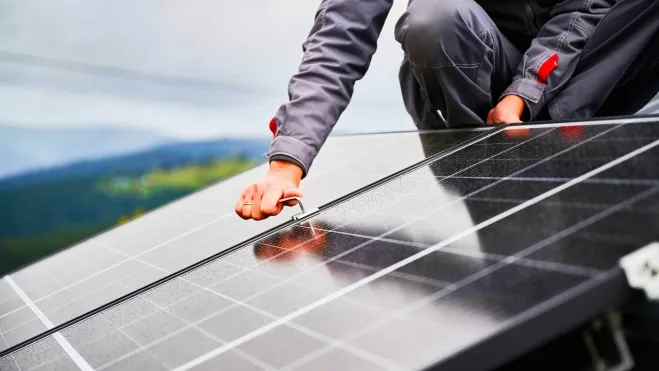
The improved stability of lead-free perovskites opens up direct application prospects in the renewable energy sector. Creating more stable, efficient solar panels free from heavy metals facilitates more sustainable integration into charging infrastructure, residential rooftops, and even potential use on the exteriors of electric vehicles.