
Ljubljana is investing in 35 new electric buses from Mercedes, some equipped with fuel cells
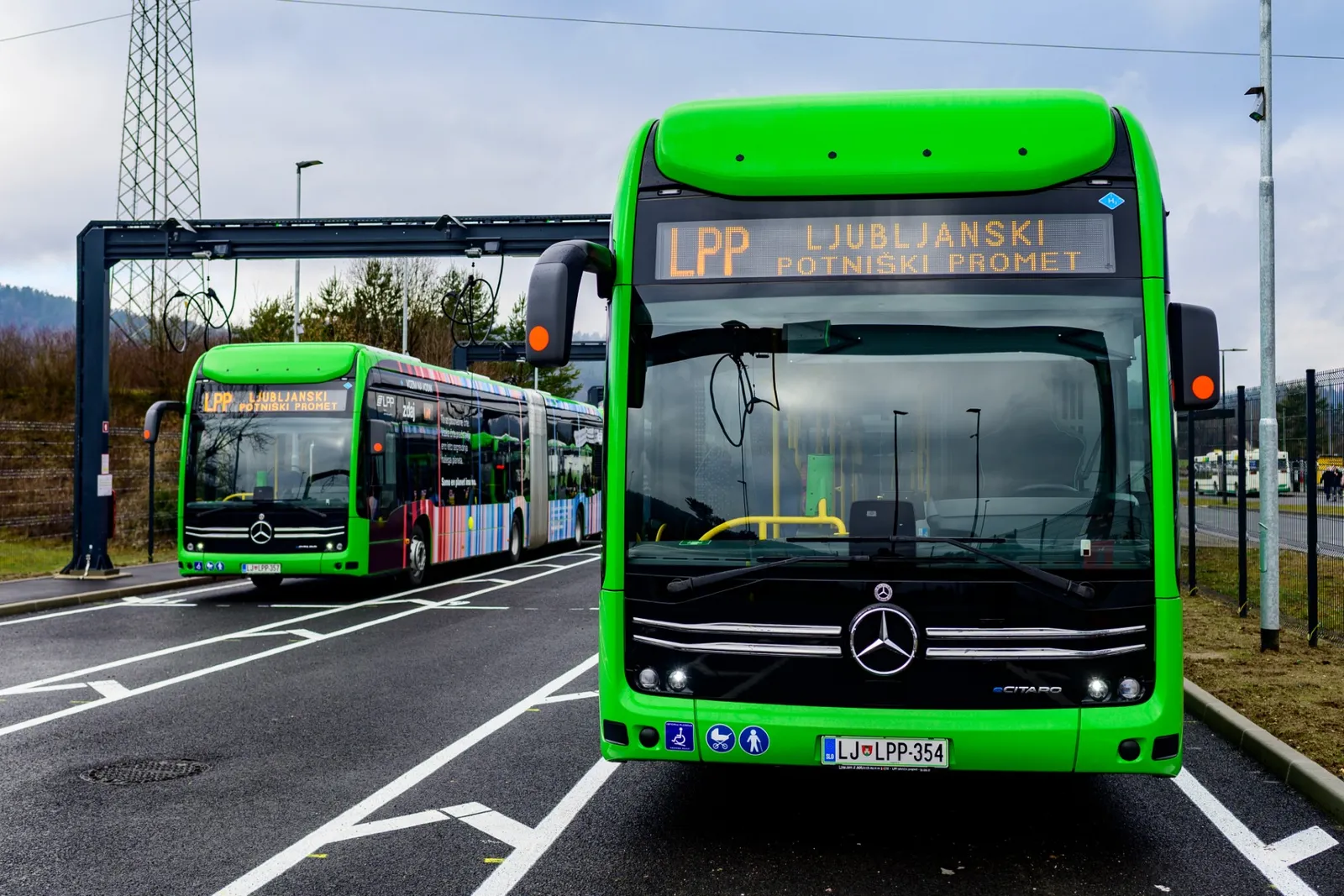
Ljubljana, the capital of Slovenia, relies on a combination of battery and hydrogen technology for its public transportation transformation. The city’s transit authority, Ljubljanski Potniški Promet (LPP), has introduced 25 battery-electric eCitaro buses as well as ten Mercedes-Benz eCitaro G Fuel Cell buses within a year.
Image: Daimler Truck AG
The unspecified investment in the 35 new vehicles represents the largest fleet modernization project in the history of this public transportation operator. LPP is now deploying the classic eCitaros especially on city routes with predictable schedules and regular charging opportunities. The Mercedes-Benz eCitaro G Fuel Cell further complements the fleet on routes that require greater range and more operational flexibility.
While the Mercedes-Benz eCitaros with battery-electric propulsion in the single-vehicle format can theoretically store up to 666 kWh of energy, the eCitaro Fuel Cell features a smaller battery combined with a fuel cell acting as a range extender. The articulated bus version has a battery capacity of up to 392 kWh. The fuel cell delivers 60 kW of power. It is not specified in which configurations LPP ordered the buses, so the exact ranges cannot be determined precisely.
It is clear, however, that alongside fleet renewal, LPP has established the necessary charging and hydrogen infrastructure and improved operational procedures for using the new propulsion technologies. The project also supports Ljubljana’s participation in Europe’s “100 Climate-Neutral and Smart Cities” initiative, which aims to assist cities in achieving climate neutrality.
"Last year, we built a locally CO₂-free fleet based both on battery-electric and hydrogen technologies. Together, they create the foundation for a reliable and future-ready public transportation system," says Dr. Rok Vihar, CEO of LPP.
"The shift toward locally carbon-free mobility is today much more than just a vehicle issue. What matters most is the interaction between vehicle technology, infrastructure, and operational expertise. LPP demonstrates convincingly how these elements can work together successfully to create an efficient and future-ready public transportation system," adds Rasto Oderlap, CEO of Autocommerce, Mercedes-Benz Buses' general distributor in Slovenia.