
Listen carefully, 007: Stellantis patents Bond-style battery ejection system in the name of safety
News
The automotive giant's battery ejection style system could use explosive bolts to eject the battery in the event of a fire.
GE
George East
5 October 2026 · 3 min read
Stellantis has filed a US patent for a battery ejection system that would allow an EV to drop its battery pack in the case of a fire and move itself clear.
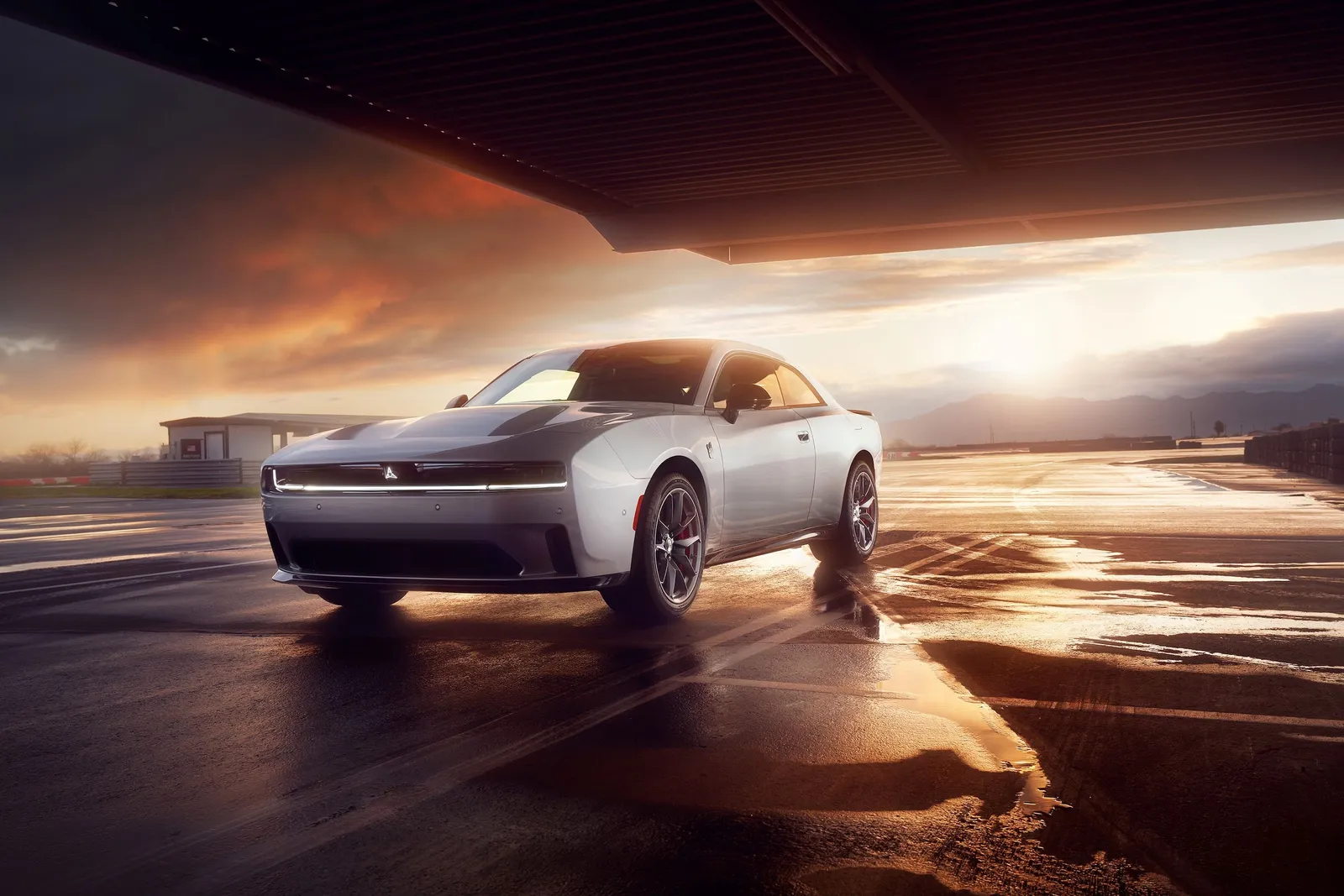
The setup was developed to prevent a battery from making an entire vehicle a write-off. An illustration of the automotive giant’s American arm, FCA US, displays what appears to be the STLA Large-platformed two-door Dodge Charger ejecting its 93.9kWh battery and moving away.
Stellantis hasn’t confirmed whether it will adopt the system in its production car range. Should the setup make it to production, it could be automatically triggered by sensors, or manually through a lever or via the touchscreen.
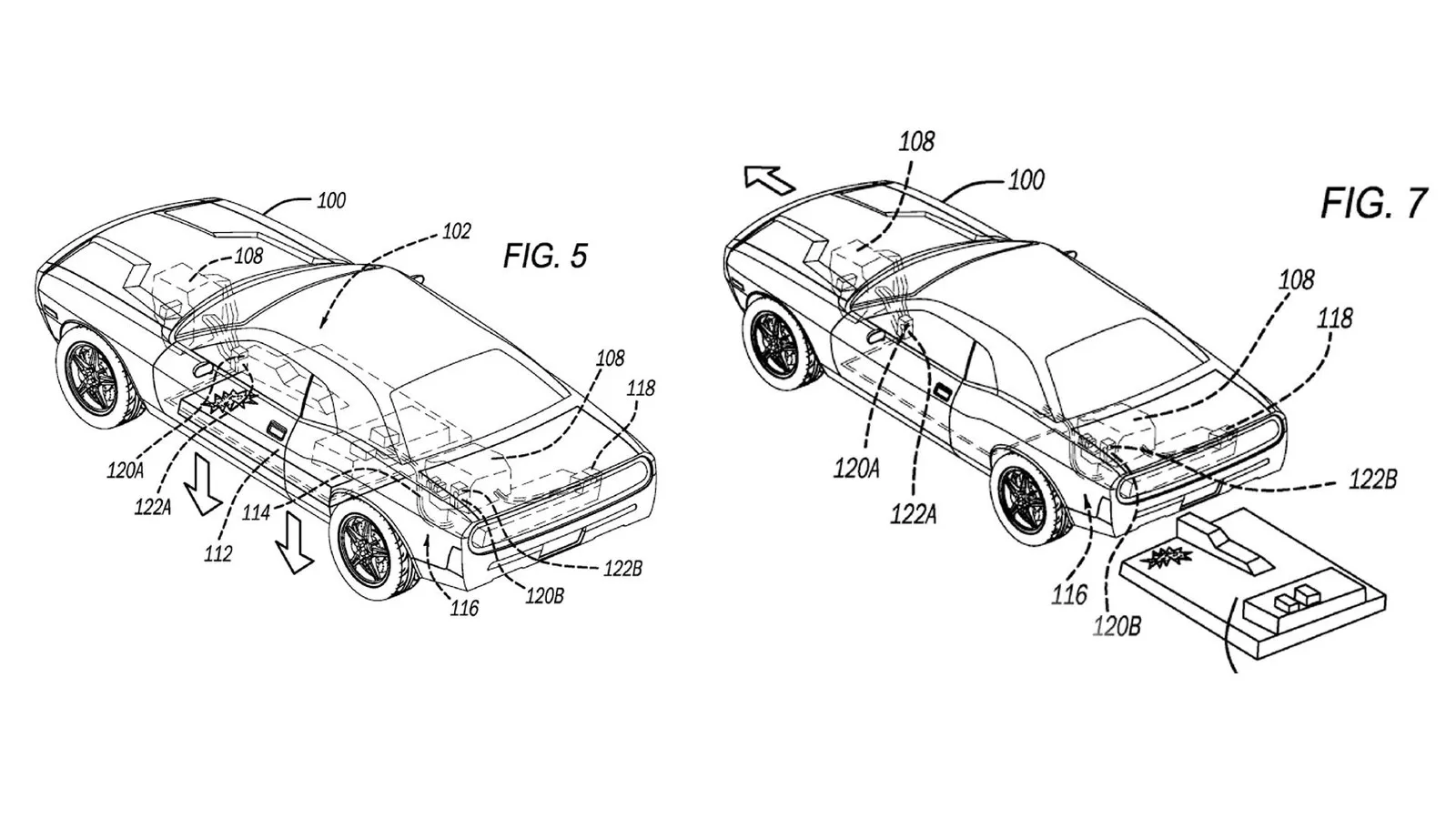
It could use two potential systems. The first uses pyrotechnic fasteners – the explosive bolts used in aerospace and defence – to sever the battery pack’s mountings from the car and drop it beneath the vehicle. As batteries and fire of any sort are not usually happy bedfellows, a second design could use interlocking castellated frames without needing any explosives.
Without a ‘main’ traction battery, an EV cannot move. Therefore, the patent proposes using the car’s 12V battery, the battery controlling all of the car’s electronic functions, to move the vehicle far enough from the ejected pack to reduce its exposure to fire. When the car ejects its battery, it also removes its heaviest component so the body lifts on its suspension, adding clearance over the discarded unit.
The battery ejection system is the latest in a line of battery-fire patents Stellantis has filed. In February 2025, it patented an EV ‘exhaust’ that vents and chemically treats the flammable gases that arise when cells enter thermal runaway – a process in which a temperature increase triggers reactions that generate more heat, creating a dangerous feedback loop that’s hard to stop.
Late last year, another Stellantis patent was a foam-based suppression system built into the battery. Nonetheless, EV battery fires are uncommon. According to the Energy Saving Trust, there is a 0.0012% chance of an EV catching fire. From 2010 to 2024, a total of 511 high-voltage battery fires were recorded globally.
Despite the Bond-style theatrics, car manufacturers often file patents to protect ideas, and many never reach the showroom. However, we have put together a list of EVs that could suit the world’s most famous spy when he, as an employee of His Majesty’s Government, is inevitably forced to go electric in 2035.
