
Hydrogen, like LNG: “If you don’t build the distribution infrastructure…”
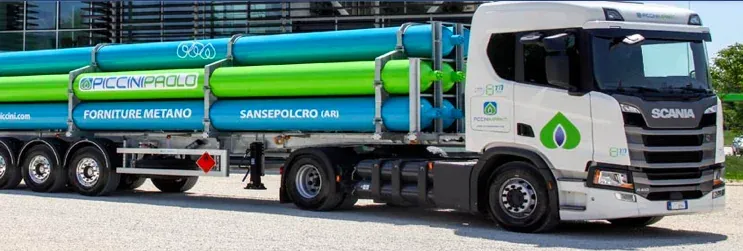
Hydrogen, like LNG—liquefied natural gas: if you don’t build the distribution infrastructure, no one will adopt it. This is the view of an industry expert in response to our article questioning the network funded by PNRR funds. To contact us: info@vaielettrico.it
Hydrogen, just like LNG: “No one believed it at first, but then…”
I read your article “The money for hydrogen (so much) — what happened to it?” I completely disagree with the comments made by Mr. Pizzuto. I’d like to remind everyone of when this began. I want to point out that before 2010, the situation regarding LNG (liquefied natural gas) refueling projects was similar to today’s situation with hydrogen. No one believed in it back then, just as no one believes in hydrogen today. I started working on this issue in 2011, and in 2013 I was appointed to the board of NGVA in Brussels. In May of that same year, we successfully launched the first LNG refueling corridor (the so-called “LNG Blue Corridors”). In 2014, the first LNG refueling station was opened in Piacenza. No one believed in such development of LNG for freight transport at that time.
"Today there is a fleet of 30,000 trucks, with 791 stations."
Just think that in 2014, only 6 trucks were in use in Italy, while across Europe the total fleet numbered just a few hundred units. Also at the end of 2014, there were only 43 fueling stations across the European continent. Thanks to the efforts of NGVA Europe, we were able, in collaboration with the EU, to turn this development into a success. Today we have 4 corridors, a fleet of 30,000 trucks, and 791 fueling stations that supply CNG to heavy vehicles. What I’m trying to say is that the beginning is always very difficult. As usual, it’s a vicious cycle: no fueling stations mean no cars or heavy vehicles, and no cars or heavy vehicles mean no fueling stations. Especially when development is pursued based on a wrong strategy.
“It’s economically unsustainable today, but…”
The reason why many projects fail to materialize is obvious: green hydrogen is simply not economically viable. It requires 9 liters of purified water and 56 kWh of renewable electricity per kilogram. Production costs are excessively high, ranging from 6 to 8 euros per kilogram. As a result, the price at filling stations is unaffordable, between 13 and 20 euros per kilogram. There are alternatives, such as “turquoise hydrogen,” which is classified as renewable hydrogen if it is produced from biogas, biomethane, or bio-GNL. Production costs range from 2.50 to 3.50 euros per kilogram (for example, one facility requires 4 kg of methane and 10 kWh of electricity). Interest in hydrogen-powered cars and trucks is significant, but refueling stations are lacking, just as happened in the past with GNL. Guido Brunetta
Hydrogen like LNG? We hope so.
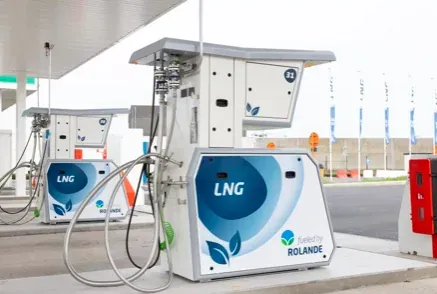
Mauro Tedeschini responds. We are not the electric vehicle lobby and we welcome all solutions for decarbonization. But it is also right to see what happens to the money spent on more sustainable transportation. Hydrogen was presented by our government as a solution with potential equal to, if not greater than, that of electric vehicles. As a result, 103.5 million was allocated for a network of 36 refueling stations to be built by 2026. To serve whom? Definitely not cars. The problem is that even in heavy vehicles, manufacturers are largely turning to different solutions such as LNG and electric vehicles. The risk is ending up with stations that are little or not used at all, like the one in Bolzano mentioned by Pizzuto. Thank you anyway for the civil and informed tone of your letter, far removed from the pointless and aggressive arguments that often accompany such topics.
or these topics often.Watch the fun VIDEO-SHORTS on our YouTube

Previous Article
Upgrading your home can save 900 euros per year
Next Article
China Zorrilla makes its debut in South America, the 40 MWh battery ferry