
Lidl raises the price of electric car charging cards in Europe: filling the battery for less than 10 euros is now a reality
27/09/2026 10:30
Updated to
27/09/2026 10:30
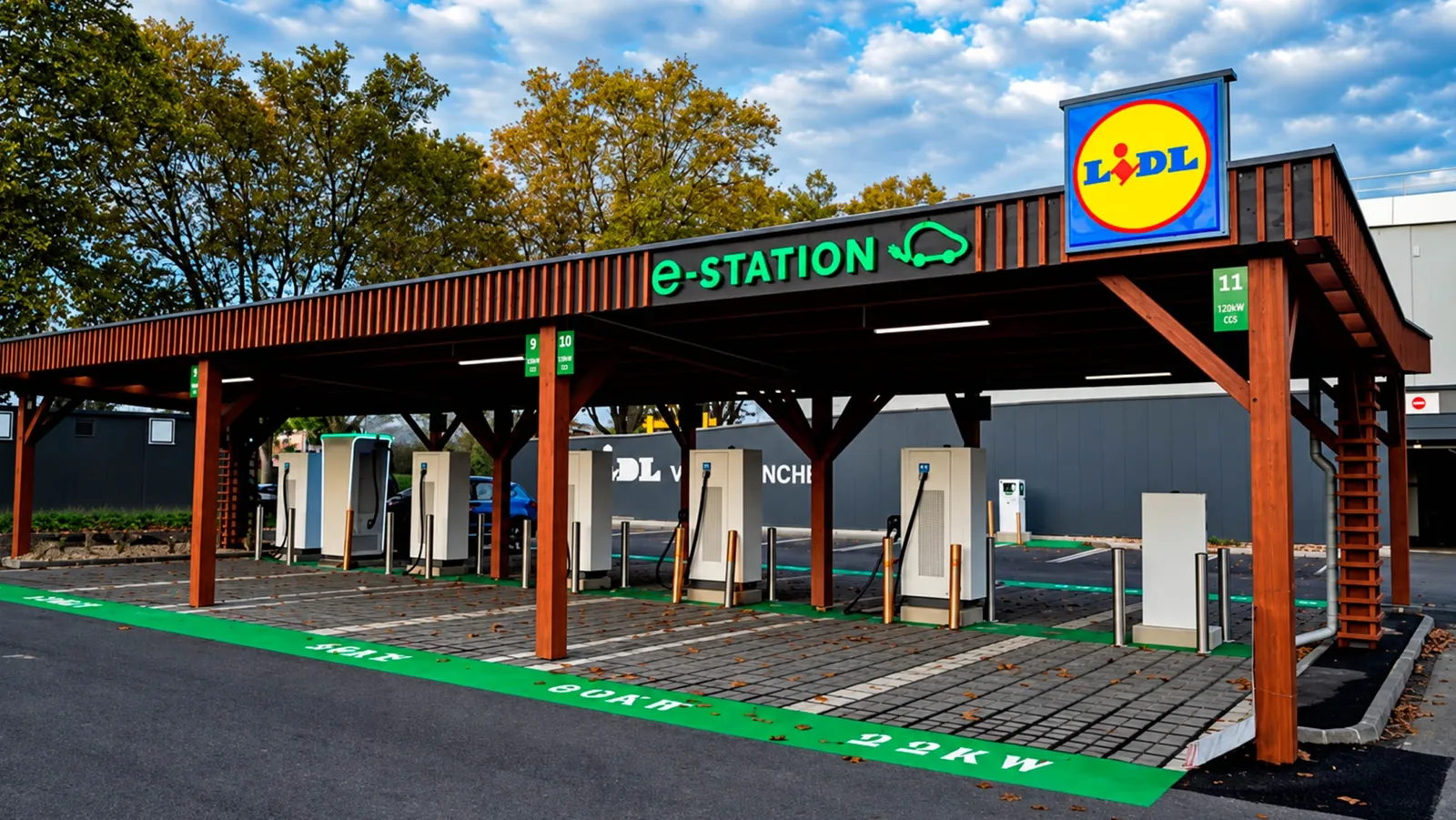
The price of electricity at public charging stations depends not only on the energy supplied, as the available power, location of the facilities, and the operator managing them can result in significant differences in the final cost. In Europe, the expansion of charging stations is introducing new business models, especially in supermarket parking lots, where retail chains can offer electricity as an additional service to their customers.
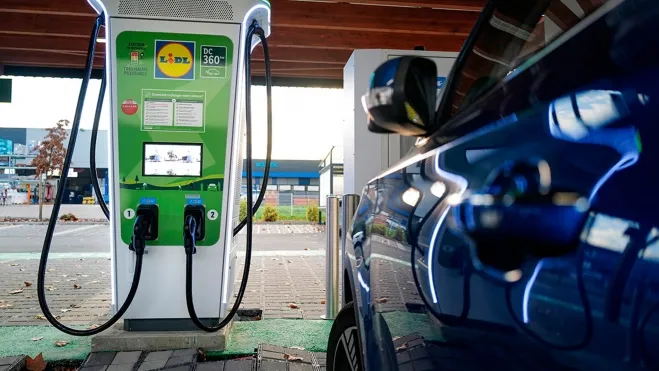
50 kWh of charging for 9 euros, but with some conditions
The discount applies exclusively to Lidl’s alternating current outlets, which offer capacities up to 22 kW. To access the new price, it is necessary to use Lidl Plus, the company’s free app, without the need to subscribe for a paid plan. Direct current installations are excluded from this reduction and retain a rate of 0.29 euros per kWh through the app, although some of them allow capacities up to 180 kW to reduce waiting times.
The economic impact of the new tariff can be seen by taking a Renault 5 E-Tech equipped with a 52 kWh battery as an example. A charge of 50 kWh would cost 9 euros, compared to 14.50 euros under the previous price. However, the maximum power advertised by charging stations does not guarantee that all vehicles can utilize it, as many electric models come with onboard chargers limited to 11 kW or 7.4 kW in alternating current.
In the case of the Renault 5 E-Tech, whose charger supports up to 11 kW in alternating current, a 30-minute stop would theoretically allow for about 5.5 kWh of charge to be restored, provided the charging conditions are favorable. Lidl’s offering is primarily aimed at drivers who can use parking spaces while shopping or leave their vehicles connected for longer periods, whereas DC charging stations provide an alternative for those who need to restore range in less time.
European supermarkets expanding their presence in the charging business
The reduction in fees coincides with the increasing installation of charging infrastructure in European retail stores. Companies such as Carrefour, Intermarché, and E.Leclerc have also developed their own networks in the parking lots of their supermarkets, combining AC charging stations with fast-charging units. This approach allows them to offer an additional service to customers while making use of locations that already have parking spaces, access routes, and regular traffic flow.
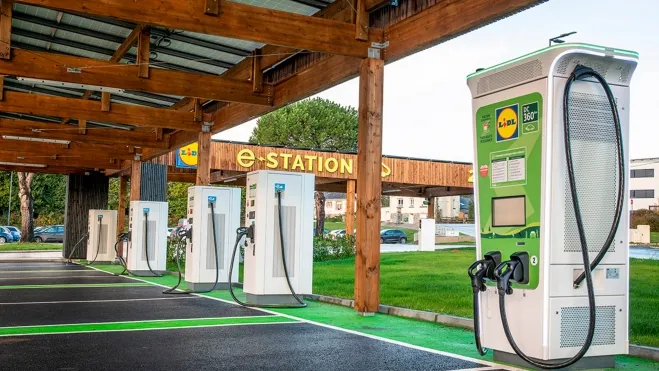
Lidl currently has over 5,700 charging points located in the parking lots of its stores across France, with more than 1,000 supermarkets equipped and nearly 1,600 stores having such facilities. Unlike specialized operators whose business focuses on selling electricity, retail chains can incorporate charging into their broader product offerings, although this does not necessarily mean they sell electricity at cost price.
For now, the new rate of 0.18 euros per kWh has only been announced for France, with Lidl not confirming an equivalent reduction at its stations in other European markets, including Spain. This measure reflects the entry of new competitors into the public charging sector and the existence of different business strategies to attract electric vehicle drivers. The development of these offerings will depend on the decisions of each operator, energy costs, and the availability of infrastructure in various European countries.