
The Li Auto i6 traveled 811.4 km on a 96 kWh battery. Consumption is 11.8 kWh/100 km.
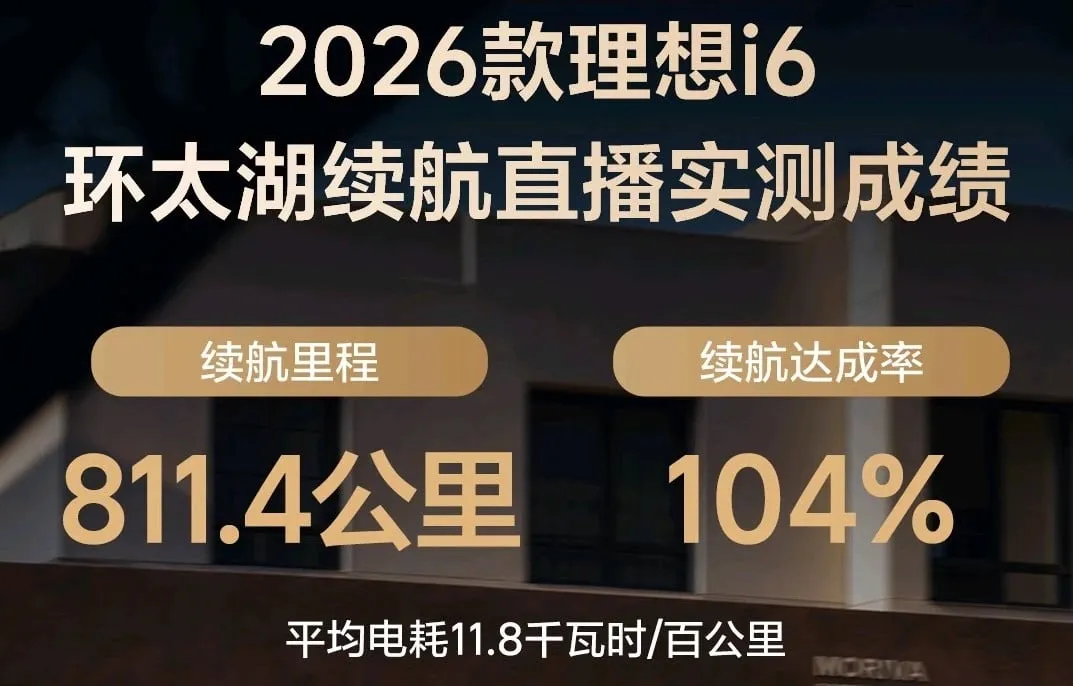
Li Auto demonstrated a live test of the updated i6’s range. The SUV traveled 811.4 km on a 96 kWh battery, achieving 104% of the CLTC range (780 km). This is the first i6 without CATL cells, and it is set to go on sale in Europe in Q1 2027 under the name Li 6.
Test on roads, not highways
The journey lasted 18 hours and took place around Tai Lake in the Yangtze River delta, with temperatures between 13-20°C. Four people, luggage, and an additional 50 kg of load were in the vehicle. Li Auto emphasizes that the air conditioning was running throughout the trip.
The catch is that the entire distance was covered on roads with speed limits of 40-80 km/h. Urban areas and mild weather are conditions in which EVs show their best performance. The average energy consumption was 11.8 kWh/100 km.
The broadcast showed that the battery level dropped to 0% SoC. The company notes that the car was still functional and could have continued driving, albeit at a reduced speed. Converted to WLTP standards, this would equate to around 632-640 km, meaning the range would be nearly 27% higher. However, this is just an estimate, not a measured value from that cycle. On the road or in cold weather, the range will be significantly lower.
Lian Shan proprietary battery instead of CATL
Li Auto is moving away from CATL. The new Lian Shan battery is a proprietary design: the cells are supplied by CALB and Sunwoda, while the battery pack is manufactured at Li Auto’s own facility. President Li Xiang attributes the improved range to this battery, along with the new proprietary engines and SiC-based power electronics.
According to the Chinese website Dian Dong Che Zhu Ren, the new design allows for an additional 3 kWh of battery cells. The same site states that the SiC modules have altered current paths, which reduces losses and provides 30 more kilometers of range in winter. These are claims without independent verification.
The battery supports 5C charging and is likely to be used in existing Li Auto models as well. The manufacturer emphasizes safety heavily, promising that the Lian Shan battery packs will not catch fire on their own or in a collision. Similar to Xiaomi’s Dragonscale batteries, Li Auto offers a free new car if such an incident occurs. This level of confidence is noteworthy, as such promises are easy to make but very costly to fulfill.
There is no information on the European price of the Li 6 in available materials. It is only known that sales will begin in the first quarter of 2027, so Polish prices and availability will have to wait longer.
Will 811 km in the city with 11.8 kWh/100 km change your mind about Li Auto’s new batteries, or will you wait for a test on the highway?
LovEV Newsletter
Want more content like this?
Sign up — we’ll send you a weekly summary once the newsletter starts.