
Li Auto wants to sell its own chips and SiC externally, just like Nio and Xpeng, because margins are a concern.
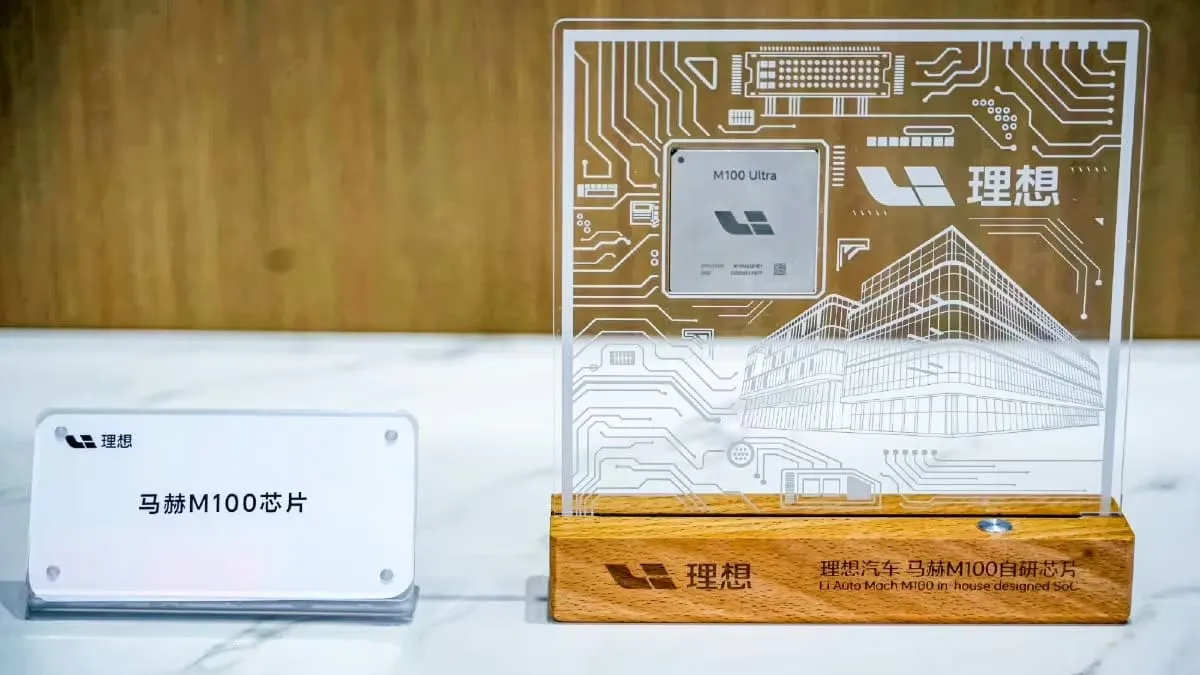
Li Auto is preparing to sell its technologies outside its own group, including Mach chips, silicon carbide modules, and range extenders. According to 36Kr, these plans started in early 2026, with some of these businesses aiming to operate more independently and seek external funding.
For EV drivers, this is a clear signal. Chinese brands are increasingly aiming to make money not only from cars but also from the components under their floors and in their electronics.
The Mach M100 chip is already in use, but no contracts have been signed yet
Li Auto’s management is set to approve the separation of its chip business while simultaneously trying to acquire customers. The company is reportedly in talks with entities involved in embodied AI and offering them the Mach chip. So far, there is no information on signed contracts, volumes, or revenue. And that’s the most important point here.
On July 13, Li Auto established Xinchuang Zhihe Technology in Shanghai. Its business scope includes the design and sales of integrated circuits, so the infrastructure for an independent operation is already in place.
The M100 chip itself is Li Auto’s first mass-produced chip for driver assistance systems. It is manufactured using a 5 nm automotive-grade process and offers 1,280 TOPS of computing power per chip. On paper, it seems impressive, but potential customers might be deterred by the cost of migrating their own algorithms to the new platform.
Sike Semiconductor aims for external funding and its own profits
Even before focusing on chips, Li Auto’s SiC business began to diverge. Sike Semiconductor, founded in 2022 alongside Hunan Sanan Semiconductor, aims to expand its customer base beyond the parent company’s products.
In February, Sike changed its reporting structure. Managers now report to their own board of directors rather than to Li Auto’s production department. The company operates independently and is responsible for its own performance. In short, it must be self-sufficient.
Li Auto currently holds 70 percent of shares in Sike. The company is seeking external funding and has begun preparations for an IPO. This move also makes practical sense. Other manufacturers usually prefer not to buy key components from a supplier controlled by a competitor.
In addition to semiconductors, Li Auto is also signaling openness to selling its own third-generation range extenders. The company is already developing and producing these systems on its own. However, it does not want to sell batteries for now. The reason is quite practical: the battery packages are highly customized for specific vehicles.
The entire operation isn’t out of thin air. In Q2 2026, Li Auto reported a net loss of 1.7 billion yuan, compared to a profit of 1.1 billion yuan the previous year. It still has substantial cash on hand, at 87.5 billion yuan by the end of the quarter, but R&D expenses remain around 3 billion yuan per quarter for six consecutive quarters. With such figures, an additional source of revenue stops being a fantasy.
Li Auto isn’t an exception here. Nio has separated its chip business into GeniTech, or Shenji, and is also seeking external customers. According to 36Kr, the M97 chip developed with Axera Semiconductor has piqued Geely’s interest, though no contracts have been disclosed and there are no plans for mass production. Xpeng, on the other hand, aims to sell more technologies overseas than just those for Volkswagen, including electric and electronic architectures, cockpits, chips, and driver-assistance software.
If this trend continues, Chinese brands will start to resemble BYD and Huawei more than traditional car manufacturing companies. Who do you think has the best chance of actually selling such systems abroad: Li Auto, Nio, or Xpeng?
LovEV Newsletter
Want more content like this?
Sign up — we’ll send you a weekly summary once the newsletter launches.