
LG is developing a battery that is cheaper than LFP batteries and has 33% higher energy density.
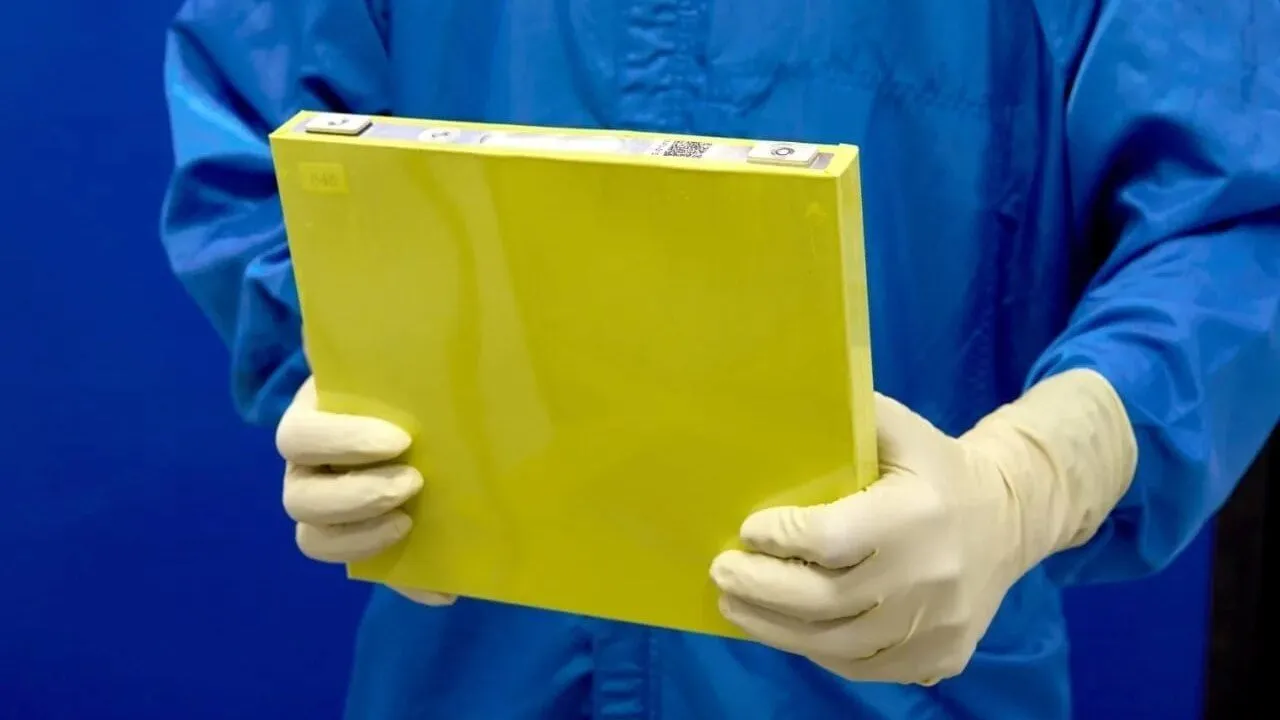
LG Energy Solution has just taken an important step toward solving one of the problems that had hindered a particularly promising chemistry for years. The South Korean company, in collaboration with Seoul National University, has significantly improved the durability of manganese-rich LMR batteries, to the point where they have demonstrated functionality in large-format cells designed for electric vehicles.
The research, published in Nature Communications, shows that an LMR cell with a capacity of over 40 Ah can retain 92.2% of its initial energy after 883 full charge and discharge cycles. What’s interesting is not only the figure but also how the researchers achieved it: by modifying the battery’s operating conditions to better control oxygen reactions.
LMR technology, short for lithium manganese-rich batteries, has been under consideration for years as a potential alternative to batteries with high levels of nickel and cobalt. In current high-performance chemistries, these materials enable high energy density but also increase the cost of the product. Manganese, on the other hand, is much more abundant and cheaper.
In the LMR cells developed by General Motors and LG Energy Solution, the composition is approximately 65% manganese and 35% nickel, with virtually no cobalt present. GM claims that this configuration allows for an energy density about 33% higher than that of the best LFP batteries at a comparable cost.
This was precisely the problem. LMR batteries also use the oxygen present in the electrode material to store energy. During charging, part of that oxygen gets oxidized, and if it cannot return to its original state properly during discharging, it can end up causing damage to the cell’s internal structure. Additionally, gas is generated, which is especially problematic when dealing with large cells used in electric vehicles, where available space is limited and increased internal pressure can accelerate degradation.
Researchers at LG Energy Solution and Seoul National University discovered that the solution lay largely in better controlling the operating window. By reducing the maximum charging voltage from 4.6 to 4.3 volts, the recovery rate of oxidized oxygen increased from 86% to 97%. They also found that lowering the minimum discharging voltage from 3.0 to 2.0 volts allowed oxygen to return almost to its original state.
Based on these results, the team adjusted both the voltage range and the initial cell formation process. This latter step was also carried out at a lower temperature to further reduce gas generation. The outcome was a large-format LMR cell with over 40 Ah capacity, which retained 92.2% of its energy after 883 full cycles. The study also reports a specific energy of 663 Wh/kg based on the mass of the active material in the positive electrode, though this figure should not be confused with the energy density of a complete vehicle battery pack.
It might seem that 883 cycles aren’t too many for an electric car battery, but the figure changes when converted to distance traveled. Using a car with a range of about 640 kilometers as a reference, 883 full cycles would equate to approximately 565,000 kilometers. With such usage, the battery would have lost around 8% of its initial energy, according to laboratory results.
There is another particularly important detail: progress does not depend on introducing a completely new material or fully modifying battery factories. Researchers have shown that a key part of the problem can be solved simply by optimizing the electrochemical operating conditions. This opens the door to a much simpler implementation if the results hold up when this technology moves to large-scale industrial production.
This is also not chemistry that remains confined to the laboratory. General Motors and LG Energy Solution are already working to integrate LMR batteries into mass-produced electric vehicles. Both companies plan to begin pre-production of LMR prismatic cells by the end of 2027 and start commercial production in the United States in 2028 through Ultium Cells.
The initial target is GM’s large electric SUVs and pickup trucks, where the weight and cost of high-capacity batteries have a particularly significant impact. The company aims to achieve driving ranges over 640 kilometers while reducing costs compared to current batteries with high nickel content. In fact, GM has been working with this chemistry since 2015 and claims to have tested hundreds of large-format prismatic cells in various configurations.
The combination is particularly interesting because LMR batteries can occupy an intermediate space between LFP and nickel-rich chemistries. The first advantage is the cost of manganese; the second is a significantly higher energy density than LFP batteries; and the third is the ability to maintain high battery life without relying on large amounts of nickel and cobalt.
It remains to be shown how this technology will perform in millions of cells manufactured in series under the actual operating conditions of an electric vehicle. It will also be necessary to determine what energy density the complete battery pack ultimately achieves and how its performance evolves after thousands of cycles. However, the advancement recently published by LG Energy Solution and Seoul National University eliminates one of the major obstacles that had hindered LMR batteries for years: degradation caused by irreversible oxygen reactions and gas generation.
If the industrialization planned by GM and LG Energy Solution meets its deadlines, the first applications will arrive in 2028. This means that a battery capable of offering long range, using much less cobalt, and reducing production costs could be far closer to the electric cars we use daily than it seemed just a few years ago.
Source | LG
Key points
The chemistry uses approximately 65% manganese and 35% nickel, with very little cobalt.
The energy density can be 33% higher than that of the best LFP batteries, according to GM.
A cell with over 40 Ah retained 92.2% of its energy after 883 cycles.
Charge and discharge voltage control allows up to 97% of the oxidized oxygen to be recovered.
GM and LG Energy Solution plan to begin commercial production of LMR cells in 2028.
The first applications will be for GM’s large electric SUVs and pick-ups.
With a range of about 640 kilometers, 883 cycles would equal approximately 565,000 kilometers.